- Injection moulding
- Translated with AI
Europe's leading elastomer press supplier shows alternatives to injection molding
Economically produce a wide range of high-quality elastomer molded parts
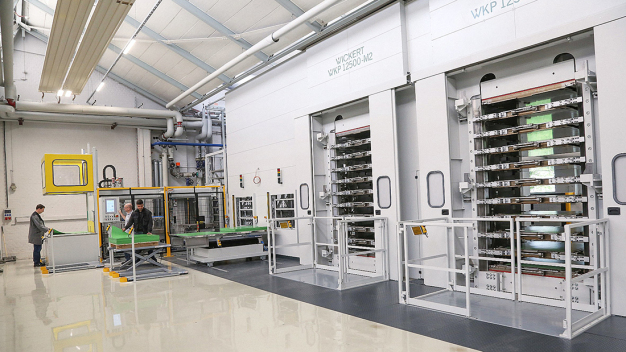
The range of services offered by Wickert includes customized pressing systems as well as complete plants, including automation (Photo: Wickert)
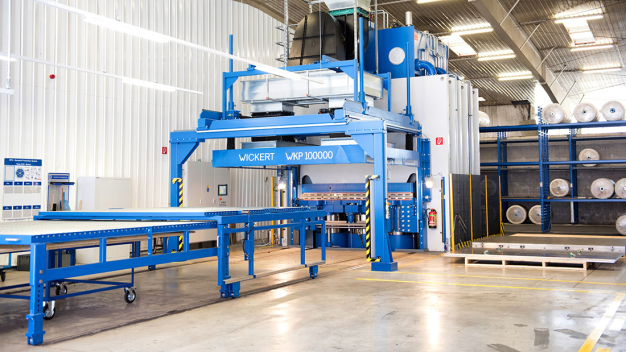
Compression presses like this WKP 100000 are indispensable when manufacturing large-area parts (Photo: Wickert).
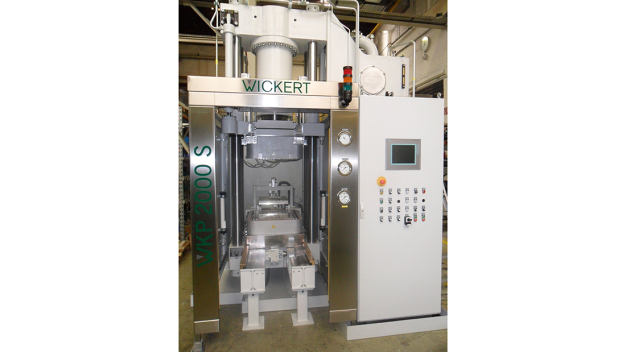
Mass production of small and very small precision parts recommends Wickert TM presses like this WKP 2000S (Photo: Wickert)
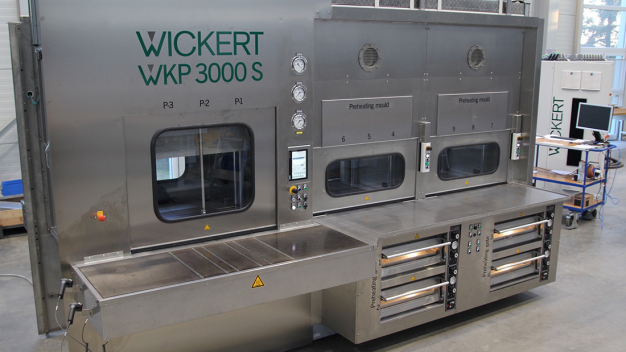
Wickert elastomer press with integrated tool and product preheating for the production of transfer doors with vulcanized sealing for cleanroom handling systems. Suitable for use in cleanrooms of ISO6 and ISO8 classes (Photo: Wickert)
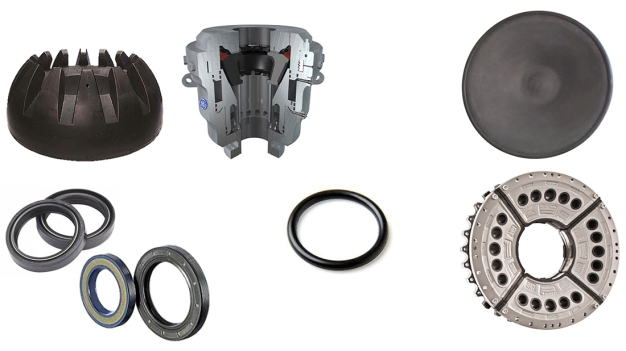
Elastomer components (top row from left) shut-off valves for oil or natural gas drilling, rubber membrane, (bottom row from left) shaft seals, O-ring, coupling made from a rubber-metal composite with a diameter of 2 meters (Photo: Wickert)
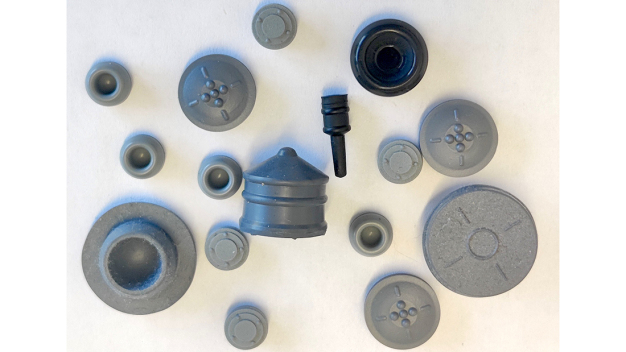
Pharmaceutical stoppers and pistons (Photo: Wickert)
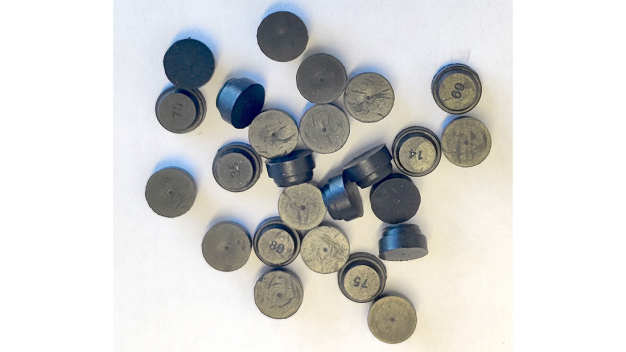
Small parts with a diameter of 3 mm (Photo: Wickert)
Pressing instead of Injection Molding
At the DKT, Wickert Maschinenbau demonstrated how high-quality elastomer molded parts can be produced economically in both large and small quantities. With its self-proclaimed globally leading elastomer presses, the company targets a broad user base: including producers of micro- and precision parts as well as manufacturers of thin-walled or large-volume components and cleanroom pharmaceutical products.
Wickert offers, on the one hand, customized, fully automated press systems for Compression Moulding (CM), Transfer Moulding (TM), and Injection Transfer Moulding (ITM). Additionally, the range of services includes component development, concept and feasibility studies, as well as overall planning including automation and general contracting.
Global Leader in Elastomer Processing
Wickert's competitive advantages include top positions in precision and pharmaceutical presses, as well as in vacuum chamber technology often required for rubber processing in cleanrooms. Furthermore, the presses from the Rhineland-Palatinate manufacturer are characterized by very homogeneous temperature distribution on the heating plate surface and exceptionally high precision regarding planarity and flatness. Therefore, the machine builder considers itself a leader in elastomer processing in presses.
Compression Presses for Both Large and Thin-Walled Parts
Compression presses are predestined for manufacturing large-format molded parts from silicone or cellular rubber. They allow for absolutely homogeneous vulcanization, larger batch sizes, and the highest surface quality.
For very thin-walled parts and delicate products such as membranes with fabric reinforcements, compression molding is also a process-safe and dimensionally stable manufacturing method.
Small and Micro Parts in Transfer Moulding
For large-series production of small and very small precision parts, Wickert often recommends TM presses in addition to CM presses. Transfer molds offer the advantage that parts can be manufactured by direct injection and thus at high injection pressures. Tools with sometimes hundreds of cavities are reliably managed in this way.
The relative waste rate, especially in cold runner transfer, is very low.
Large parts with volumes exceeding 100 liters can also be economically produced in transfer presses. Here too, high-quality parts with very tight tolerances can be reproducibly manufactured via short gate channels.
Vacuum Manufacturing Often Makes Sense
In general, Wickert recommends a vacuum chamber when using tools with many cavities. For many high-quality pharmaceutical rubber parts, a vacuum chamber or a press integrated into a cleanroom is an indispensable prerequisite. An example of this is rubber stoppers for COVID-19 vaccines.
Machine Builder on the Path to Success
The Wickert cleanroom pharmaceutical presses, which are used for manufacturing, were in high demand worldwide in 2021. The boom contributed to the family-owned company's record year, achieving both the highest sales and the highest order intake in its 120-year history. This positive trend continues into the first four months of the current year, during which Wickert has continued to record high order volumes.
Wickert Maschinenbau GmbH
76829 Landau in der Pfalz
Germany