


- Furnishing & equipment
- Translated with AI
Malte Lenkeit
Ergonomics at the industrial workplace
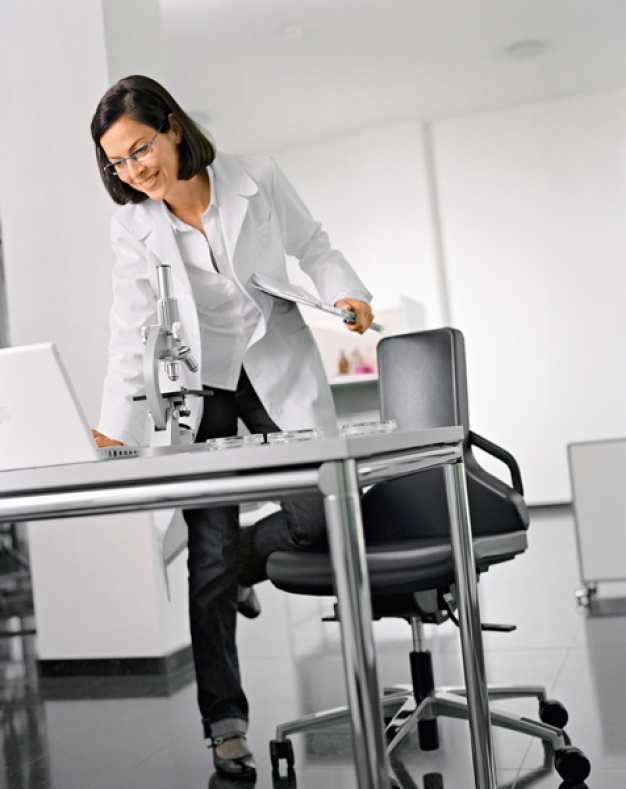
Tec-profile_people_web
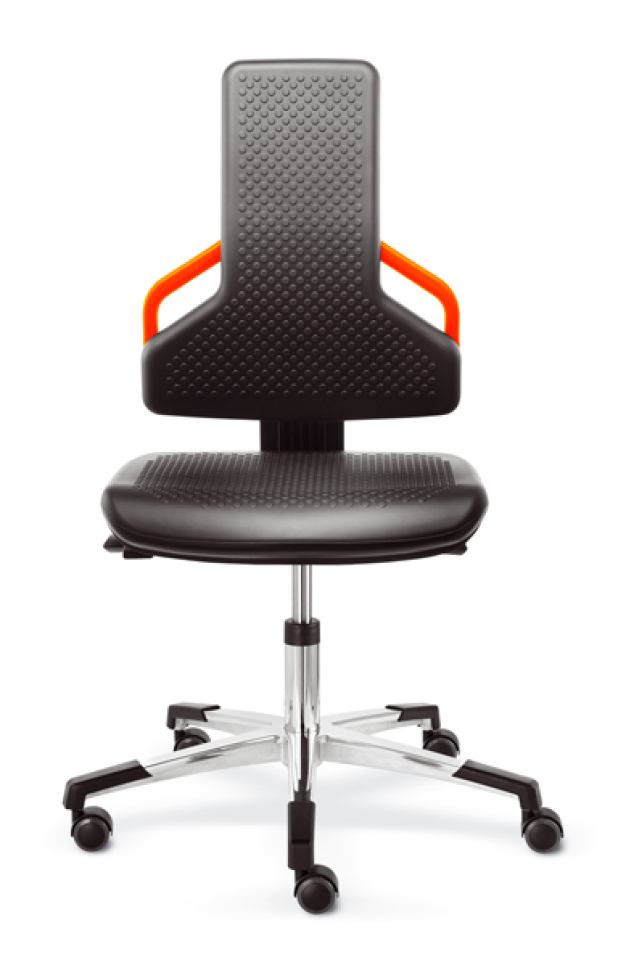
Tec_profile_Cleanroom_1_web
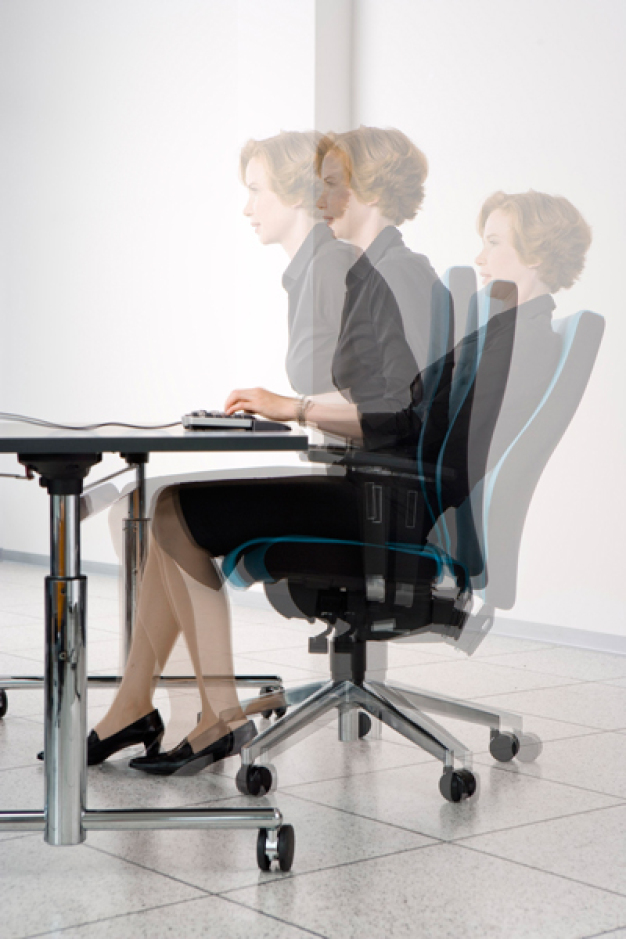
Posture often-changing_web
When ergonomics is discussed in an industrial environment, the topic quickly turns to machine operation or the schematic assessment of work processes. Simple solutions such as offering a seating option to relieve the spine are rarely addressed. Paradoxically, in offices it is already widely recognized that body-friendly sitting is an effective back prevention measure. In contrast, not only in the textile industry, seating is often considered a secondary issue at industrial workplaces. The unfortunate consequence is that many work chairs and sit/stand aids in commercial settings completely fail to provide relief for the spine. During workplace inspections, many deficiencies can be quickly identified with an ergonomics-trained eye and often remedied with simple, sometimes creative measures. For example, if there is no solid and non-slip surface, special mats can help. If people cannot firmly place their feet during work, small boxes are useful for transition before an appropriate industrial chair is procured. However, if there is a lack of freedom of movement for legs and feet, simple solutions are no longer sufficient. Because then, body-friendly sitting is fundamentally impossible.
The most common deficiency encountered in an industrial environment is the seating itself. Rarely is it tailored to the anatomy of all users. Generally, chairs with synchronization technology and automatic adjustment of the backrest pressure are best suited for shift and rotating workstations. Corresponding chair mechanisms ensure that different users only need to adjust the seat and backrest height. For workplaces assigned to a specific user, a technology that allows individual adjustment of the backrest pressure makes sense. Body weight, torso length, and the user's sitting feel are thus better taken into account.
Relief of the spine
Numerous studies and investigations deal with the risks of sitting in the office. The fundamental message is that swivel chairs promoting body-friendly sitting around the plumb line help avoid health risks. Of course, this also applies to work at industrial workplaces. Researchers from the university medical facility of the Rheinisch-Westfälische Technische Hochschule (RWTH) Aachen describe that a chair should have a forward-tilted seat surface of at least minus 8 degrees. The Aktion Gesunder Rücken (AGR e. V.), which for the first time this year also tested industrial chairs and awarded six products from Dauphin the quality seal "tested & recommended," demands a seat tilt and depth adjustment of at least minus 4 degrees. The fact is, that a greater forward tilt of the seat opens the pelvic angle and thus increasingly relieves the spine.
Movement patterns and body postures in the industrial environment are diverse. Requirements for safety, materials, and durability also vary with each application area. Industrial chairs must be more versatile than office chairs. An intelligent decision is to choose a chair family that offers components and equipment options in a modular system. For example, Dauphin offers the "Dauphin System Ergonomics" for the AGR-certified TecProfile, which equips each workplace optimally according to needs and requirements. This ensures that ergonomic industrial chairs contribute to promoting the health of employees throughout their entire service life, which is approximately eight years, even as conditions change.

Dauphin HumanDesign® Group GmbH & Co. KG
Espanstraße 36
91238 Offenhausen
Germany
Phone: +49 91 5817514
Fax: +49 91 5817701
email: info@dauphin-group.com
Internet: http://www.dauphin-group.com