

- Possibilities
- Translated with AI
Michael Riester
Digital Product Passport: A Booster for Standardization
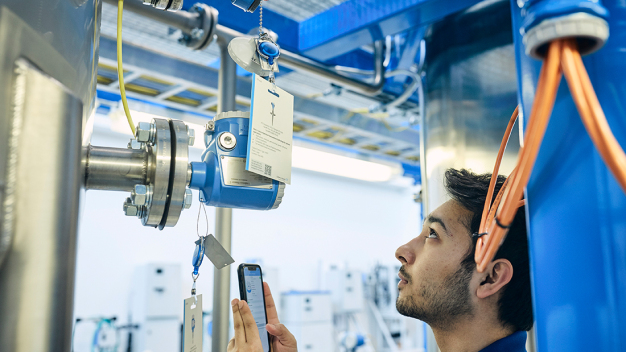

Digitalization has made significant progress in industry by contributing to the optimization of plants, increasing production capacity, and reducing costs. However, to efficiently integrate and manage increasingly complex digital infrastructures, a standardized infrastructure for digital ecosystems is needed. Such standardization would facilitate the structured exchange of data at the equipment, product, and system levels, which in turn improves real-time decision-making and operational safety. Digital twins, which connect the physical and digital worlds, could play a key role here. For digital twins to network across industries, a much more comprehensive standardization than before is required.
A crucial step towards this standardization is the introduction of the Digital Product Passport (DPP). These must be implemented across sectors by 2030. This will enable users to access comprehensive product information with just a few clicks via mobile devices such as smartphones or tablets. The new EU Battery Regulation, which mandates the digital product passport as the first, highlights the necessity of a uniform standard. Although product information, certificates, and user manuals already exist, cross-sector exchange is still hindered by the multitude of different actors and the lack of standardization.
Instead of continuing to focus on the digitization of individual processes, the entire digital ecosystem is now coming into focus. Collaboration among all stakeholders – from plant operators to service providers to machine manufacturers – will be essential to increase efficiency and automation in process industries. Sharing data about machine performance and maintenance needs in real time can, for example, reduce downtime and extend the lifespan of plants.
To simplify data exchange along the value chain, increased use of digital twins combined with a shared understanding between industry, associations, and research is crucial. The Industrial Digital Twin Association (IDTA) plays a central role here. The core technology is the "Asset Administration Shell" (AAS), a standardized description of an asset's behavior and capabilities for communication and interaction, i.e., the standardized digital twin of an asset. This management shell enables the integration of data from various sources and provides a unified basis for communication between different systems and actors.
Digital Data Chain: The Path to a Standardized Future
To establish the complete digital data chain from manufacturers to plant operators, the integration of three essential technologies is necessary: automatic identification of physical objects according to IEC 61406, digital technical documentation according to VDI 2770, and digital information exchange platforms (Information Exchange Platform, IEP). These technologies form the foundation for a harmonized approach to the identification and management of objects and data, which accelerates the implementation of innovations and enables economies of scale.
All of this makes it clear: When it comes to deploying standardized digital infrastructures, both the newly initiated Digital Product Passport and the Asset Administration Shell (AAS) play a decisive role in enabling efficient and transparent data exchange along the entire value chain.
Endress+Hauser AG
4153 Reinach BL 1
Switzerland