



- Translated with AI
Developers, suppliers, and manufacturers in direct dialogue with medical technology users
COMPAMED Innovations Forum: New concept bears fruit
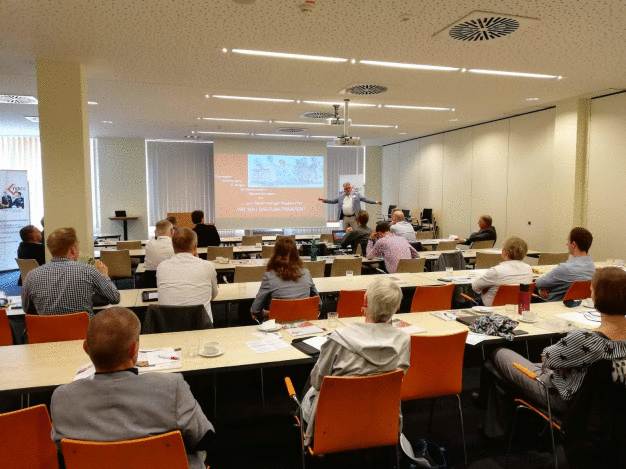

"Medical devices need to improve. They are often not sufficiently compact, not flexible enough, and not meaningfully integrated into the operational workflows on hospital wards," recently wrote a specialized magazine focused on medical technology development about the conflict between manufacturers and users. "The list of shortcomings from medical technology users is apparently long," states Peter Reinhardt, Editor-in-Chief of DeviceMed. Addressing this challenge—advancing the dialogue between manufacturers, developers, and the end-users of medical systems and products—was the focus of this year's COMPAMED Innovation Forum. The traditional forum always provides an initial outlook on topics and trends of the internationally leading trade fair for suppliers in the medical technology industry, which takes place in Düsseldorf (2019 date: November 18–21, parallel to MEDICA 2019), with a few months' lead time. It is jointly organized by Messe Düsseldorf and the IVAM Association for Microtechnology. The host for the forum, held under the motto "Practice meets Technology - Hightech in Hospitals," was the Helios Klinikum Krefeld on July 10th.
Within the Helios network, this hospital is considered a maximum-care facility with over 30 specialized departments, making it one of the large institutions. It employs 2,350 staff members and cares for 60,000 inpatients and an additional 120,000 outpatients annually across 1,100 beds. "Early discussions at the forum have already shown that high-tech medical technology is often developed far from the real needs of healthcare professionals," explains Dr. Thomas R. Dietrich, Managing Director of IVAM.
Against this background, Helios is also forging new paths—so the company is not only an important user of medical technology but also supports future-oriented developments in health and medicine through its corporate Center for Research and Innovation (HCRI) in Wuppertal and Berlin. The focus is on solutions not yet available on the market and pilot projects for clinics and research institutions. "Our goal is to improve the quality of medical care, optimize hospital processes, increase attractiveness as an employer, and boost efficiency in healthcare," explains Maren Christina Geissler, Head of Helios' Innovation and Research Department in Wuppertal. An important project is the European joint venture STARS-PCP, launched in early 2017, in which Helios participates. It has a five-year duration and is funded by the EU Horizon program with over 3.2 million euros. STARS aims to develop new personalized eHealth solutions to reduce stress associated with medical procedures. Reducing stress lessens the harmful side effects of sedatives, shortens hospital stays and recovery times. At the same time, nursing staff and related persons are relieved from continuous assistance.
Speech assistance in hospitals is gaining importance
The digitization of hospitals is in full swing, but it is not yet a complete success story. Within the Helios group, however, the Krefeld hospital is well positioned in this sector: the digital patient record has been established in almost all areas since 2013. "In the future, we want to give even more importance to speech assistance for doctor’s letters and record keeping," reports Franziska Niederschelp, Assistant to the Management at Klinikum Krefeld. The introduction of speech recognition is being promoted throughout the hospital. A pilot project will utilize 'Single Sign-On' (SSO). This single login process allows access to services, applications, or resources through one authentication process. SSO replaces multiple login procedures with different user data and uses a unified identity of the user. It is intended to prevent users from having to create and remember different credentials for numerous applications and services, which would complicate hospital operations. An additional focus is on the automated bundling and digital integration of patient data from medical devices, laboratory tests, and various wards.
Sensors play a key role
Prerequisites for many new developments in medical technology and the digitization of healthcare are sensors, which have long played an important role at COMPAMED and were intensively discussed in the second session of the Innovation Forum in Krefeld. For example, the Centre Suisse d’Electronique et de Microtechnique (CSEM) has developed an optical method for continuous, reliable blood pressure monitoring. Elevated blood pressure affects one-third of the elderly population and can lead to serious complications such as stroke or heart failure. After ten years of research and five years of clinical testing, CSEM offers under the brand 'oBPM' (Optical Blood Pressure Monitoring) a portable device without a cuff that measures blood pressure in resting or active states with the highest quality. The oBPM concept is based on physiological analysis of photoplethysmographic signals (PPG signals) measured at the finger. These signals are recorded with a standard pulse oximeter. An initial experimental proof of continuous blood pressure monitoring using optical signals was demonstrated during a clinical study at the University Hospital in Lausanne. The application is possible with a standard smartphone and an appropriate app, utilizing the phone’s camera light. "We have now founded the startup 'aktiia' to utilize the oBPM technology and market a wristband that collects the valuable data and transmits it to a smartphone," explains Dr. Alexander Steinecker, Business Development Manager at CSEM.
Disposable sensors for intelligent wound dressings
The requirements for sensors are constantly increasing. According to InnoME, they must be thin, flexible, and moldable, easy to integrate, and body-compatible. "Conventional sensors are only limitedly suitable for medical applications because they are not economical, lack design freedom, and have poor environmental compatibility and limited integrability. Our answer to these shortcomings is foil-based, printed, and/or hybrid sensors," emphasizes Eike Kottkamp, Managing Director of InnoME. The company offers disposable sensors in mass production or for individual products. Most are produced via screen printing; roll-to-roll processes are also possible. For quantities of one million units, prices around 12 cents are feasible. Applications include smart bandages and wound dressings that allow wound monitoring without removing the dressing, or waste bags for bodily fluids such as blood, urine, sweat, and dialysate, enabling in-vitro patient monitoring. Measurable parameters include pH, conductivity, and temperature.
The Fraunhofer Institute for Microelectronic Circuits and Systems (IMS) also conducts research and development in the field of sensors for medical technology. "Our core competence is CMOS circuitry, which we expand into microsystems," describes Michael Görtz from IMS. In medical technology, measuring pressure in the blood, brain, or eye is particularly relevant. The sensor system EYEMATE, developed jointly by IMS and Implandata Ophthalmic Products, is quick, simple, and straightforward, improving intraocular pressure measurement. In the future, EYEMATE is intended to make life easier for glaucoma patients. The implant enables optimal therapy for patients affected by the eye disease glaucoma. In our eye, there is a constant exchange of aqueous humor—new fluid is produced, and old fluid is drained. If the amount of newly produced fluid exceeds the drained amount, intraocular pressure rises, potentially causing irreversible damage, including optic nerve death. "With EYEMATE, we have created a microsensor system that allows affected individuals to perform contactless pressure measurements in the eye themselves," reports Görtz. An implanted sensor measures pressure and temperature inside the eye. The values are captured, digitized, and displayed via a handheld device held in front of the eye by the patient. Within seconds, pressure and temperature in the eye can be precisely measured contactlessly at any time. This provides physicians with a vastly increased data basis for determining the correct therapy. Additionally, patients can access the data directly via a smartphone app, track intraocular pressure over time, and react if pressure becomes too high. The more frequently the patient uses the reader, the more reliable the measurements and the more personalized the therapy can be.
New solutions for emergency call systems and room monitoring
An important topic, given the aging population, is also ensuring a safe, healthy life at home as much as possible. Thanks to technological advances, the possibilities are improving continuously. The research center FZI has developed a smart emergency call system called easierLife, designed to generate safety without a button. "In conventional systems, only 13 percent of users carry the transmitter all the time, 27 percent do not carry it at all, and only 17 percent activate it when they fall," notes Annette Hoppe from FZI. easierLife HOME sensor-based system records daily activities, performs intelligent analysis of unusual situations, and initiates personalized alerts via app or emergency call center. Automatic alerts in case of anomalies make the system suitable even for people with dementia. The "normal behavior" can be individually set for each user, and the information density can be adjusted. In the future, the system will also learn individual daily routines independently.
An intelligent room monitoring system is also being developed by the technology company nevisq, which has created a sensor band for this purpose. It detects people, objects, and movements in rooms, with data analysis aided by artificial intelligence. "We use active infrared to scan the area above the floor," explains Christian Kind, Business Development & Finance Director at nevisq. The smart floor strips are a cost-effective alternative to existing technologies like floor sensors or wearable devices. They detect not only falls but also trigger alarms when someone leaves the bed or room. "The 'brain' of the sensor band is a microcomputer that processes sensor data locally, analyzes activities, and interfaces with the lighting call system," he adds. "Our initial focus is on care facilities, but we also see potential in smart home applications," says Kind.
Conclusion of the COMPAMED Innovation Forum: The concept of bringing developers, manufacturers, and users together is bearing fruit. This is evidenced by the lively and stimulating discussions following the presentations. This exchange can be continued and deepened at COMPAMED 2019 in Düsseldorf, the international number one platform for suppliers in the medical technology industry.
Messe Düsseldorf GmbH
40001 Düsseldorf
Germany



