


- Automation
- Originaltext
Damit die Abfüllung im Reinraum nicht zum Flaschenhals wird
Flaschenfüllvollautomat für Puder
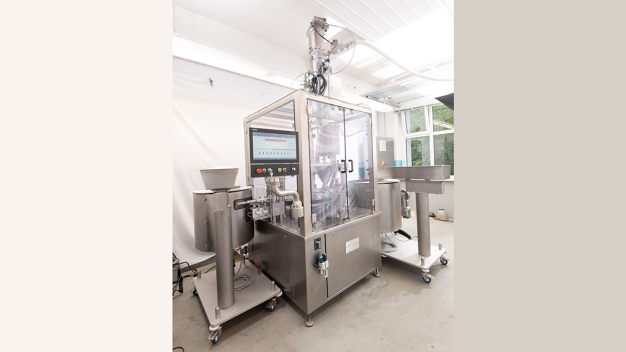
Maschine komplett © gustav-obermeyer.com
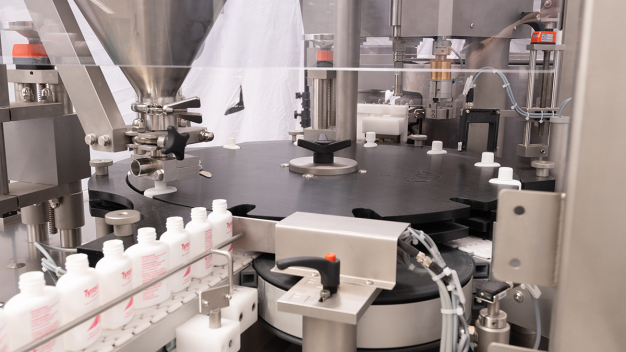
Vordergrund Eingabestation © gustav-obermeyer.com
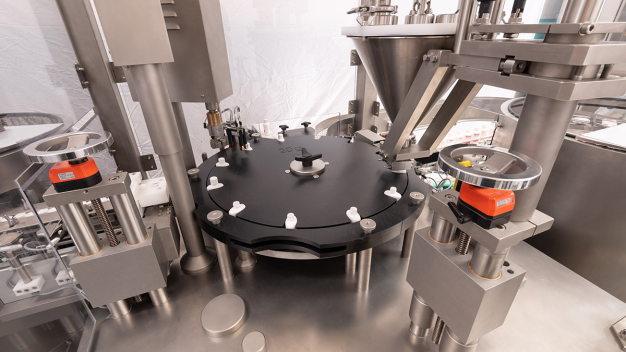
Hier findet die Abfüllung und Verschraubung statt © gustav-obermeyer.com
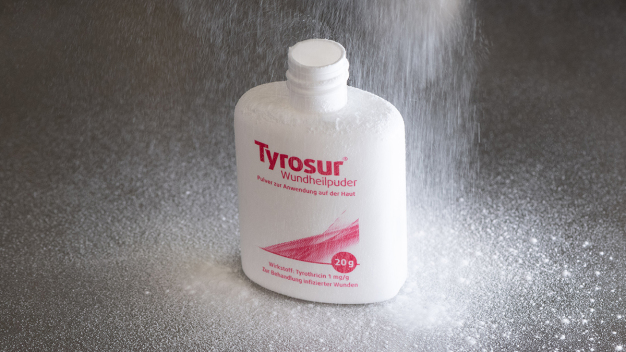
Produktmuster © gustav-obermeyer.com
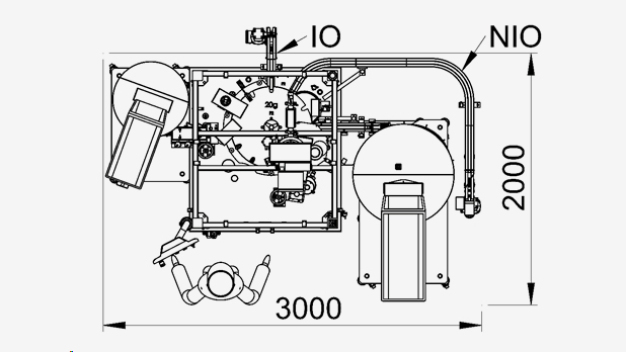
Abbildung 1 - Kompakter Vollautomat im Reinraum - Gutflaschen (IO) werden zur Sekundärverpackung gefördert. Schlechtflaschen (NIO) verbleiben zur Inspektion im Abfüllraum
Demographischer Wandel, stark schwankende Auftragsvolumina, kurze oder vorgezogene Lieferzeiten – wer kann, entwickelt seine Hand- oder halbautomatische Abfüllung in Richtung Vollautomaten weiter. Aber wie ist es dann z.B. mit dem Platzbedarf?
Produktionsflächen im Hygienebereich und insbesondere in Reinräumen sind teuer und somit knapp. Sie sollten immer optimal genutzt sein. Die Herausforderung ist, vorhandene Flächen bestmöglich zu nutzen und dazu kann der Maschinenhersteller mit cleveren Konzepten einen wesentlichen Beitrag leisten. Gleichzeitig sind die Anforderungen durch die laufende Produktion vielfältig. Am Handarbeitsplatz hängt die Qualität des Produkts wesentlich von der Arbeitsweise, der Gründlichkeit, dem Geschick und den einschlägigen Erfahrungen der ausführenden Person ab. Nicht nur einseitige Belastungen durch die immer gleichen Handgriffe bei größeren Losgrößen können Herstellungsfehler mit allen bekannten Folgen und Folgekosten verursachen. Eine Automatisierung ist daher oft lohnend.
Im Folgenden sollen dazu zwei unterschiedliche Ansätze des Maschinen-Gesamtkonzepts vorgestellt werden, die auch bei sehr komplexen und individuellen Anforderungen des Füllguts, der Verpackung und der Gegebenheiten beim Kunden zum gewünschten Ziel führen:
Eigenständige Module verketten
Bei dieser Variante bietet der Maschinenhersteller praxiserprobte Module für die einzelnen Sortier-, Füll- und Verpackungsschritte als Verkettung an. Je komplexer die Aufgabenstellung dabei ist, desto länger wird die Modulkette. Die Schnittstellen sind klar definiert und flexibel. Sie garantieren einen sicheren Produktionsablauf. Ein Modul könnte ein Reihenfüller sein, ein weiteres ein Kappenaufsetzer mit Verschrauber, z.B. in Karussellausführung. Zusätzliche vor- oder nachgeschaltete Module für die Reinigung der Gebinde, zur Inspektion der Primärverpackung oder für die Serialisierung können integriert werden. Vorteile dieses Konzepts sind i.d.R. optimierte Ausbringungsleistung sowie der durch die Standardisierung erleichterte Service der Standardkomponenten. Dem stehen das vergleichsweise große Investitionsvolumen in die Summe der einzeln versetzbaren Module und der resultierende höhere Flächenverbrauch im Reinraum entgegen. Bleiben nach der Investition die Verkaufszahlen hinter den Erwartungen zurück, kann sich das deutlich negativ auf Renditekennzahlen der Investition auswirken.
Funktionsbausteine vereinen
Der zweite Ansatz zielt darauf ab, einzelne Funktionsbausteine in einem Maschinengestell zu vereinen. Im Ergebnis entstehen kompakte Füll- und Verschließanlagen, die gemeinsame Elemente zusammen nutzen. Jede Maschine wird zu einem Unikat, da die Funktionsbausteine bestmöglich an die Kundenanforderungen angepasst werden. Die Maschine kann in ihrer äußeren Form zusätzlich an den räumlichen Gegebenheiten beim Kunden ausgerichtet werden. Beispielsweise können die Position des Bedieners oder die Richtung des zu- bzw. ablaufenden Produktstroms individuell gewählt werden. Kunde und Konstrukteur selektieren auf der Grundlage des gemeinsam erstellten Pflichtenhefts aus verschiedenen Konzepten für den Gebindetransport das Beste, um bei dem Beispiel zu bleiben. Für kompakte Maschinen sind der Rundtakttisch bzw. die Revolveranordnung weit verbreitet, aber auch lineare Lösungen mittels eines Transportbands oder Rechenförderers sind umsetzbar. Zwar ist dieser Ansatz meist mit einem größerem Beratungsbedarf und aufwändigeren Individualisierungen verbunden, ein besonderer Vorteil der vereinten Funktionsbausteine ist jedoch, dass eine Maschine mit geringem Platzverbrauch entsteht. Außerdem können Sonderfunktionen leicht eingeplant oder für die spätere Nachrüstung vorgesehen werden, da es bei diesem Lösungsansatz keinen engen Lösungsraum gibt. Alles, was denkbar ist, kann auch umgesetzt werden, um den Anforderungen gerecht zu werden.
Für einen Kunden aus der Pharmabranche wurde von der Gustav Obermeyer GmbH & Co. KG in Plauen, Sachsen, der zweite Ansatz verwendeten, um eine besonders kompakte Anlage zu konzipieren. Im Reinraum standen nur knapp 12 m² Gesamtfläche zur Verfügung. Es galt, auf dieser geringen Fläche eine Flaschenfüll- und Verschließmaschine für Puder unterzubringen. Den Vollautomaten auf die Breite des Raums zu begrenzen war eine große Herausforderung. Alle Elemente, die vom Bediener überwacht und befüllt werden müssen, wurden nach einer Seite ausgerichtet. Die vom Bediener abgewandte Seite der Maschine musste direkt an einer Wand stehen. Zur Wand hin dürfen folglich ausschließlich Komponenten verbaut werden, die nur äußert selten zugänglich gemacht werden müssen. Hinter der Wand befindet sich der Raum mit der Sekundärverpackung. IO-Flaschen bzw. Gut-Flaschen können nur durch die Maschine hindurch in diesen Nachbarraum gelangen; Schlecht-Flaschen bzw. NIO-Flaschen werden mittels eines Transportbands an der Reinraumwand entlang, um die Maschine herum, in die Reichweite des Bedieners befördert.
Der Kunde konnte mit dieser individuell an die bei ihm vorherrschenden räumlichen Gegebenheiten und an die Besonderheiten des Verpackungsprozesses angepassten Anlage die Ausbringung von maximal 8 Flaschen pro Minute an einem Handarbeitsplatz auf 35 Flaschen pro Minute durch den Vollautomaten steigern. Der Bediener erfährt so eine notwendige Entlastung und die Maschine überwacht nun zuverlässig und ohne Ermüdungsfahr die Qualität jeder einzelnen Flasche. Der Mitarbeiter muss nur noch bei Störungen und zur Reinigung in die Maschine eingreifen.
Dadurch, dass nun die vierfache Produktionsleistung zur Verfügung steht, sind deutlich höhere Verkaufszahlen möglich und eine größere Charge kann deutlich schneller produziert und auf den Markt gebraucht werden. Die gut ausgebildeten Mitarbeiter der ehemaligen Handabfüllung stehen nun für höherwertige Aufgaben zur Verfügung. Sie sind prädestiniert dafür, die anspruchsvolleren Tätigkeiten der Ein- und Umrüstung der Maschine zu übernehmen. Neue Mitarbeiter, die mit unternehmensinternen Besonderheiten noch zu wenig vertraut sind, können die Bedienung der Maschine durch das große Touch-HMI mit Symbolen und Abbildungen leicht erlernen. Kontrollstationen unterschiedlicher Art überwachen ständig und zuverlässig die Füll- und Verpackungsprozesse. Eine Benutzerverwaltung mit verschiedenen Berechtigungsebenen sowie ein integriertes Audit-Trail unterstützen bei der sicheren Qualitätsproduktion.
Gustav Obermeyer GmbH & Co. KG
08527 Plauen
Deutschland