

- Construction
Meilenstein für die Medizin von Morgen
Teva investiert in hochmoderne Biotech-Anlage
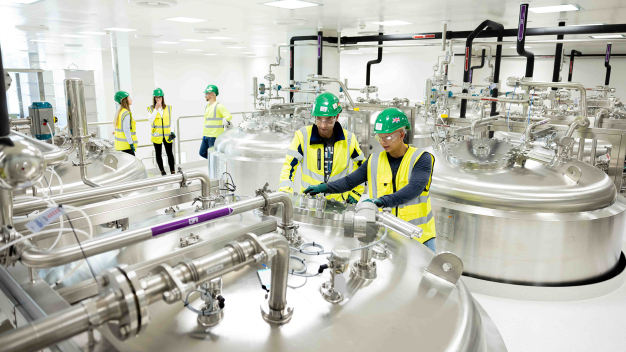
Die hochmoderne Biotechnologie-Anlage des Arzneimittelherstellers Teva in Ulm ist speziell für die Herstellung neuer innovativer Antikörper-Medikamente ausgelegt. © Teva Deutschland
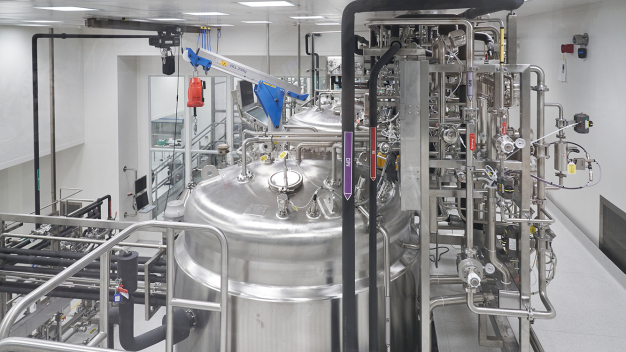
© Teva Deutschland
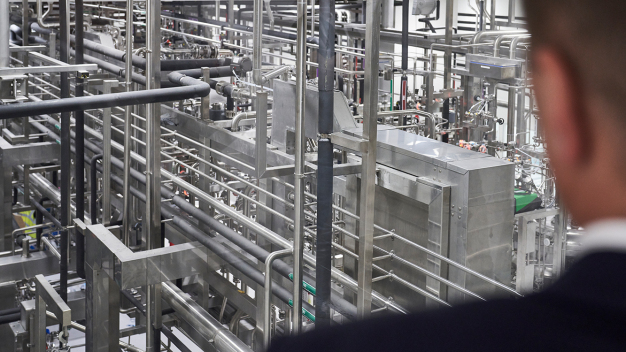
© Teva Deutschland
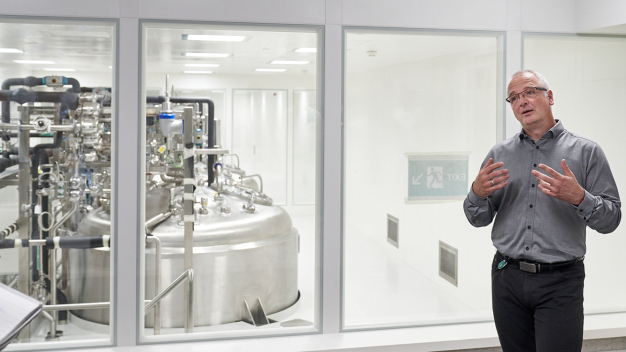
Presserundgang © Teva Deutschland
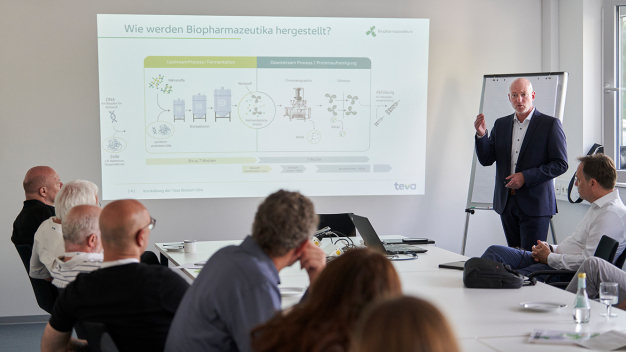
Stefan Fügenschuh, Vice President & Site General Manager Teva Biotech Ulm © Teva Deutschland
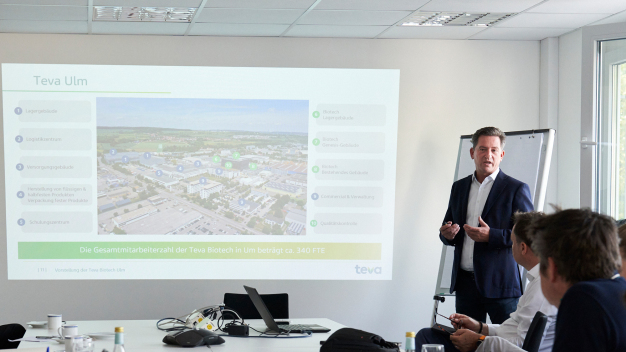
Bernd Hägele, Vice President BMSO Engineering Business Partner © Teva Deutschland
Es ist ein Projekt der Superlative: Die Ratiopharm-Mutter Teva investiert am Standort Ulm rund eine Milliarde US-Dollar in die biotechnologische Produktion. Ab 2025 sollen im Ulmer Donautal in riesigen Bioreaktoren Biopharmazeutika produziert werden. Diese Medikamente werden bei komplexen, teils lebensbedrohlichen Erkrankungen eingesetzt, etwa zur Behandlung von Krebs- oder Tumorerkrankungen oder bei Schmerzpatienten. Das auf Bau und Immobilien spezialisierte Beratungsunternehmen Drees & Sommer SE unterstützt Teva während der anspruchsvollen Bau- und Inbetriebnahmephase.
Von außen sieht das Gebäude mit dem Projekt-Namen „Genesis“ schon ziemlich fertig aus. Im Inneren laufen aber die letzten Vorbereitungsarbeiten auf Hochtouren, um die Anlagen abzunehmen und die Beschäftigten einzuarbeiten. Hier wird auch schnell klar, warum Planung und Bau so herausfordernd sind: „Die Herstellung von Biopharmazeutika ist sehr komplex und technologisch anspruchsvoll“, erklärt Stefan Fügenschuh, der bei Teva Deutschland die Biotechnologiesparte verantwortet. Mit simplen Tablettenpressen hat das nichts zu tun, denn die Produktion biopharmazeutischer Medikamente unterscheidet sich grundsätzlich von der Herstellung pharmazeutischer Arzneimittel. Biopharmazeutika sind biotechnologisch hergestellte Medikamente, für deren Produktion lebende Zellen oder Organismen eingesetzt werden.
„In der neuen Anlage ist alles perfekt aufeinander abgestimmt, das gesamte Gebäude ist nahezu vollständig digitalisiert und automatisiert“, so Bernd Hägele, Vice President Global Engineering Business Partner Teva. Genesis dient damit als Vorreiter und Blaupause für die nächste Stufe der Automatisierung bei Teva. Über 26.000 Messgeräte überwachen den Betrieb aufs Genaueste, insgesamt 16 Kilometer Edelstahl-Leitungen und rund 300 Kilometer Kabel ziehen sich durch die acht Stockwerke. Für einen effizienten Bauablauf hat sich Teva daher die Life Sciences-Experten von Drees & Sommer ins Boot geholt.
Einstieg im laufenden Projekt
Seit Ende 2019 unterstützt das Team von Drees & Sommer beim Bau des neuen Gebäudes und managt seither eine Reihe von Herausforderungen. In einem ersten Schritt prüften die Bauexpert:innen in einer detaillierten 360-Grad-Analyse das Projekt auf Herz und Nieren. Dafür wurden sämtliche Planungen, Prozesse und die gesamte Organisation durchleuchtet. Basierend auf dieser Analyse erarbeitete das Team Optimierungsvorschläge. „Für einen reibungslosen Bauablauf ist grundsätzlich ein klares Anforderungsprofil wichtig. Gemeinsam mit dem Bauherrn haben wir in einem ersten Schritt klare Entscheidungswege definiert und realistische Ziele vorgegeben, in welchem Zeit- und Kostenrahmen der Neubau fertiggestellt werden kann“, erklärt Jannik Grünenbaum, Projektteamleiter bei Drees & Sommer.
Dazu gehörte auch eine professionelle und transparente Organisation der Abläufe für über 1000 Unter-Systemen – etwa Fassade, Feuerwehraufzug oder Blitzschutz. „Außerdem haben wir den Informationsfluss zwischen den einzelnen Gewerken hergestellt, damit diese aufeinander abgestimmt werden können. In den Hochphasen hatten wir auf der Baustelle 16 verschiedene Unternehmen, über 100 Equipment-Lieferanten und über 1400 Arbeiterinnen und Arbeiter, die koordiniert werden mussten – das geht nicht ohne transparente Planung“, so Grünenbaum weiter. Gerade während der Coronapandemie war diese Koordination besonders wichtig.
Coronakrise erforderte Engpassmanagement
Neben projektspezifischen Rahmenbedingungen standen während der Pandemie dabei vor allem Aspekte wie Hygiene und Sicherheit im Fokus. Es wurden Wärmebildkameras zur Temperaturmessung und Lüftungsanlagen installiert, um das Ansteckungsrisiko möglichst gering zu halten. Die Arbeiten wurden in einen Zwei-Schicht-Betrieb umgestellt und der Samstag als zusätzlicher Arbeitstag eingeführt. „Im Vorfeld definierte Risikoszenarien inklusive entsprechender Handlungsanweisungen sind in solchen Fällen besonders wichtig, um eine verlässliche Planung zu haben“, berichtet Stefan Göstl, der als Associate Partner und Head of Chemicals & Life Sciences bei Drees & Sommer zahlreiche Fast Track-Projekte begleitet. Um etwa das Ausfallrisiko zu minimieren, konnten beispielsweise Redundanzen in den Ausführungstrupps pro Schicht aufgebaut werden.
Noch hat Teva die neuen Produktionsanlagen nicht in Betrieb genommen. Aktuell läuft die Qualifizierungs- und Inbetriebnahmephase. Danach folgen Probeläufe sowie die Abnahme der Anlage durch die zuständigen Behörden. Wenn Genesis voraussichtlich Ende 2024/Anfang 2025 mit der kommerziellen Produktion beginnt, werden dort rund 300 Mitarbeitende an der Herstellung der neuen Wirkstoffe arbeiten.
______________________________
F acts:
BIOTECH-PROJEKT GENESIS:
MEILENSTEIN FÜR DIE MEDIZIN VON MORGEN
ECKDATEN
> Baubeginn: 2017
> Fertigstellung: Ende 2024 /Anfang 2025
> Investment: rund 1 Mrd. US-Dollar in die biotechnologische Produktion am Standort Ulm
> 45.000 m2
> 300 neue Arbeitsplätze unter Vollauslastung
> Gebäudeart: Produktion, Reinraum, Büro
BESONDERHEITEN GEBÄUDE
> Hochautomatisches Anlagendesign auf dem neuesten Stand der Technik
> Zwei unabhängige Produktionslinien, parallele Herstellung unterschiedlicher Produkte
> 4 x 5.000 Liter Bioreaktoren (Linie 1)
> 2 x 15.000 Liter Bioreaktoren (Linie 2)
> Bis zu 7 Wochen Upstream-Prozess vom Auftauen der Zellbank bis zur Ernte
> Etwa 1 Woche Downstream-Prozess bis zur Abfüllung
> 26.000 Messgeräte überwachen Produktion & Gebäude
> 16 Kilometer Edelstahl-Leitungen
> 300 Kilometer Kabel
> 1.400 Arbeitskräfte, 100 Equipment-Lieferanten und 16 verschiedene Unternehmen zu Spitzenzeiten auf der Baustelle tätig
> Umfassendes Hygienekonzept während Baumaßnahmen zur Coronaprävention: Wärmebildkameras, Lüftungsanlagen, Zwei-Schicht-Betrieb
> 360-Grad-Analyse und laufende Reportings zum Projektstand
> Enge lokale bauliche Situation stellte hohe Anforderungen an Logistik
DREES & SOMMER-LEISTUNGEN
> 360-Grad-Analyse, Gesamtleitung Construction TEVA,
> Construction Management, Bauleitung auf Kundenseite ggü. dem EPCM-Contractor, Anti-Claim-Management, Nachtragsverhandlungen zu Bauzeitverlängerung mit EPCM-Contractor und Baufirmen, Brandschutz-Expertise, Reinraum-Expertise,
Fassaden-Expertise, Projekt-Kommunukations-Management, Datenmanagement

Drees & Sommer SE
Geisenhausenerstraße 17
81379 München
Germany
email: lifesciences@dreso.com
Internet: https://www.dreso.com/life-sciences