




- Floor
- Translated with AI
Tightness is mandatory!
Industrial hall floors must comply with the Water Resources Act
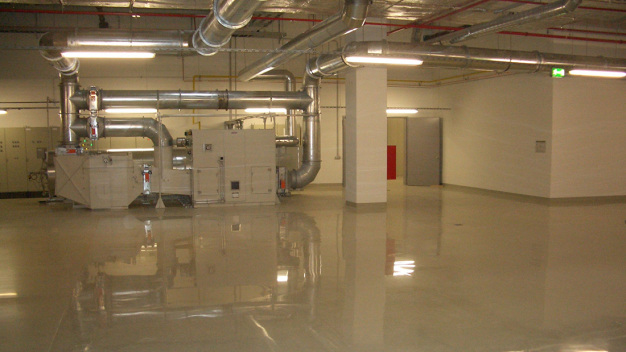
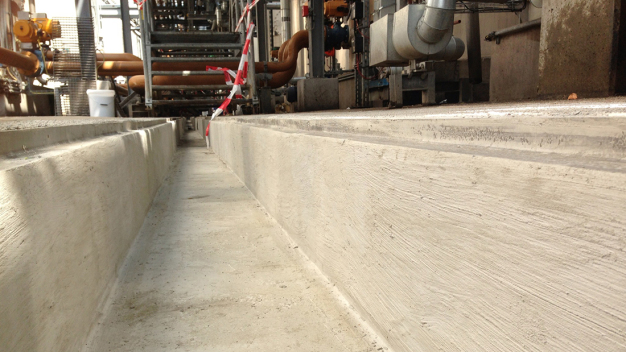
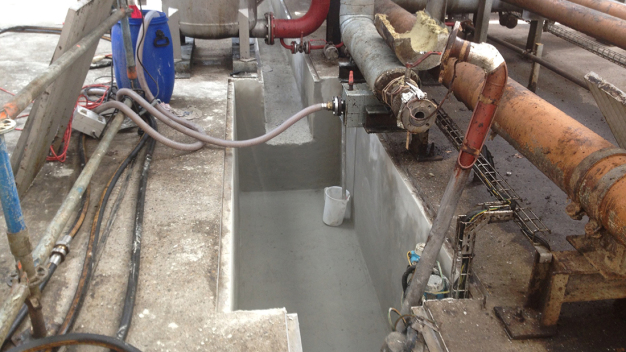
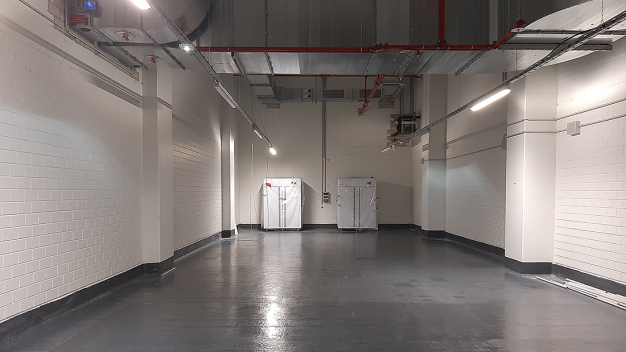
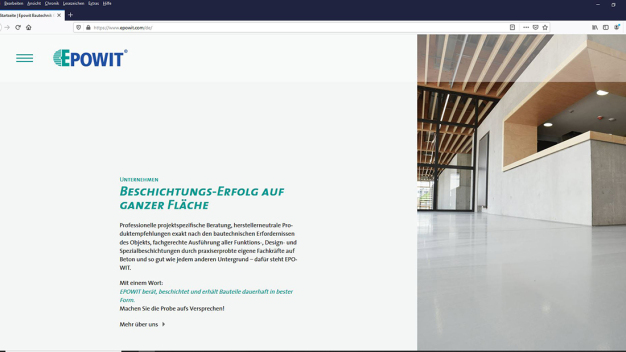

Concrete floors in production and storage halls are often subjected to extreme stress around the clock – whether from heat, cold, fumes, acids, oils, caustic solutions, or other substances. The weight of heavy machinery and high shelves also significantly impacts the building structure. The consequence: over time, cracks form; outbreaks and holes develop, becoming increasingly deeper and larger if not addressed early.
Dr. Jörg Rathenow, managing director of the company EPOWIT Bautechnik, which specializes in building protection with branches in Berlin, Munich, and Eichenzell near Fulda, warns of the danger that production-related contaminants can find their way through damaged floors into the ground: “Restoring compromised concrete components is never too early if you want to prevent consequential damages, preserve the building substance, and comply with the Water Resources Act.”
Legal situation clear
The Water Resources Act (WHG) requires industrial hall floors to be executed with special care and their condition monitored during use. In particular, concrete floor surfaces under so-called LAU and HBV systems must be regularly checked for tightness, because: storage, filling, and transshipment facilities (“LAU systems”) or manufacturing, processing, and use facilities (“HBV systems”) must comply with the “Ordinance on Facilities for Handling Water-Hazardous Substances.” This means that, for example, handling acids and caustic solutions in production or storage halls must ensure that nothing can seep through the floor into the groundwater – regardless of the age of the concrete components.
Nothing must leak through
Regularly checking concrete floors for tightness is therefore in the interest of every industrial company using production and storage halls. Both extensive areas and hard-to-see sections should be inspected. “Cracks, outbreaks from reinforcement cover, and voids are possible everywhere, caused by the impact of aggressive media or the pressure of weights,” reports EPOWIT managing director and building protection expert Dr. Jörg Rathenow, who is also an expert in sealing and WHG systems as well as a knowledgeable planner for concrete restoration.
Protection of the underside necessary
Just as oils, hydraulic fluids, etc., leaking from machines must not reach the groundwater, the ingress of pressurized groundwater into the hall must also be prevented. Cracks and holes in the base slab should be promptly and professionally sealed upon discovery; otherwise, there is a risk that infiltrated water, mixed with chemicals and other pollutants, will contaminate the soil when it flows back out. Excavation would then be unavoidable, as would operational interruptions during the reconstruction of contaminated components.
EPOWIT advises and executes
Ensuring acid and caustic resistance, mechanical strength, and maximum load capacity of concrete components is a task for building protection specialists. At EPOWIT Bautechnik, 30 experienced civil engineers and master builders analyze the specific building situation on-site and provide independent renovation recommendations. This also includes, if desired, the development of alternatives. The implementation is carried out by trained EPOWIT specialists with the necessary experience and skills in applying construction chemicals and surface protection systems. Project-specific inquiries are welcome at info@epowit.com.
EPOWIT Bautechnik – Building protection in top form
Founded in 1990 in Eichenzell, East Hesse, EPOWIT Bautechnik GmbH is a provider of professional building protection. The company's origins trace back to Zeiss Chemie and Otto Wittig KG, which developed their own products as early as the 1960s. From their merger, the company emerged, specializing in site-specific consulting and proper application, and is part of the Fulda-based WERNER Group (www.wernergrupppe.com).
EPOWIT is characterized by a distinctive way of thinking and working: at the start of each collaboration, EPOWIT considers the operational challenges that the respective client must meet in their industry. For example, in the case of industrial hall floors: for work in production and storage halls and other heavily used building areas subject to the Water Resources Act (WHG), EPOWIT offers maximum safety through needs-based, quickly applicable coatings.
Proven on large surfaces
The foundation is over 60 years of experience with practically all coating, sealing, and concrete restoration products available on the market. In short: EPOWIT knows which systems prove effective in practice over the long term. This guarantees customers optimal product and execution recommendations under nearly all conditions, even with tight schedules and budget constraints.
To implement projects effectively, the building protection specialist employs around 130 staff members at the Eichenzell, Munich, and Berlin locations. 30 of them are experienced civil engineers and master builders who understand how to professionally advise clients on all building protection issues and support architects and planning offices competently. The managing director of EPOWIT Bautechnik GmbH is Dr. rer. nat. Jörg Rathenow, Bürgermeister-Ebert-Str. 17, 36124 Eichenzell-Welkers.
EPOWIT Bautechnik GmbH
36124 Eichenzell
Germany



