


- Translated with AI
The rise of a cork manufacturer to the leading plastic producer
From chicken coop to cleanroom production

Josef Pöppelmann (pictured) founded the "Cork Factory Brothers Pöppelmann" in Lohne in 1949 together with his brother Hubert.
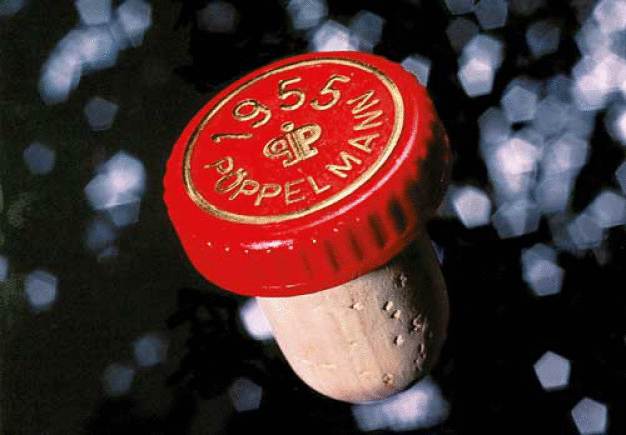
The machine-made handle cap for a cork marks the beginning of Pöppelmann's plastic range.
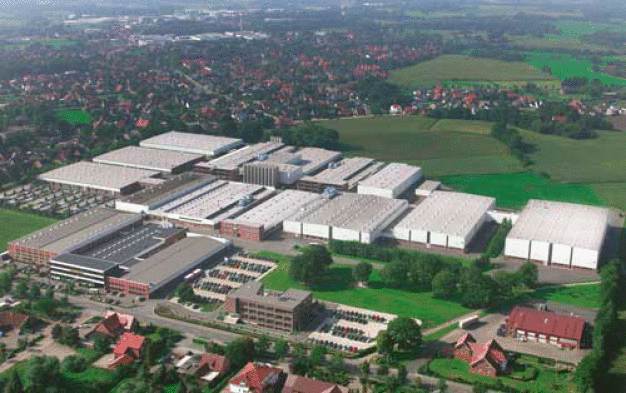
Today, Pöppelmann, with its four business divisions, is one of the leading plastic processors in the market.
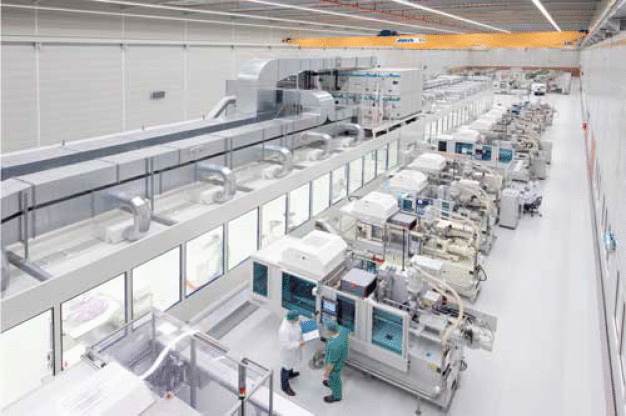
If necessary, Pöppelmann FAMAC also manufactures assemblies, functional parts, and packaging under the most modern cleanroom conditions.

Pöppelmann was awarded the TOP 100 seal in June and is thus one of the most innovative companies in Germany.

Engelbert Rechtien manages sales at Pöppelmann FAMAC.

Torsten Ratzmann has been the Chairman of the Executive Board of Pöppelmann since early 2016.
When the Pöppelmann brothers applied for permission to open a cork factory in February 1949 to the city administration of Lohne in the Lower Saxony district of Vechta, they hardly suspected what their venture would develop into nearly 70 years later: an international company with over 2,000 employees leading the plastics processing industry. Today, the company's extensive competencies also include the production of assemblies, functional parts, and packaging for the food and cosmetics industries as well as for the pharmaceutical industry and medical technology.
Anyone visiting Plant 3 of Pöppelmann in Lower Saxony quickly recognizes that the corporate group, with a total of more than 550 injection molding machines, deep-drawing systems, and extruders, is one of the most modern and advanced plastics processors in Europe. Here, the employees of Pöppelmann FAMAC® develop and produce assemblies, functional parts, and packaging made of plastics in a three-shift operation, meeting the highest standards of quality and cleanliness. The production of the FAMAC® injection-molded products is carried out according to the rules of Good Manufacturing Practice, or GMP.
For this purpose, FAMAC® has two cleanroom productions qualified according to DIN EN ISO 14644 Class 7 and Class C of the EU GMP guideline, with a total capacity of 800 m². A certified quality and hygiene management system provides additional security. Employees wear special protective clothing and are properly trained. Regular inspections also ensure particle and germ counts according to the implemented standards. "Especially for products for the pharmaceutical industry and medical technology, the highest requirements are placed on technology and quality from the start of component development to the approval of tool design — criteria that we reliably and always implement at FAMAC® in the best interest of the customer," says Engelbert Rechtien, who heads sales at FAMAC®.
At the beginning, there was a hand-cutting machine for bottle corks
As modern as Pöppelmann is today in plastics technology, the company had little to do with it at its founding in 1949: "The first products were cork stoppers made from cork oak, produced on a hand-cutting machine for bottle corks," explains Torsten Ratzmann, Chairman of the Management Board at Pöppelmann. "For the young entrepreneurs Joseph and Hubert Pöppelmann, an old chicken coop on the family farm in Brockdorf near Lohne was converted in early summer 1949." For a fee of five Deutsche Marks, the two brothers submitted an "application for permission to open a cork factory" to the Lohne city administration in February.
The still young company entered the plastics era only six years later with the purchase of an injection molding machine at the "German Industrial Fair Hannover." This laid the foundation for today's four business fields. In subsequent years, toolmaking and presence in the international plastics market were strengthened. Following the introduction of the KAPSTO brand program for caps and stoppers, the first technical plastic injection-molded parts were introduced with the K-TECH program, and a few years later, with the TEKU program, plastic plant pots. "The company steadily expanded its innovative capacity and tailored its plastic products to the diverse needs of various industries," summarizes Ratzmann.
High-quality plastic solutions at economical prices
In 1998, FAMAC® completed the field of activity of plastics specialists as the fourth business area. In addition to packaging and functional parts made of thermoplastics for medical and pharmaceutical applications, the range also includes the manufacturing of plastic products for the food and cosmetics industries.
Alongside a broad standard program, Pöppelmann FAMAC® also offers custom solutions at economical prices. "Customers receive everything from development to series production from a single source and benefit from the resources, partners, and contacts of the Pöppelmann Group," explains Rechtien.
The company's first cleanroom, established in 2004 at Plant 1, was 60 m² and allowed for the connection of eight machines. In 2011, FAMAC® commissioned a larger cleanroom with 400 m² of space and the capacity to connect 25 machines. In 2015, another cleanroom of the same size was added, deliberately set up in a different hall to offer customers maximum security regarding contingency. "The expansion of cleanroom capacities shows that FAMAC® customers value the high quality at Pöppelmann FAMAC®," says Rechtien.
Flexible use of injection molding machines
The injection molding machines produce from the outside into the cleanroom. The necessary tools are manufactured in a special area of Pöppelmann's mold construction. This moldmaking has been responsible for the design and construction of injection molding and thermoforming tools across all business areas for over 50 years and now comprises around 130 toolmakers and tool designers. The range of injection molds extends from standardized contour inserts to multi-cavity tools.
Setting new trends through innovations
Through the use of new technologies, Pöppelmann regularly introduces innovative packaging solutions to the market. It is not uncommon for an award-winning solution to emerge at the end of the development and design process. That Pöppelmann is among the innovation leaders of German medium-sized companies is also demonstrated by the "TOP 100" seal, which the plastics specialists from Lohne received on June 23 in Essen from compamedia and mentor Ranga Yogeshwar. In the independent selection process, the family-owned company was particularly convincing with its innovation climate and innovation success. The competition, held for over 20 years, is the only one in Germany that assesses not individual inventions but the innovation management of companies — and thus their future viability.
Regionally rooted — globally positioned
As during the times of Joseph Pöppelmann, who passed away in 1983, continuous progress and innovative thinking remain core components of the company's philosophy today. With subsidiaries and branches in France, Spain, England, Denmark, Belgium, and the Netherlands, Pöppelmann is present throughout Europe in plastics processing. The company's solid grounding and loyalty to Lohne have remained unchanged.
The company has been largely training its skilled workers internally since 1956. "In times of increasing automation, it is becoming ever more important to promote and develop highly qualified personnel within the company," emphasizes Torsten Ratzmann. With over 170 apprentices currently, Pöppelmann is one of the largest training companies in the Oldenburg Münsterland region. Over the past years, the company has trained more than 1,200 young people in various professions. "Like all Pöppelmänner and Pöppelfrauen, they contribute significantly to the success of the corporate group worldwide," says the chairman of the management board.
Pöppelmann GmbH & Co. KG
49378 Lohne
Germany