- Translated with AI
Oguz Özkeser
Safe and effective disinfection of sterile facilities through the air
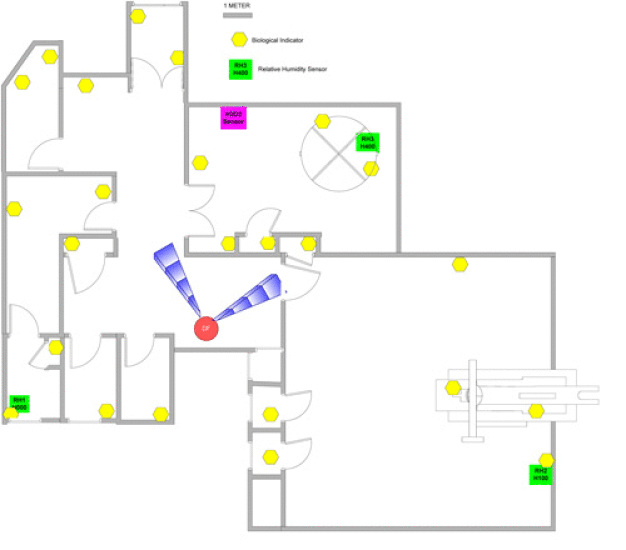
Fig. 1: Structure of the area and location of the various elements
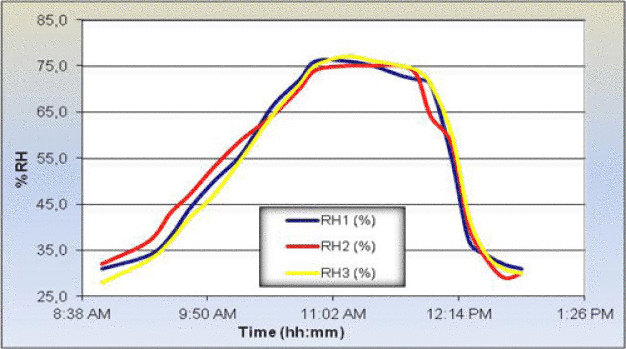
Fig. 2: Measured humidity (three sensors) during disinfection
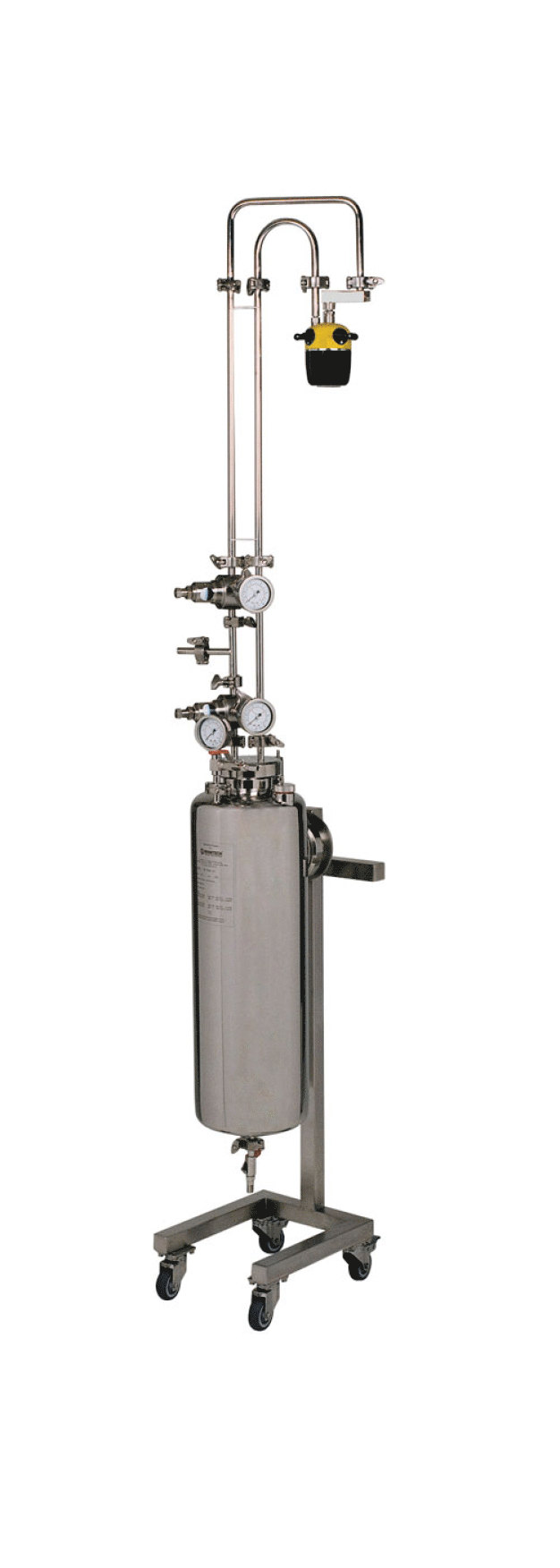
Minncare DryFog System

Oguz Özkeser
In cleanroom disinfection, it is a routine process in sterile pharmaceutical manufacturing facilities. In addition to a prescribed daily low-level disinfection, the FDA (1) requires a comprehensive disinfection program that also includes the regular application of a sporicidal disinfectant according to a written plan. Furthermore, the United States Pharmacopeia (USP) 29 NF-24 states that the only effective sporicidal disinfectants are aldehydes, bleach, ozone, hydrogen peroxide, and peracetic acid.
In reality, only a few of these chemicals can be used because they either have toxic, carcinogenic, and/or mutagenic effects (aldehydes, bleach, ozone) or are dangerous at the high concentrations needed for effective sporicidal activity. Peracetic acid is one of the few sporicidal technologies that performs this task safely and effectively. The main reason for this is that peracetic acid (PES) is already an effective sporicide at very low concentrations (less than 1%).
The use of a cold disinfectant
The term "cold disinfectant" is increasingly used in facilities of the pharmaceutical industry today. According to USP, a "cold disinfectant" is approved for the complete destruction of all microbiological life. This type of chemical action goes beyond that of a simple sporicide.
Cold disinfectants such as Actril® and Minncare® Cold Sterilants (Medivators) are highly effective bactericides, fungicides, mycobactericides, sporicides, and virucides. The use of peracetic acid (PES) technology and its raw materials in pharmaceutical quality results in minimal residues and the lowest traces of heavy metals. Actril® Cold Sterilant is used for manual disinfection of work surfaces and equipment and can be combined with a cleaning agent to achieve higher efficacy against biofilms. Minncare® Cold Sterilant is used for sterilizing medical devices and disinfecting high-quality, sensitive water treatment systems and is also approved for aerosol-based disinfection of cleanrooms when used with Minncare® Dry Fog™ technology.
The Minncare® Dry Fog™ concept
Minncare® Dry Fog™ has offered a very good and unique concept for disinfecting surfaces in demanding areas for over ten years.
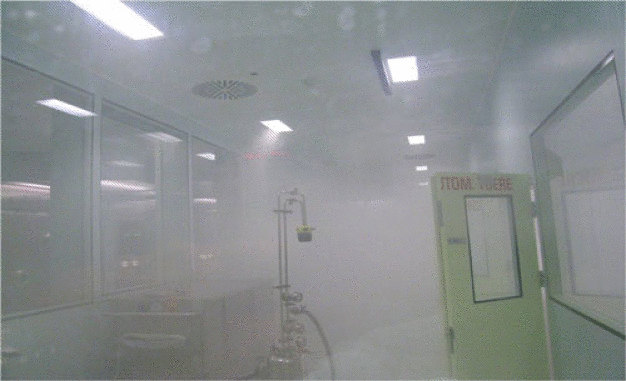
The autoclavable system generates a fog of extremely fine droplets with an exact diameter of 7.5 microns. The droplets bead off surfaces without truly wetting them (dry fog effect), and the Minncare® vapor phase disperses quickly and effectively throughout the entire room. The size of the droplets is the key factor: larger droplets would not remain airborne long enough to disperse properly and would condense, increasing the risk of corrosion and prolonging drying time. Conversely, too small droplets could penetrate the paint layers of walls or equipment and cause permanent damage.
The system uses a simple compressed air source to generate vapors that neither heat the liquid nor require the use of a very complex or computer-controlled device.
The Minncare® Dry Fog™ concept is synonymous with simple application, maintenance, and verification. The system is flexible for room volumes from 20 to 1,000 cubic meters. A single system can also disinfect multiple rooms in a facility with a lead time of a few hours instead of days.
Minncare® Dry Fog™ was developed in collaboration with companies for use in the pharmaceutical industry and in accordance with documentation, certification, qualification, and traceability standards applicable in the pharmaceutical sector. Over 600 of these systems have been installed worldwide in FDA-approved pharmaceutical manufacturing facilities.
Case Studies
Two representative cases were selected from hundreds of users in sterile pharmaceutical facilities, pharmaceutical research laboratories, biotechnology production sites and laboratories, medical device manufacturing plants, and other controlled production environments.
Case Study 1: Suitability of Minncare® Dry Fog™ for a pharmaceutical production cleanroom
Area (Fig. 1):
An area with nine rooms (Class A, B, and C) with a total volume of 653 cubic meters. The rooms are fully equipped with standard devices: filling lines, carts, cabinets, and various instruments.
Setup of the Minncare® Dry Fog™ system:
A Minncare® Dry Fog™ system with two nebulization nozzles is installed at a strategic point to spray in two directions and distribute the vapors evenly.
Diffused solution:
- Based on the preformatted Minncare® Dry Fog™ Excel calculation table and with an initial relative humidity of 35%, the amount of Minncare® used was 1,345 ml diluted in 10,094 ml of WFI water.
- Diffusion time: 122 minutes
- Contact time: 60 minutes
- Ventilation time: 50 minutes
- Total process duration: 232 minutes or less than four hours.
Control of vapor disinfection:
At various locations in the room, 6-log bioindicators from B. atrophoeus (subtilis) (Apex stainless steel carriers in a Tyvek® cover) were placed (yellow dots in Fig. 1).
Three sensors measuring relative humidity at different points monitored the humidity throughout the disinfection process. The humidity curves indicate the dispersion of the vapors (Fig. 2).
Unlike usual procedures, an H2O2 sensor was additionally used to measure the H2O2 concentration during the process.
Control of chemical residues:
After disinfection, the concentration of residual H2O2 and peracetic acid in the air could be easily measured using the Dry Fog™ vapor detection set and a portable electronic H2O2 meter.
Results after less than four hours of disinfection including ventilation:
Microbiology: All bioindicators tested negative after seven days of incubation, confirming a reduction of microbial load by 6-log at each location.
Recondensation: Recondensation was observed only on the floor near the diffusion device. Elsewhere, the maximum relative humidity was 75% and below the dew point.
Maximum H2O2 concentration: In the measured area, it was 102 ppm. This demonstrates that even with dispersion of only very small amounts of chemicals, an effect can be achieved without the associated problems of corrosion and residues.
Corrosion: No traces of corrosion were found on large surfaces, devices, or instruments.
Residues: No residues were detected on surfaces. When staff entered the room to remove bioindicators from the equipment, air controls showed concentrations of less than 1 ppm H2O2 and 10 ppm peracetic acid. After disinfection, surfaces do not need to be cleaned or wiped.
Case Study 2: Uncontrollable contamination problem in a pharmaceutical production area
Location:
New cleanroom facility in Southern Europe, 212 square meters
Problem:
Rooms of Class A, B, and C are outside the specified limits due to persistent microbiological contamination. Identified microorganism: Chrysonilia Sitophila.
History:
On-site staff and external service providers carried out various measures with different biological decontamination technologies, but without significant success:
- Manual surface disinfection: 4 different biocidal products with various formulations, including isopropyl alcohol and chlorine.
- Biological air decontamination:
- 30-50% formaldehyde: residual microbiological contamination still higher than allowed for reclassification
- Ozone: applied three times to the rooms and the entire ventilation system; contamination returned after one week
- Vaporized 33% hydrogen peroxide: the effect was insufficient for reclassification of the area.
The situation seemed hopeless; after substantial expenses for biological decontamination, no promising solution was in sight.
Investigation by Mar Cor Purification:
To assess the situation and identify possible sources of contamination, an inspection was conducted. It was found that a neighboring factory to the north manufactures wooden furniture. The new cleanroom was under construction during the summer. Weather conditions included temperatures around 35°C and 80% relative humidity. Additionally, strong winds from the north blew during this time. Lastly, the existing HEPA filters are made of cellulose. All these points led to a reconstruction of the facts: the new cleanroom was contaminated during construction by the neighboring company. It was completely contaminated with wood dust. The mold Chrysonilia Sitophila originates from wood and could thrive on the cellulose-based HEPA filters.
Measure:
Manual disinfection with Actril® Cold Sterilant:
Using the double-packaged cleanroom version of Actril, every hard-to-reach area was systematically sprayed by hand: wall/ceiling corners, equipment and table legs on the floor, around doors, and each accessible HEPA filter.
Biological air decontamination:
Using Minncare® Dry Fog™, each room was systematically fogged. The procedure was adapted to ensure that the vapors reached all parts of the ventilation system, including each HEPA filter, at an appropriate concentration. The process was repeated twice.
Results:
The microbiologist confirmed several days later that all tests were negative, and several weeks later, no recontamination was detected. The rooms officially met the standards and were reclassified.
Conclusion
The peracetic acid technology offers a good and safe solution for disinfecting cleanrooms in sterile pharmaceutical facilities. It can be used in a ready-to-use form for manual wiping and surface spraying. The technology can also be combined with the Minncare® Dry Fog™ biological decontamination system for air disinfection.
In any case, PES technology meets FDA and USP requirements regarding efficacy and periodic bacterial spore destruction.
Last but not least, peracetic acid can be applied in very low concentrations, and with proper handling, it is completely safe for users, surface materials, equipment, and the environment.
Hundreds of users in the pharmaceutical industry have tried this themselves and use this technology daily.
(1) Guidance For Industry, Sterile Drug Produced by Aseptic Processing Current Good Manufacturing Practice September 2004 Pharmaceutical CGMPs Section x.
Laboratory Controls Part A. Environmental Monitoring Point 3. Effectiveness of disinfection.

VWR International GmbH
Hilpertstraße 20a
64295 Darmstadt
Germany
Phone: + 49 6151 39720
email: info.de@vwr.com
Internet: https://de.vwr.com