


- Injection moulding
- Translated with AI
Plastic drives progress forward
In medicine, plastic is a key material that is processed into precise, demanding components through injection molding.
Modern diagnostics with lab-on-a-chip systems enable test results at the point of care and save the time-consuming trip to the central laboratory. (Copyright: Contentway GmbH)
Whether in rapid test systems for pathogens, auto-injectors, or laboratory materials: high-performance plastics are indispensable in medicine and life sciences and continue to drive medical progress forward. Two applications exemplify modern diagnostic products that are now made possible through specialized plastic injection molding.
Plastic components for cell therapy
A growing branch is cell therapeutic medicine. Pharmaceutical companies are working on the production of gene-modified cells for research and the treatment of serious diseases such as cancer or genetic disorders. Modern procedures like electroporation, where the cell membrane is temporarily permeabilized by an electrical impulse to introduce molecules (e.g., DNA, RNA, or proteins) into the cell nucleus, rely on specialized materials and components for cell manufacturing.
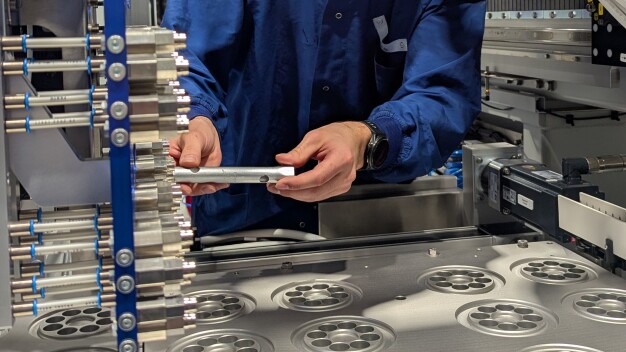
The contract manufacturer RKT Rodinger Kunststoff-Technik produces multi-well plates, consisting of tiny multiple cavities, along with cartridges needed for therapy, for a pharmaceutical company. In the multi-well plates with up to 384 cavities, experiments with pipetted cell material are conducted, while larger quantities of liquid containing cell material are processed in the cartridge through flow procedures to produce a sufficient amount of modified cells for therapy. The manufacturing process is particularly demanding in two-component injection molding to incorporate both a transparent and a conductive plastic, through which the electrical impulse during electroporation can be delivered. Metal pins, precisely integrated into the components, serve as connections. All manufacturing steps are carried out under ISO-7 cleanroom conditions.
Mini-laboratories for rapid pathogen detection
Modern diagnostics with lab-on-a-chip systems enable point-of-care testing results, saving the time-consuming trip to the central laboratory. These mini-laboratories on a disk or cartridge with various chambers and microchannels contain different biochemical substances and solutions. After sample input (e.g., saliva or blood), a miniature laboratory process takes place, leading to results within hours or minutes.
In the production of these microfluidic tools, high precision is essential. This begins with the design of narrow channels, extends to tool manufacturing using specialized processes to create microstructures, and includes monitoring of precise injection molding parameters. Additional process steps involve liquid handling of solutions, incorporating sensitive reagents, or the final thermal bonding, where the cartridge is securely sealed through hot embossing.
Conclusion
Innovation in diagnostics and life sciences relies on high-performance plastics, which, through specialized manufacturing processes, enable new testing methods, research approaches, and therapeutic solutions.
Contentway GmbH
20457 Hamburg
Germany