



- Building technology
- Translated with AI
Dipl.-Wirtsch.-Ing. (TU) Jens Amberg
Overpressure maintenance in cleanrooms or mini-environments
A practical-oriented overview of a seemingly well-known subject area
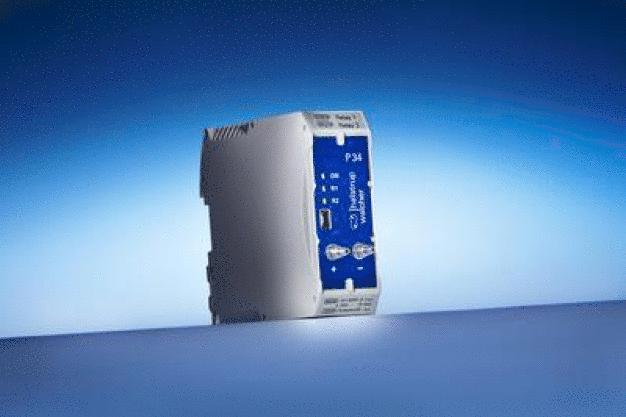
Messumformer P 34
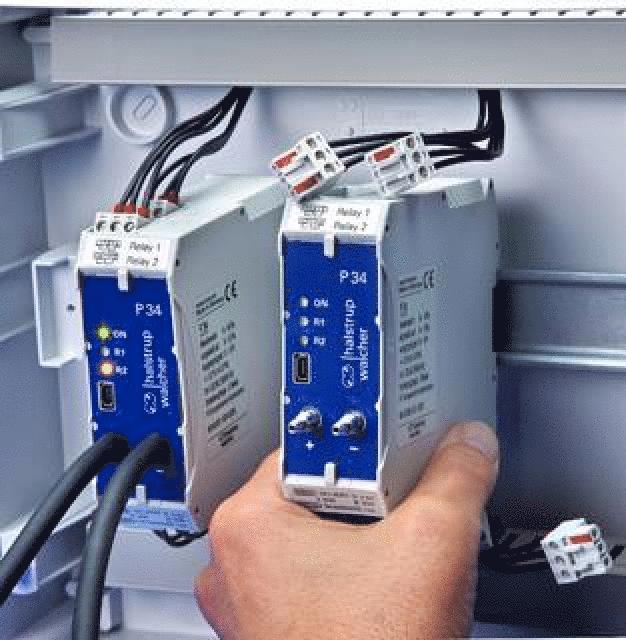
Installation P34
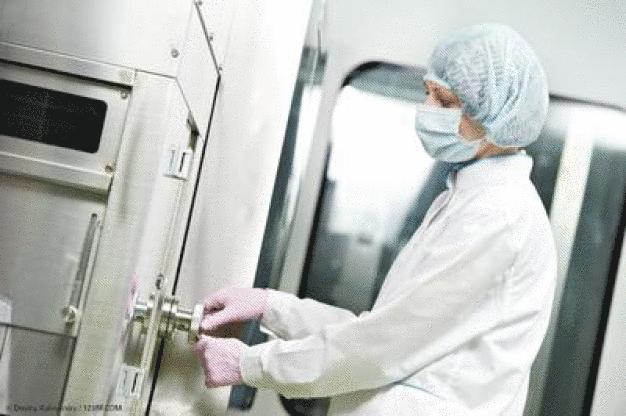
In the cleanroom
The requirements for operating cleanrooms are constantly increasing. A typical example of this is overpressure maintenance. Essentially, it involves maintaining stable pressure cascades to prevent contaminated air from entering.
Flow Transmitter P 34 Control Cabinet Design
The demands on cleanroom operation are continually rising. A typical example of this is overpressure maintenance. Essentially, it involves maintaining stable pressure cascades to prevent contaminated air from entering. In facilities with multiple cleanrooms (or in systems with several mini-environments), zones with multiple pressure levels are created to protect the most sensitive areas most effectively.
Years ago, it was often sufficient to demonstrate to an auditor the pressure measurement using a large, round pressure gauge. Today, much more precise methods are required. This is justified, as uncontrolled contamination can compromise the final product quality, and in extreme cases, pose health risks.
The obligation to continuously monitor overpressure as described in standard DIN EN ISO 14644 cannot be met simply by installing indicator devices. If the overpressure drops below critical thresholds, there is no regulating countermeasure. At the same time, it is unrealistic to expect operating personnel to be nearby at such times and to take corrective action. Therefore, it has become standard practice to perform differential pressure measurement continuously (i.e., with a flow transmitter), with its signal constantly fed to a control system.
The market offers both "static" differential pressure transmitters and "dynamic" solutions for this application. The latter are based on the overflow principle, meaning a small amount of air flows from one room into the next; the flow rate is measured and the differential pressure is derived from it. This "dynamic" method has two major disadvantages:
1. Dynamic measurement requires airflow. This results in air exchange between rooms. However, many cleanrooms are intended to be supplied solely with high-quality filtered supply air to avoid cross-contamination. Flow transmitters with static sensors do not have this problem.
2. When more than two cleanrooms are to be controlled, it must be ensured that pressure differences are maintained in stable steps. With the dynamic measurement principle, only the differential pressure between a room and its neighbor can be determined; there is no common pressure reference point ("pneumatic zero potential"). Static differential pressure transmitters ensure this optimally, for example, by pneumatically connecting the negative pressure ports of all neighboring transmitters.
However, even with "static" differential pressure transmitters, the details matter. It is not a "measurement child's play" to reliably measure tiny pressures below 30 or even 10 Pascals over years. For comparison: normal atmospheric pressure is about 1 bar, equivalent to 100,000 Pascals. Ten Pascals is only a tiny fraction of our ambient pressure! Most "static" differential pressure transmitters have two weaknesses in this measurement range:
1. The long-term stability of the measurement span is not guaranteed. For example, a measurement value of around 10 Pascals can drift over time by several Pascals.
2. Zero point stability is not guaranteed. This means that over time, the zero signal (a differential pressure of zero Pascals) can drift, often by 1 to 2 Pascals per year.
The reason: many sensors used by suppliers do not meet the high demands of such small pressure ranges. Based on forty years of experience in this measurement field, the measurement technology specialist halstrup-walcher offers mature solutions for both issues. For example, decades of optimized membrane design achieve world-class stability of the measurement span. Simultaneously, solenoid valves ensure that the zero point is always held precisely. This is achieved through automatic, regular "zeroing" with solenoid valves. As a result, every measurement remains absolutely reliable even after years.
Until a few years ago, a trend in cleanroom measurement technology was the use of so-called "panels" with integrated sensors. These panels are embedded in the cleanroom wall and display overpressure as well as climate data such as temperature and humidity, with pressure and often other parameters measured directly at the panel's installation site. Today, this instrumentation is used less frequently. The reason is that it is more advantageous to position sensors elsewhere than on the panels. For example, humidity and temperature are preferably measured in the exhaust air, where the average room climate values are captured. At the same time, the differential pressure is better installed in a nearby control cabinet rather than directly behind a wall panel.
Mounting differential pressure transmitters in a control cabinet offers two advantages:
1. The aforementioned "pneumatic zero potential" (to maintain clear pressure steps across multiple zones) is very simple to implement by mounting all transmitters of adjacent rooms directly next to each other in the cabinet. A short tube connection between neighboring cabinet transmitters already provides the same pressure reference.
2. Calibration (which is often an annual routine in many cleanrooms) takes place outside the cleanroom, and all transmitters are optimally arranged side by side for calibration. This saves significant time.
When selecting the right differential pressure transmitter for cabinet mounting, professional cleanroom installers ensure a compact design, ideally as a narrow "disk module," so many devices can be installed side by side. Besides the size of the pressure transmitter, the accuracy must also meet the requirements (at least 0.5% of the end value, or even 0.2% for very critical applications). Wiring and module exchangeability in case of service are also important criteria for choosing the right pressure transmitter.
The new differential pressure transmitter P 34 for cabinet mounting by halstrup-walcher perfectly meets all three requirements:
• It guarantees top-class accuracy data (highly stable membrane, automatic zeroing), even for very small measurement ranges in the Pascal range.
• Its extremely compact dimensions require only minimal space in the cabinet.
• The cables are connected via coded, non-interchangeable terminal blocks, ensuring quick and error-free installation and module replacement.
Another feature demonstrates that the P 34 is designed by practitioners for practical use: the measurement value can be read out. This allows building management systems and monitoring systems to receive the measurement signal independently of each other.
As initially stated: The demands on cleanroom operation are continually increasing. A good reason to rely on manufacturers who meet these requirements with suitable cleanroom concepts when choosing components.
halstrup-walcher GmbH
79199 Kirchzarten
Germany