



- Translated with AI
Dipl.-Ing (FH) Jürgen Luft
Leakage testing of containments
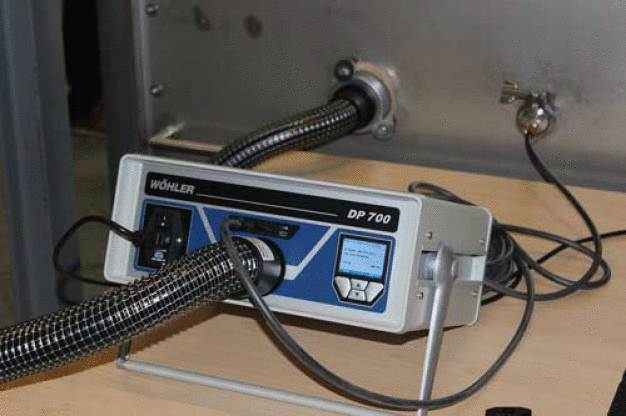
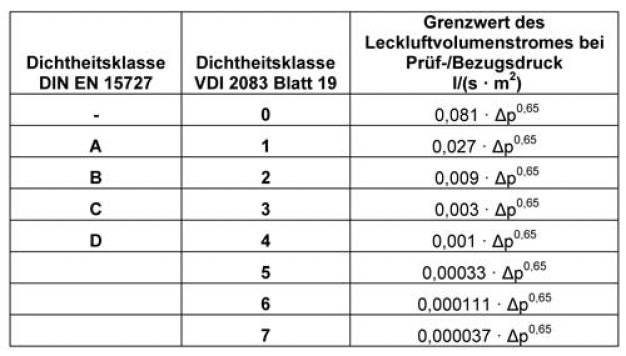
Figure 1
The demand for cleanrooms is steadily increasing across various industries. Consequently, the need for testing to verify compliance with user requirements (qualification), especially regarding airtightness, is also rising. The draft of VDI 2083 Sheet 19 (submission deadline until March 31, 2017), published in October 2016, titled “Cleanroom Technology - Airtightness of Containments - Classification, Planning, and Testing”, introduces a standardized definition and testing method for room airtightness, emphasizing a holistic approach. In addition to recommendations for selecting room airtightness classes for different applications, it provides guidance for planning and executing cleanroom envelope and airtightness testing.
The VDI guideline applies to all rooms where a positive or negative pressure relative to the environment is required during operation to meet specific safety objectives. The classification and testing of room airtightness described in VDI 2083 Sheet 19 refer to the definitions in DIN EN 15727, a standard from the “Building Ventilation” sector, which deals with air ducts and duct components. DIN EN 15727 defines the limits of air permeability for four airtightness classes A to D, which correspond to room airtightness classes 1 to 4 in VDI 2083 Sheet 19. Furthermore, VDI has defined additional airtightness classes.
Air permeability is defined as the measured leakage airflow volume, related to the envelope area or the gas-separating airtightness plane of the containment. (see Figure 1)
Airtightness tests can generally be performed using the pressure change method (pressure drop or pressure rise test) or the constant pressure method (maintaining a pressure and measuring the volume of air that needs to be supplied). The VDI guideline focuses exclusively on the latter pressure maintenance test. It provides detailed instructions for testing an entire system, a subsystem, or individual components.
For rooms with test pressure differences of ≤ 100 Pa, multiple measurement points should be recorded and graphically represented as a differential pressure-volume flow diagram. For rooms with test pressure differences > 100 Pa, a simplified test procedure with a single-point measurement may be performed. The guideline also includes a table with general descriptions of measuring devices for airtightness testing, depending on the expected leakage airflow volume.
For the direct measurement of leakage airflow volume recommended in the guideline, compact measuring devices suitable for a wide measurement range are used. These devices integrate the test fan, a direct airflow volume display, and data analysis. Wöhler Technik GmbH offers the Wöhler DP 700, a user-friendly measuring device. It can be used with a measurement range up to 55.00 l/s, with an accuracy of ± 0.0009 l/s or 5% of the measured value, and a maximum test pressure of ± 7000 Pa.
The straightforward operation with user guidance or expert mode, along with immediate graphical display of the leakage airflow volume during a single-point test based on 1013 hPa and 20 °C, enables quick execution of initial qualification tests or recurring inspections of rooms and individual components.
Wöhler Technik GmbH
33181 Bad Wünnenberg
Germany