



- New building
- Translated with AI
Industrial construction of the future
Erbe Elektromedizin GmbH is opening a new industrial building for the development and production of medical devices in Rangendingen. io was the general planner of the 25,000 sqm new construction.
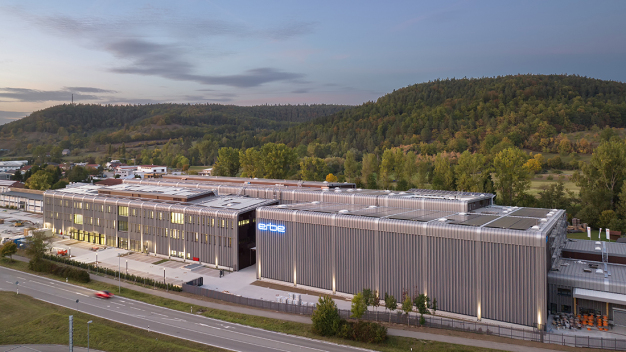
New production site of Erbe in Rangendingen (Copyright: Erbe Elektromedizin GmbH)
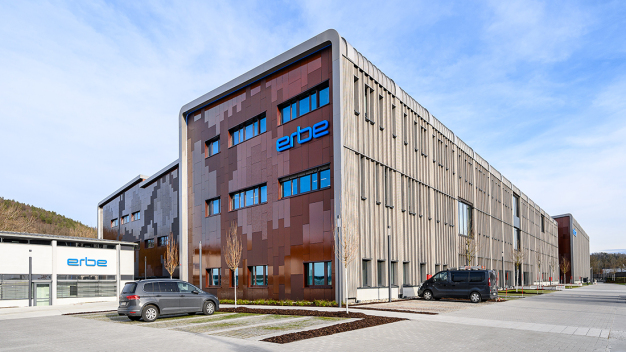
View from the front of the new production site of Erbe in Rangendingen. (Copyright: Erbe Elektromedizin GmbH)
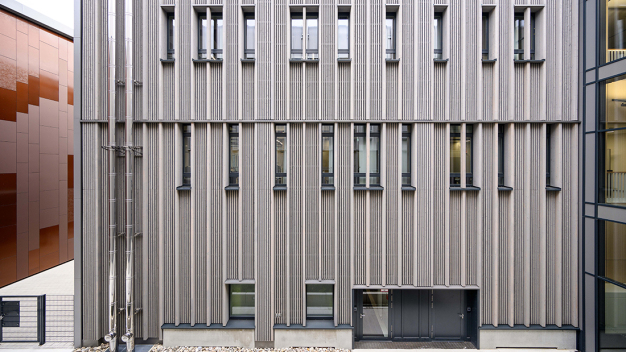
Wooden facade of the new production building (Copyright: Erbe Elektromedizin GmbH)
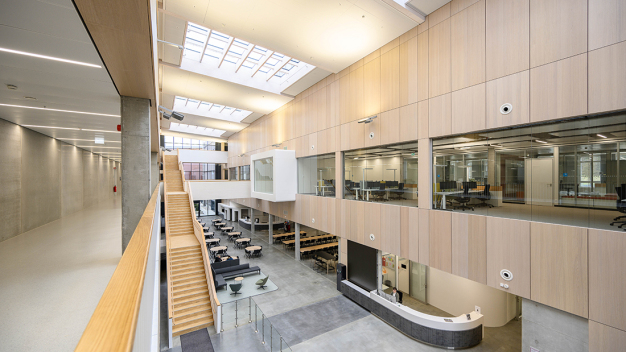
View of the reception, the atrium, and the office workplaces in the new production building. (Copyright: Erbe Elektromedizin GmbH)
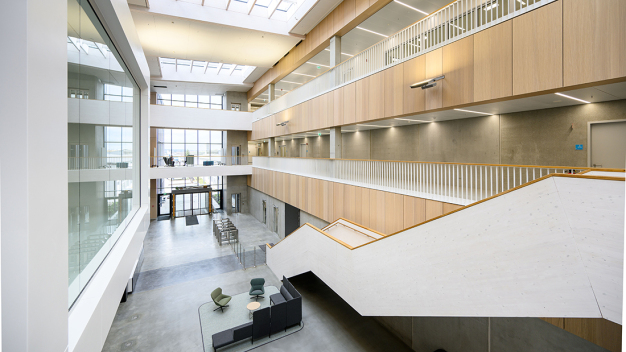
View of the entrance and the atrium in the new production building. (Copyright: Erbe Elektromedizin GmbH)
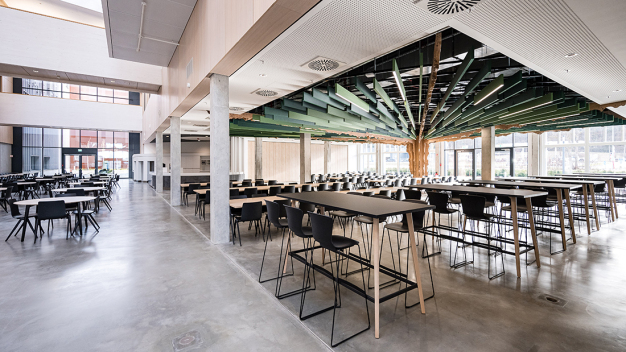
View of the canteen with tree in the new production building. (Copyright: Erbe Elektromedizin GmbH)
Last Friday, Erbe Elektromedizin GmbH invited builders, politics, business, and press to the opening of their new building in Rangendingen. Among the 250 guests present was FDP Federal Chairman Christian Lindner as the guest speaker on stage.
The 25,000 sqm industrial building of the medical technology company combines production and product development with logistics and administration, as well as a modern canteen, and offers space for up to 500 employees. The project started in 2019 in collaboration with the consulting and planning firm io from Heidelberg. As the general planner, io took over the site planning, process and logistics planning, as well as kitchen and cleanroom planning.
“This building here in Rangendingen is our site for instruments. They are developed here, manufactured — and shipped from here to the whole world. This is the largest single investment we have made in our over 170-year company history,” says Christian O. Erbe, Managing Director of Erbe Elektromedizin, at the ceremonial opening of the new building in Rangendingen. Builders, neighbors, as well as representatives from politics, business, and press, had the opportunity to tour the new production facility. In addition to the celebration, the new premises were introduced through a guided tour by the planning and construction team. The atrium on the ground floor, where the celebration took place, resembles a “movement corridor” that quickly connects all departments. It is designed as a lively communication space and is therefore open to neighbors and guests. The same applies to the company restaurant — the “regulars’ pub,” in the center of which stands a wooden tree whose branches extend over the tables. “The new building not only exudes friendliness: it is an invitation,” says Jeremy Hotchkiss, partner and design lead at io.
Industrial construction combines all aspects of sustainability
“In realizing this new building, we placed particular emphasis on ecological, economic, and social sustainability, thus aligning with several goals outlined in our corporate strategy,” emphasizes Christian O. Erbe.
The building was mainly constructed using timber. Erbe deliberately chose wood as a building material and for energy efficiency at its second headquarters. It is one of the first industrial buildings in Germany that meets the requirements of the KfW Efficiency House Standard 40 Plus — consuming at most 40 percent of the primary energy required by comparable buildings. The 2,800 photovoltaic modules on its roof, with a capacity of about one megawatt, produce around 610,000 kWh of electricity annually. The remaining energy needs are covered by a combined heat and power plant fueled by biogas.
“Both in architecture and logistics, as well as cleanroom and kitchen planning, we combine functionality, design, and sustainability within a holistic concept in line with our general planning // plus approach. This makes this industrial building a lighthouse project both energetically and architecturally,” says Thomas Kilimann, Managing Director of io.
Wood as a supporting element
According to its conceptual idea, the new industrial complex is an effective part of its surrounding nature. The architecture of the new building was implemented using resource-conserving and homogeneous construction methods. Wood and wood-based materials are used in the roof structure, facade, and interior finishes, shaping the character of the building. The interface between wood, concrete, and prefabricated parts posed a particular challenge in planning for both architects and engineers. The energetically high-quality building envelope reduces the annual operating costs for thermal energy by 120,000 euros.
Compact layout for smooth material flows
Among the focuses of io’s planning were short transport routes, seamless material and personnel flows, and a compact layout on a narrowly sized plot of land.
One of the most challenging aspects was the realization of the ISO 8 cleanroom according to DIN EN ISO 14644-1 within a timber construction. Specific requirements for hygiene, airtightness, and climate control are necessary for the production of medical devices. The cleanroom requires smooth, dust-free surfaces, a controlled high air exchange rate, and a specific overpressure concept to protect the products. The production area can be expanded at any time.
The heart of the new logistics center is the AutoStore small parts warehouse, through which most customer orders as well as internal production supplies are processed. With over 20,000 containers, it integrates perfectly into the building structure. Flexible expandability of the storage system ensures high future security: containers can be added gradually up to maximum capacity without structural modifications, and robots can be integrated to increase system dynamics.
io-consultants GmbH & Co. KG
69115 Heidelberg
Germany