




- Laminar Flow
- Translated with AI
Increasing threat from fine dust
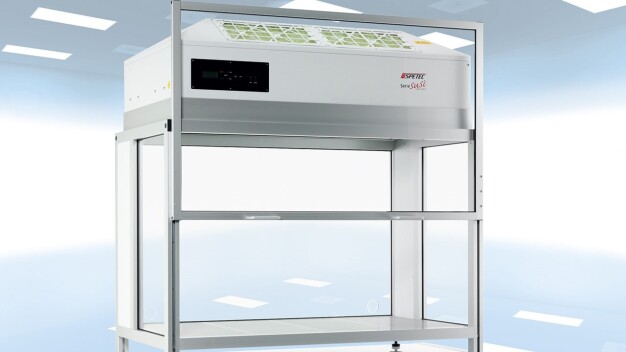
Fine dust consists of a complex mixture of solid and liquid particles and is classified into different fractions depending on their size.
Distinguished are PM10 and PM2.5 (PM, particulate matter) with a maximum diameter of 10 or 2.5 micrometers (µm), and ultrafine particles with a diameter of less than 0.1 µm.
Fine dust is released from various natural and anthropogenic sources. The latter include household heating and energy generation plants, commercial enterprises, industrial facilities, and especially road traffic (diesel exhaust, tire and brake wear). Nowadays, annual mean values of PM10 between 15 and 20 µg/m³ are common. A trend of decreasing concentrations is observed, but the number of the finest particles is increasing drastically.
In enclosed spaces, cigarette smoke, emissions from laser printers (up to 2 billion particles per printed page), and humans themselves are sources of fine dust pollution. With every movement, humans emit particles. Speaking and breathing inevitably release aerosols. These aerosols can not only carry viruses or bacteria but also evaporate very quickly into the room air, leaving behind tiny particles of salts and body secretions. Sensitive products, such as optical or electronic components, or sterile medical-technical or pharmaceutical products, must therefore be protected from human particles and aerosol emissions. However, humans are usually indispensable for final assembly, packaging, or filling, so workplaces face particular challenges, such as maintaining particle and germ-free environments.
The removal of fine dust presents a real technical challenge. Only through proper cleaning of the indoor air can these particles be removed from the interior environment. Filter technologies have proven to be cost-effective alternatives, as they can be retrofitted if necessary. This applies to complex cleanrooms as well as smaller filter units, known as laminar flow boxes, since both systems are based on the same filter technology.
For example, a laminar flow box, such as the FBS series (see photo, Figure 1) from Spetec GmbH, a manufacturer of filter technology with decades of experience, uses high-performance filters of class H14. These can efficiently remove 99.995% of all fine dust particles (based on a particle size of 0.12 µm), thereby improving indoor air quality by at least a factor of 10,000 compared to the ambient air in the production area. The use of a laminar flow box is thus an effective measure in the fight against an increasing number of particles and is also the most effective protection for the quality and function of products.

Spetec Gesellschaft für Labor- und Reinraumtechnik mbH
Am Kletthamer Feld 15
85435 Erding
Germany
Phone: +49 8122 959090
Fax: +49 8122 9590955
email: info@spetec.de
Internet: https://www.spetec.de



