

- Translated with AI
Imec begins developing a SARS-CoV-2 test to identify positive cases and confirm within less than five minutes whether someone is contagious.
The groundbreaking approach will use virus particles in exhaled air for rapid, simple, convenient, and large-scale testing
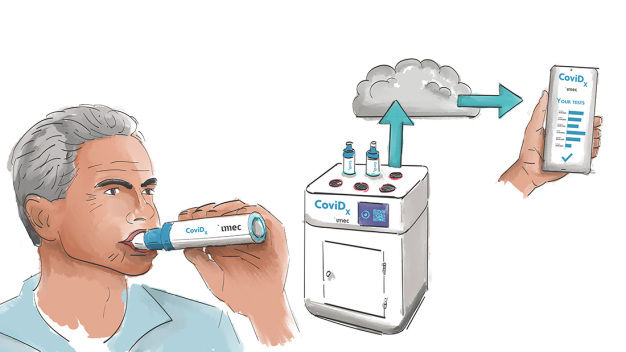
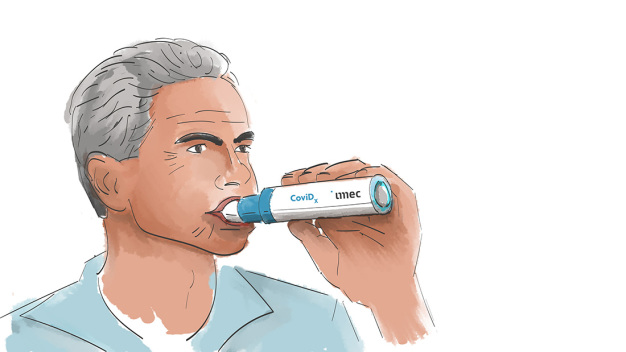
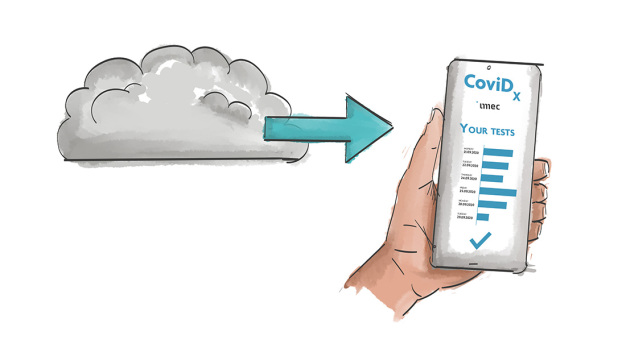
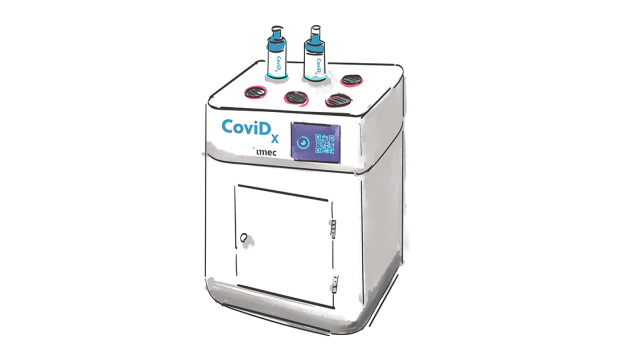
Imec, a globally leading research and innovation center for nanoelectronics and digital technologies, announced that it has begun developing a groundbreaking SARS-CoV-2 test. Unlike current approaches (using blood, saliva, or a nasal-throat swab), the new test will identify SARS-CoV-2 virus particles in a person's exhaled air. The solution promises to accurately identify an infectious case in less than five minutes. This will enable faster, simpler, more convenient, and more extensive testing — a crucial prerequisite for controlling epidemics much earlier and simultaneously limiting their economic and social impacts. For the clinical validation of the solution, Imec is collaborating with the University Hospital UZ Leuven. By summer 2021, imec aims to test a functional prototype at Brussels Airport.
This year has made it very clear that viruses are capable of striking hard and turning people's lives upside down. To keep the impacts of epidemics and pandemics on our health, society, and economy as minimal as possible, governments and experts must be able to quickly and accurately assess how a virus is spreading. However, today's diagnostic tools for SARS-CoV-2 have some limitations.
The most sensitive and reliable instrument today is the polymerase chain reaction test (PCR), which detects the virus's genetic material in a sample from the nasal-throat area. The downside of this instrument is that trained medical personnel must collect the swab, and many describe the process as highly uncomfortable. Additionally, the test involves a processing time (in a clinical laboratory) of about two days.
Another alternative, the rapid antigen test, is less reliable due to its complexity. Finally, the serological test (which uses a blood sample) is faster and less expensive than a PCR test but only detects whether someone has developed antibodies after coming into contact with the virus.
"While each of these tests can provide indications of an active or past infection, none can determine the extent to which someone can still transmit the virus to others. That is why we have started developing a test that shows within less than five minutes whether someone carries the SARS-CoV-2 virus and whether they are highly likely to be contagious. To achieve this, our solution searches for SARS-CoV-2 virus particles in a person's exhaled air, as research shows that respiratory particles are the main transmission method of the virus," says Peter Peumans, CTO for health technologies at imec. "Positive results in our clinical studies will make our tool for SARS-CoV-2 testing simpler, faster, more convenient, and scalable. Furthermore, we are designing our test to be flexible enough to handle the rise of other viruses and germs spread via exhaled particles — such as influenza, RSV, and tuberculosis."
Peter Piot, microbiologist and member of the European Commission's advisory panel for COVID-19, confirms this: "It is now clear that the virus is transmitted pre-symptomatically via exhaled particles. A SARS-CoV-2 test using an exhaled breath sample combined with ultra-fast molecular analysis would change the scenario, as it would enable the timely detection of those most likely to transmit the virus. Since an exhaled breath sample is much less invasive than swabs or saliva, it would also allow for more frequent testing and a quicker return to normalcy."
Imec's solution consists of a sample collector and an analysis unit, both custom-developed by imec researchers. The researchers are focusing much of their attention on the sample collector, which functions as an aerosol (and virus particle) collector and supports the quantitative high-speed real-time (RT-q) PCR functionality of the solution.
"Combining these tasks using conventional technologies would be extremely difficult. But thanks to our innovation capabilities with silicon, we have developed a chip that effectively does both. Its silicon micromachined PCR cavities offer thousands of impactors to capture virus particles, while its powerful RT-qPCR functionality reduces the PCR duration from 50 to 5 minutes. Importantly, the standard silicon technology used to manufacture this chip enables mass production at low costs," explains Peumans.
"Thanks to a €2 million grant provided by the Flemish government, we have made a flying start," says Luc Van den hove, CEO of imec. "Ultimately, the speed at which we can bring this test to market depends heavily on the right financial support. In anticipation of further investor involvement, imec has decided to pre-invest the necessary funds as part of our contribution to the global fight against COVID-19."
"We are excited to collaborate with imec on this groundbreaking development," says Professor Katrien Lagrou, head of the molecular diagnostics laboratory at UZ Leuven. "We will not only provide comprehensive clinical support for validating the test but also assist in its development using the PCR diagnostics expertise we have built over more than 20 years at UZ Leuven. The new test could be very widely used. It will also be very valuable for initial SARS-CoV-2 screening of potentially contagious patients or healthcare personnel in hospitals, using exhaled breath flow," confirms Prof. Lagrou.
After developing the underlying technology, experts from the University Hospital of UZ Leuven will jointly conduct a comprehensive clinical study with imec. By summer 2021, the researchers aim to test a functional prototype at Brussels Airport to ensure that the final solution meets all requirements necessary for people to travel safely and comfortably and to meet again. "We are convinced that the tests at Brussels Airport will be a key element in the recovery of the aviation sector," says Arnaud Feist, CEO of Brussels Airport Company. "Creating a safe environment for our passengers is our top priority, and in this context, it is essential for us to rely on fast and reliable testing."
IMEC Belgium
3001 Leuven
Belgium