- Translated with AI
Health Protection: Air purifiers significantly reduce the risk of Corona infection in enclosed spaces
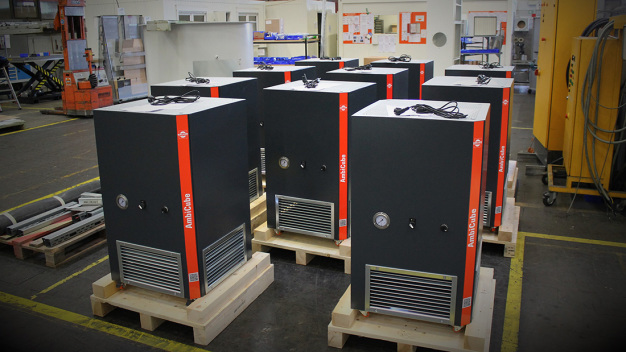
Manufacturers are preparing for the high demand from medical practices, authorities, schools, or offices – an increasing number of companies and institutions are investing in mobile air purifiers to reduce the risk of Corona infection.
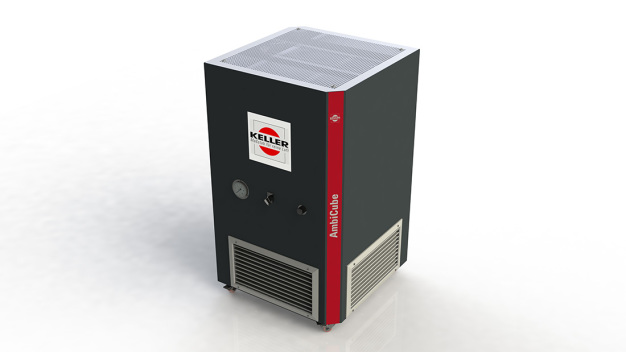
Modern air purification devices are compact, mobile, and easy to operate. They significantly reduce the risk of Corona infection in rooms where many people stay together for longer periods.
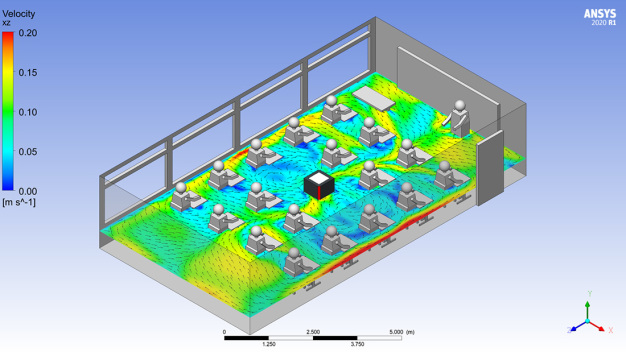
The airflow simulation confirms that this air purifier, through appropriate air guidance, is able to capture the air in the entire 70-square-meter room and purify it of viruses with a high percentage.
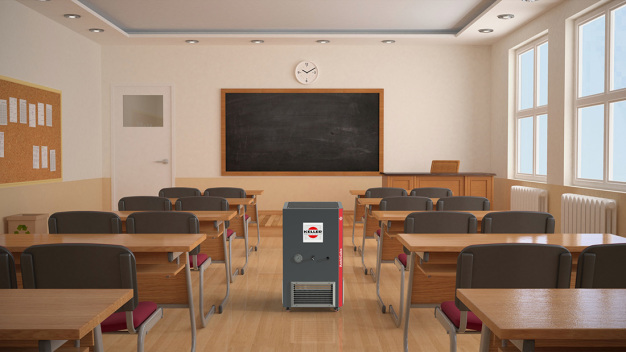
In classrooms where many people spend hours together, the risk of infection is comparatively high. Ventilation only helps to a limited extent. Mobile air purifiers can reliably reduce the danger.
Doctor's offices, authorities, schools, or offices: More and more companies and institutions are investing in mobile air purification devices to reduce the risk of Corona infection. Ulrich Stolz, Technical Director at Keller Lufttechnik, explains why the use of such air purifiers makes sense and what interested parties should consider when choosing a device.
Ulrich Stolz heads the Technical Department at the air purification specialist Keller Lufttechnik in Kirchheim unter Teck near Stuttgart. For years, he and his colleagues have been working with methods that enable the filtration of tiny particles from the air. These include fine dust, pollen, spores, bacteria – and viruses. "To remove these particles, so-called suspended particle filters (HEPA H14) are used," says Stolz. The technology has proven itself in the medical field and removes 99.995 percent of viruses from the room air. This means: Out of 100,000 disease-causing particles, only five remain statistically.
The new formula: AHA + L + R
Wouldn't the widespread use of such devices be a patent solution against the spread of the Corona virus? Stolz tempers the enthusiasm a bit: "The use of the devices is very sensible. However, to minimize the risk of infection, a combination of various measures is necessary," he says. "My formula is: AHA + L + R. That is: Keep distance, follow hygiene rules, wear everyday masks, ventilate, and use air purifiers."
Understanding transmission pathways
Anyone who wants to understand why such a bundle of measures is recommended must know how the virus spreads. Currently, scientists assume that around 45 percent of those infected transmit the virus directly. This means they inhale virus-laden droplets expelled by COVID-19 patients, for example, when coughing (droplet infection). Ten percent are infected via objects contaminated with viruses (fomite transmission). Another approximately 45 percent (probably more) are infected indirectly. This means they become ill because they are in rooms where the air is heavily contaminated with viruses. In this case, the danger does not come from the "larger" droplets, as these quickly sink to the ground. However, infected individuals also emit virus-laden aerosols. These particles are smaller than five micrometers and very light. As a result, they can remain in the air for hours and pose an infection risk.
Blocking all infection pathways
"Air purifiers can be very effective, but they cannot protect against direct infection via droplets. Therefore, it is important to maintain distances and wear masks. And only sufficient hand hygiene can effectively prevent fomite transmission," explains Stolz. "Our room air purifiers demonstrate what they can do when it comes to the indirect infection route via aerosols in the room air. They reliably and continuously reduce the concentration of these particles well below the critical level for infection. Such a result cannot be achieved through the often recommended regular ventilation alone." Nonetheless, Ulrich Stolz includes the "L" for ventilation in the formula. He justifies this as follows: "For a healthy indoor climate, the regular supply of fresh, oxygen-rich outdoor air is still indispensable. We often forget this."
Ideal for doctor's offices, companies, schools, restaurants...
The use of mobile air purification devices is especially important where different people repeatedly come together in relatively confined spaces for extended periods, says Stolz. He cites examples such as waiting areas in doctor's offices, classrooms, training and meeting rooms, as well as canteens, restaurants, and shops.
Criteria for choosing a device
Air purification expert Ulrich Stolz advises interested parties to pay attention to the following five aspects when purchasing a device:
High filtration efficiency
The device should have an H14 HEPA filter that filters out 99.995 percent of all viruses (bacteria, pollen, spores, fine dust, etc.) from the room air.
Sufficient volume flow
The air purifier should be powerful enough to exchange the room air at least six times per hour.
Correct air guidance
To ensure that the device captures the air in all areas of the room, the following air guidance is important: The room air purifier draws in the air from all directions at the bottom of the housing (360-degree intake) and blows it cleaned towards the ceiling. This creates a so-called air vortex that fills the entire room with virtually virus-free air.
Acceptable noise level
Which sound pressure level (dB(A) value) a user considers acceptable depends on their noise sensitivity and the acoustic conditions in the room. Therefore, it should ideally be possible to test the air purifier on-site. Important to know: Manufacturers often specify the sound pressure level of their device at the lowest performance setting. However, this is rarely the setting at which the device must operate to achieve the required air exchange rate.
Easy operation
Depending on the application area, it may be sensible to ensure that the device is easy to operate. Most air purifiers meet this criterion. The user only needs to plug them into the power supply, select the appropriate performance level, and turn them on.
Online consultation with air purification experts
Want to learn more? The Keller experts offer an online consultation via Microsoft Teams on the topic "Mobile room air purifiers: A contribution to corona protection." Those interested can register at: ambicube@keller-lufttechnik.de
Keller Lufttechnik GmbH + Co. KG
73230 Kirchheim unter Teck
Germany