



- Translated with AI
First vertical calibration channel for flow sensors provides higher measurement accuracy in laminar flow monitoring

Mathias Moser, Sales Group Leader at SCHMIDT Technology: "The new flow channel is specifically designed for the constant generation of very low medium velocities and is completely encapsulated and thermally insulated."
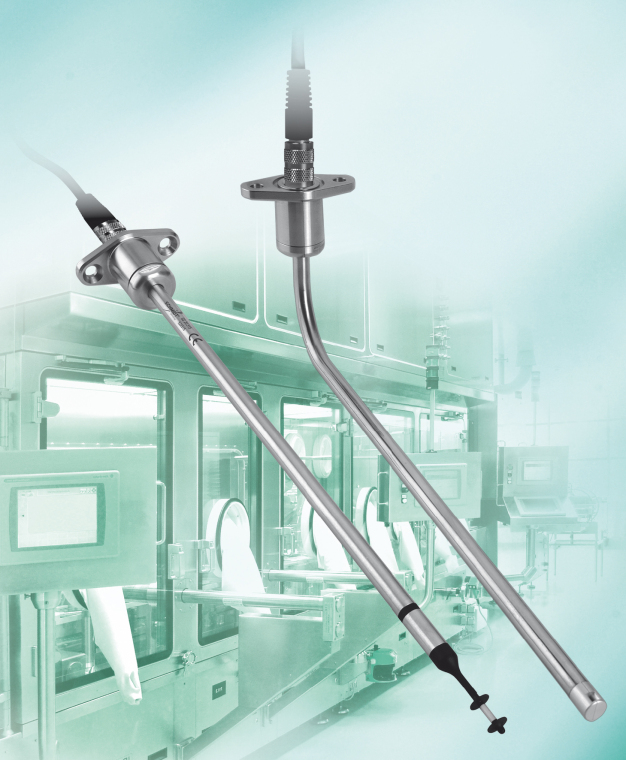
SCHMIDT® Flow Sensors SS 20.415 and SS 20.515 with high-precision calibration offer the highest accuracy down to the 1% range.
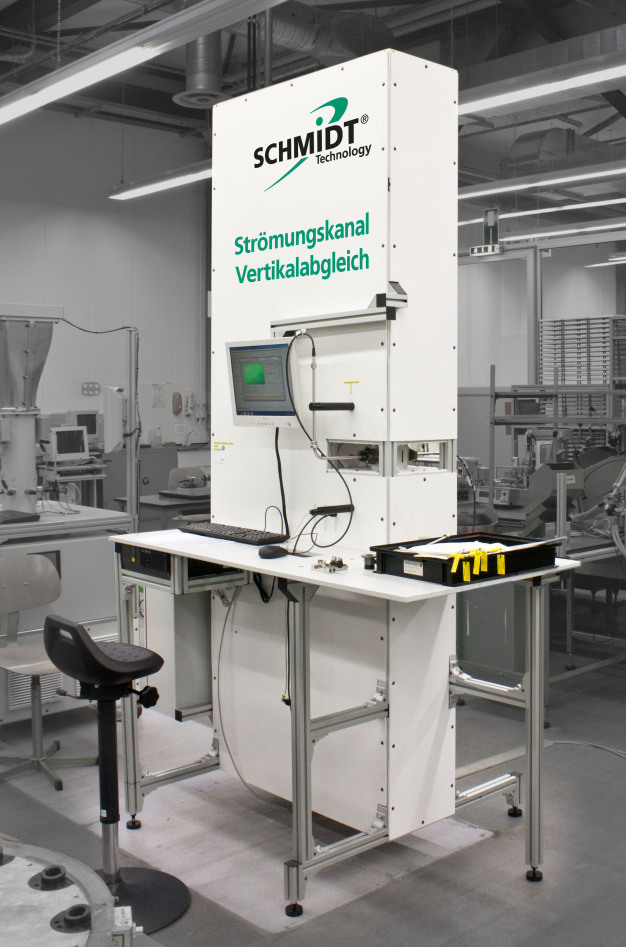
The new vertical calibration channel eliminates influences from measurement practice during sensor calibration and enables for the first time a sensor calibration precisely adapted to the operating conditions.
The vertically aligned flow channel, newly developed by SCHMIDT Technology for flow sensors, eliminates external influences that can lead to measurement uncertainties in practical applications. This allows for an accurate sensor calibration tailored precisely to the operating conditions for the first time. Users now have greater confidence in meeting the tolerance criteria accepted during validation processes.
Laminar flow monitoring, i.e., measuring directed, turbulence-free displacement flows in cleanrooms and controlled environments, is among the most demanding measurement tasks in flow measurement technology due to the very low flow velocities. External influences, which are negligible in applications with different flow directions and higher velocities, can cause significant measurement uncertainties here.
Generally, every measurement involves so-called measurement uncertainties, which can have various causes. In addition to unavoidable systematic deviations—such as those reduced to ±1% of the measured value plus 0.04 m/s in the case of SCHMIDT® flow sensors SS 20.415 and SS 20.515 with high-precision calibration—external influences in practical measurement scenarios also play a role. For example, thermal convection flow, which occurs around thermoanemometers due to the electrically heated sensor element that emits heat energy into the flow medium through its surface. This results in a thermal convection flow around the sensor that opposes the vertical laminar flow in cleanroom applications. At a flow velocity of 0.45 m/s, this can account for approximately 10%.
If the technological measurement inaccuracies of ±1% of the measured value plus 0.04 m/s are added to the approximately 10% caused by thermal convection, the maximum 20% of the acceptance criteria tolerated at most are essentially exhausted. And this is despite the fact that, for good reasons, only ±10% is usually allowed in practice.
External influences excluded
To adequately account for such influences in practical measurement scenarios during sensor calibration and alignment, SCHMIDT Technology has developed a vertical flow channel and installed it in the sensor manufacturing facility in St. Georgen. "The new flow channel is specifically designed to generate very low, constant medium velocities and is completely enclosed and thermally insulated," explains Mathias Moser, Sales Group Manager at SCHMIDT Technology. This setup guarantees a downward airflow similar to what ideally prevails in practical applications. The flow is uniform across the entire cross-section of the channel and cannot be affected by external influences. The insulation also shields against thermal external influences. For calibration or sensor alignment, the sensors are tightly integrated into the flow channel. The recognized laser Doppler anemometry (LDA) serves as a reference, with a small glass window installed specifically in the channel for this purpose. "This method can also detect the 10% thermal convection flow," adds Moser.
With this unique calibration and alignment process, users now have significantly increased measurement reliability.

SCHMIDT Technology GmbH
Feldbergstraße 1
78112 St. Georgen / Schwarzwald
Germany
Phone: +49 7724 899198
Fax: +49 7724 899101
email: o.joos@schmidttechnology.de
Internet: http://www.schmidttechnology.de