New year, new job? View the vacancies! More ...
Pfennig Reinigungstechnik GmbH Becker C-Tec Piepenbrock


All publications from Ferdinand-Braun-Institut gGmbH

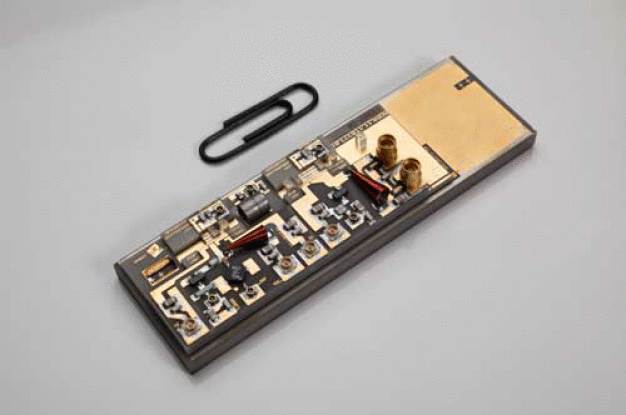
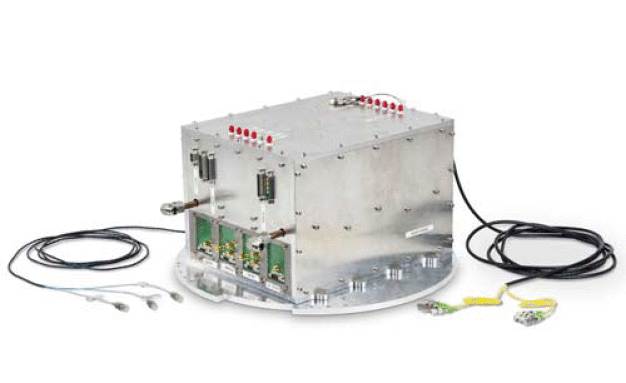
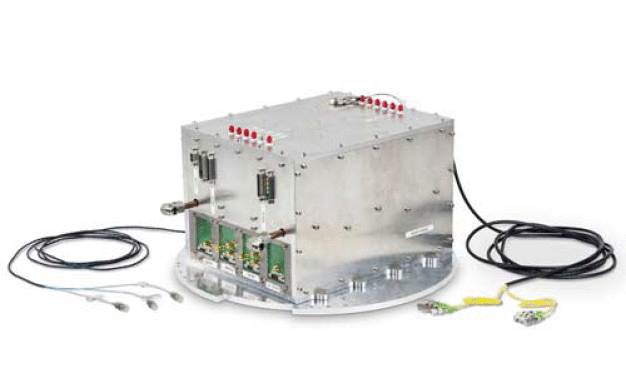
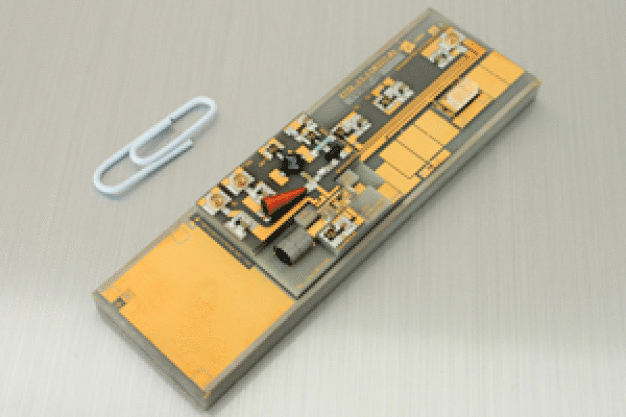
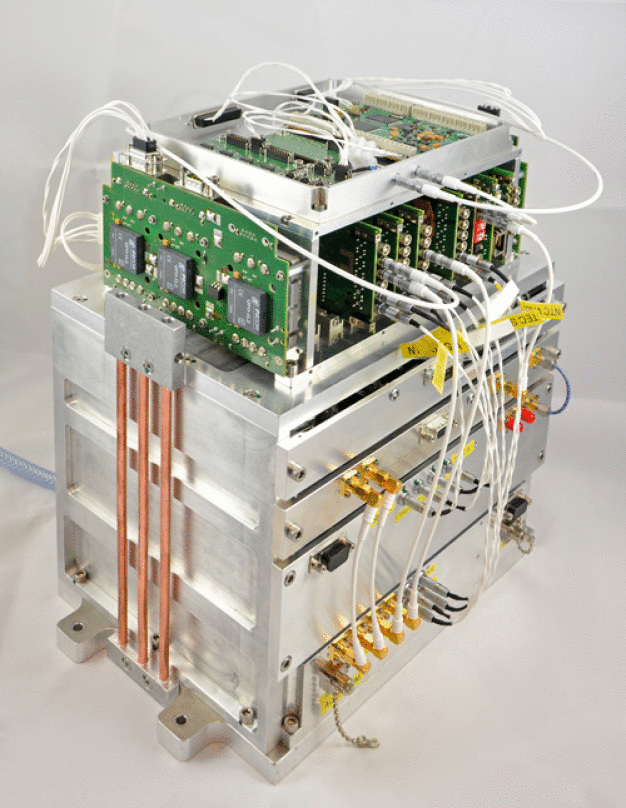
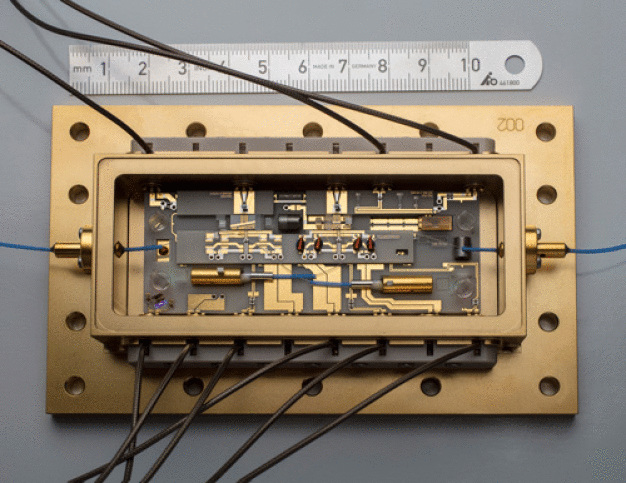
JOKARUS payload: Used to demonstrate the first optical frequency standard based on molecular iodine in space. (© HU Berlin/Franz Gutsch) Centerpiece of the JOKARUS experiment: Successfully used in space: a micro-integrated diode laser module (ECDL-MOPA) from the Ferdinand-Braun-Institut emitting at a wavelength of 1064 nm. (© FBH/schurian.com)

JOKARUS experiment on sounding rocket successfully completed. Corner stone for laser ranging measurements with the highest precision and precursor for optical sat-ellite navigation systems.

Frequency-stable laser systems for space

For the first time a frequency reference based on molecular iodine was successfully demonstrated in space! What sounds a bit like science fiction is an important step towards laser interferometric dis-tance measurements between satellites as well as for future global navigation satellite systems bas…
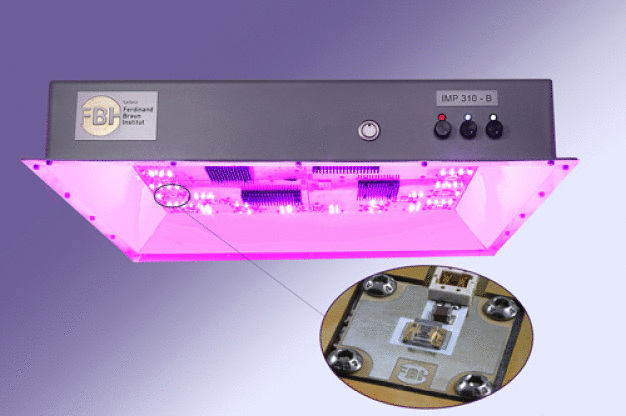
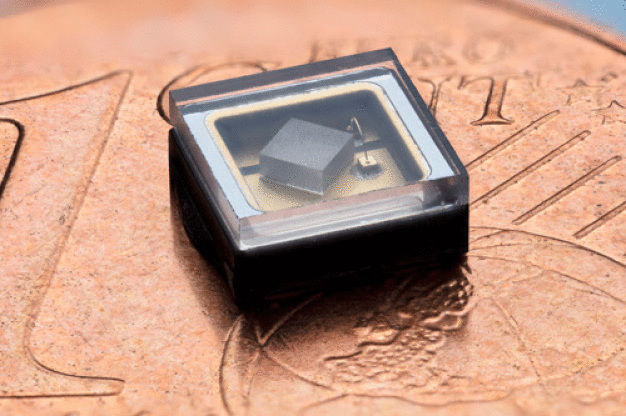
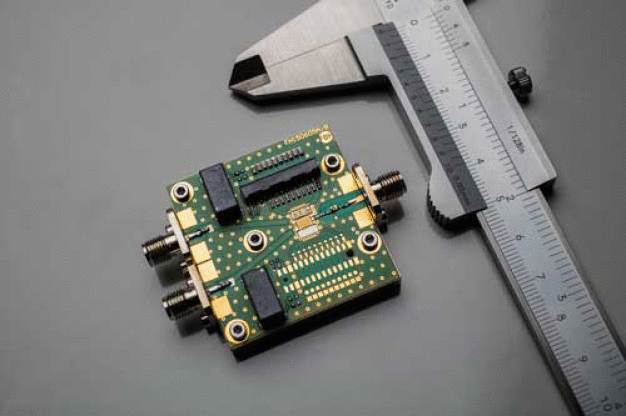
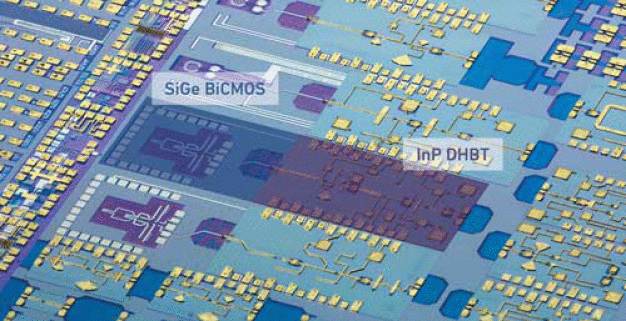
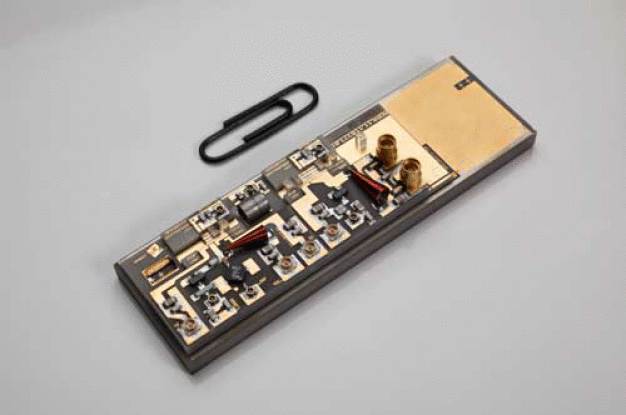
Digital Power Amplifier Module for 5G, the Mobile Communication of the Future (© FBH/schurian.com) Heterointegrated circuits, combining the advantages of two technology worlds: the high output powers of indium phosphide with the complexity of silicon technology (© FBH/schurian.com)

The Ferdinand-Braun-Institut demonstrates its capability in III-V electronics at „Productronica“. FBH components are used, among others, for the future mobile communications standard 5G and for industrial as well as biomedical applications.

Core components for future technology solutions – from heterointegrated chips to digital power amplifiers

The Ferdinand-Braun-Institut (FBH) presents a selection of current developments and advances of its power amplifiers, circuits, and heterointegrated chips at “Productronica”. The event is hosted in Munich from November 14-17, 2017 in hall B2, booth 317. The Leibniz institute exhibits at the join…

At “Laser World of Photonics” trade show and accompanying “CLEO Europe“ confer-ence, the FBH presents its capability in diode lasers and UV LEDs, each device opti-mized to fit the respective application.

Extremely versatile – FBH offers tailored diode lasers, from the chip to the system

The Ferdinand-Braun-Institut (FBH) presents novel developments and advances of its diode lasers and UV light-emitting diodes (LEDs) at the “Laser World of Photonics”. The event is hosted in Munich from June 26 – 29, 2017. FBH offers the full value chain in house: from design through chips to m…

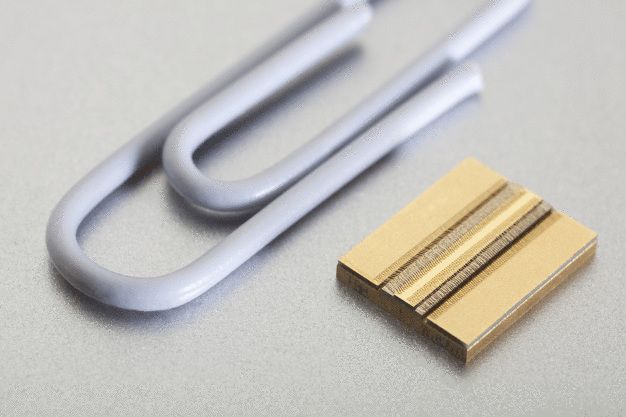
Rubidium Module for FOKUS Experiment: Fiber-coupled Rubidium Module for FOKUS Experiment in Space. ©FBH/P. Immerz

Projects KALEXUS and FOKUS successfully carried out on board the sounding rocket TEXUS-53 in microgravity.

Einstein put to the test – two precision experiments in space with lasers from Berlin

According to Albert Einstein's theory of relativity, all bodies in a vacuum regardless of their properties are accelerated by the Earth's gravity at the same rate. This principle of equivalence applies to stones, feathers and atoms alike. Under the conditions of microgravity very long and precise me…

The FBH presents its advanced diode lasers and UV light-emitting diodes at “Laser World of Photonics“ and the associated conference “CLEO Europe“

Comprehensive know-how and the full value chain, from technology development to complete systems

The Ferdinand-Braun-Institut (FBH) exhibits a selection of current improvements and new developments regarding diode lasers and UV light-emitting diodes (LEDs) at the international trade fair „Laser World of Photonics“ in Munich from June 22 - 25, 2015. Based on the in-house available full techn…

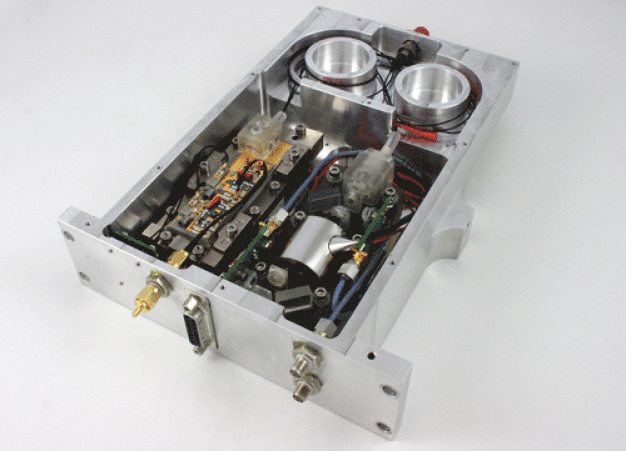
High-performance space module: Micro-integrated Extended Cavity Diode Laser (ECDL) for spectroscopy of rubidium atoms in space. Tests were conducted onboard the high-altitude research rocket FOKUS on April 23, 2015. The goal is to demonstrate whether different types of clocks actually keep time equally in space, as Einstein claimed. (© FBH/P. Immerz)

Tests in weightlessness aboard the research rocket FOKUS conducted. Successful technology demonstration for the QUANTUS mission.

Einstein verified – Precision experiments with lasers in space

According to Albert Einstein, clocks run slower the deeper they are in the gravitational potential of a mass – that is, the closer they are, for example, to a celestial body. This effect is called gravitational redshift within the framework of General Relativity – it manifests as spectral lines…

Better informed: With YEARBOOK, NEWSLETTER, NEWSFLASH, NEWSEXTRA and EXPERT DIRECTORY

Stay up to date and subscribe to our monthly eMail-NEWSLETTER and our NEWSFLASH and NEWSEXTRA. Get additional information about what is happening in the world of cleanrooms with our printed YEARBOOK. And find out who the cleanroom EXPERTS are with our directory.

Systec & Solutions GmbH Buchta PMS ClearClean