


- Automation
- Original text
Configure-to-Order Plus (CTO+)
How cleanrooms are inspired by the automotive industry

Nelissen Jo

Van Walleghem Olivier

Vangelabbeek Tom
From Engineer-to-Order to Configure-to-Order Plus
In 2024, ABN Cleanroom Technology redefined the cleanroom industry by introducing ADAPTUS, the world's first product platform strategy for cleanroom engineering. By organizing critical cleanroom components into pre-engineered and validated building blocks, ABN shifted the industry from traditional Engineer-to-Order delivery toward a smarter, faster, and more predictable model: Configure-to-Order Plus.
Configure-to-Order Plus is the framework that governs how ADAPTUS is applied, ensuring that speed, reliability, sustainability, and budget control are delivered together on every project, without compromise.
This matters because the cleanroom industry has long operated on a set of assumptions that force project teams into difficult choices. Faster delivery is assumed to increase risk.
Tighter budgets are believed to limit long-term performance. Custom engineering is treated as the only path to compliance. These assumptions are not laws. They are the product of a delivery model that was never designed to do better.
CTO+ was built on the rejection of these assumptions. By embedding performance guarantees into the architecture of the ADAPTUS platform itself, rather than managing them through project procedures, CTO+ ensures that no configuration ever compromises what matters most to a client, regardless of which priority drives the project.
This whitepaper explains what Configure-to-Order Plus is, how it works, and why it removes the trade-offs that have defined cleanroom projects for decades.
Still engineering from scratch in 2026?
Most cleanroom projects across the industry are still delivered using an Engineer-to-Order (ETO) approach. In this model, each cleanroom is designed and engineered largely from scratch, tailored to the specific requirements of an individual project. While this allows for a high degree of customization, it also introduces structural inefficiencies that compound across the project lifecycle.
In an ETO approach, design decisions are made sequentially and are tightly interconnected. A change in one part of the design triggers a cascade of changes elsewhere. Key performance characteristics only become fully visible late in the process, making outcomes difficult to predict, validation complex, and trade-offs apparent only after critical decisions have already been locked in.
As cleanroom environments became more complex and more regulated, these limitations became increasingly consequential. Faster time to market, consistent validation, and predictable performance over the full lifecycle could no longer be reliably achieved through one-off engineering alone.
At ABN Cleanroom Technology, this reality led to an early and deliberate shift. Rather than refining the ETO model, ABN moved to a fundamentally different approach: Configure-to-Order Plus.
From engineering to configuration
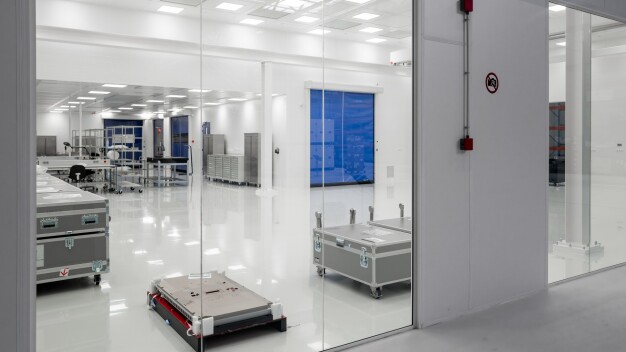
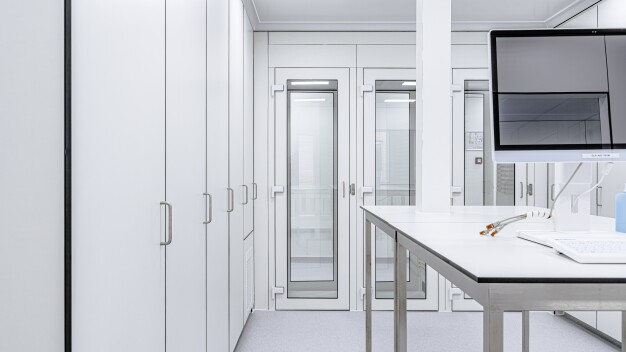
In CTO+, cleanrooms are not engineered from scratch. They are configured from pre-engineered and validated building blocks developed as part of an integrated system architecture. These building blocks, ranging from air handling units and wall panel systems to filtration modules and humidifiers, are designed, tested, and validated in advance, with defined interfaces and known performance characteristics. Cleanrooms are configured by combining proven components within this architecture, rather than being designed element by element for each individual project.
This shift fundamentally changes where complexity is managed. Engineering effort moves away from individual projects and into platform development, embedding knowledge, validation, and performance into the system itself. The result is lead times starting from as little as six weeks, cost savings of up to 20%, and predictable cleanroom behavior before construction and commissioning begin.
The role of the platform: A Lesson from the Automotive Industry
To understand how a platform-based approach can protect critical values across different cleanroom configurations, the automotive industry offers a useful parallel.
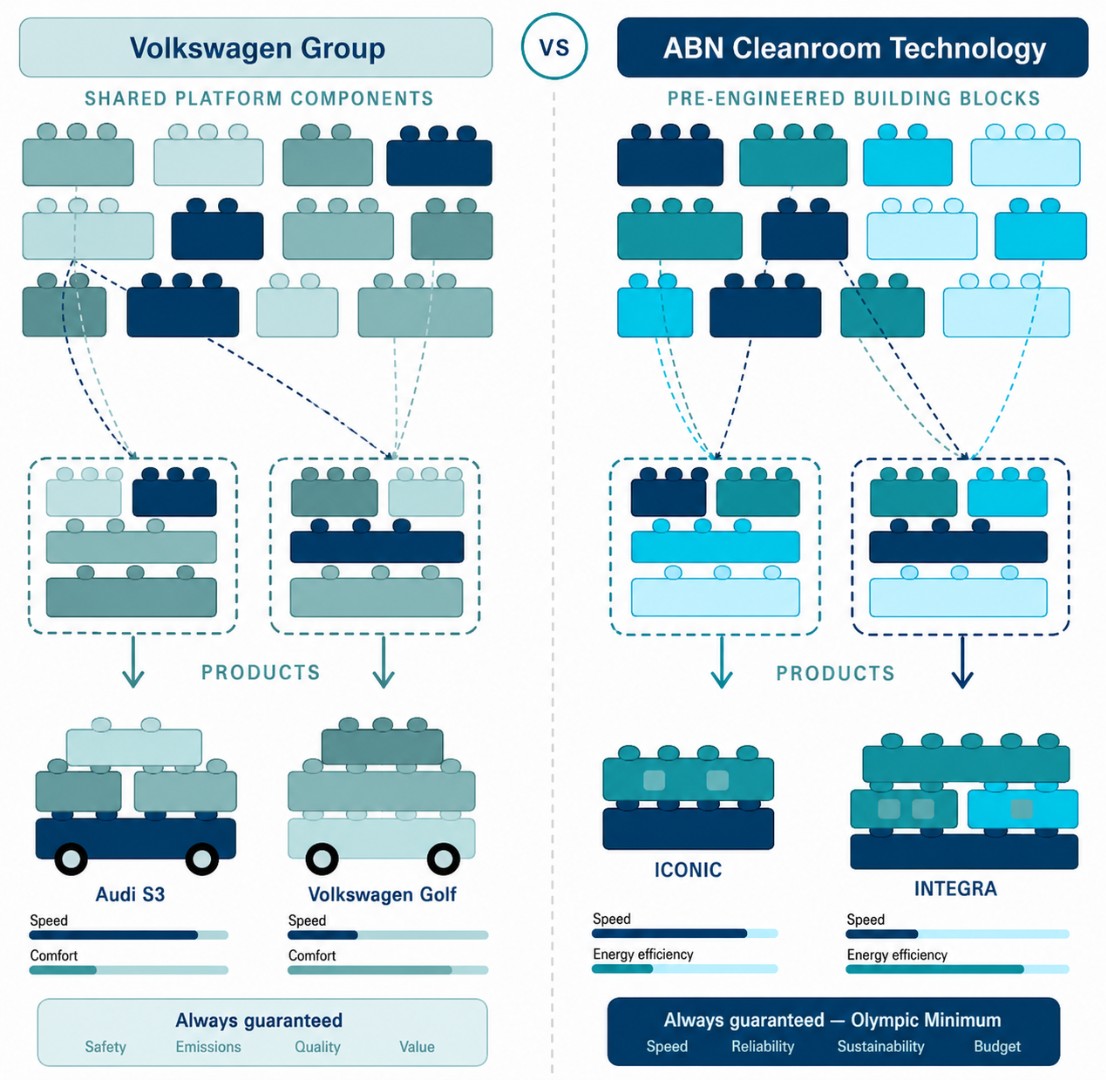
To make it clear, consider one example of how the Volkswagen Group deploys shared platforms across its brands. The Audi S3 and the Volkswagen Golf, two vehicles from different brands within the same group, are both built on the same MQB platform. The Audi S3 is configured for speed and performance. The Volkswagen Golf is configured for comfort, everyday usability, and practicality. Their driving dynamics, interior refinement, and feature sets differ substantially. Yet both meet the same safety and regulatory standards, regardless of how each is configured or what market it serves.
Configuration is used to emphasize different characteristics, such as performance or cost efficiency, but never to remove or weaken the critical fundamentals defined by the platform. Variability is permitted only where it does not affect global system behavior.
The key insight this example provides is straightforward: by fixing critical fundamentals at the architectural level, the platform defines clear boundaries within which configuration is allowed. Different configured outcomes remain predictable precisely because the platform prevents variability where it matters most.
ABN Cleanroom Technology applies this same logic to cleanroom delivery through the ADAPTUS platform and the Configure-to-Order Plus framework. The building blocks of ADAPTUS function like the shared architecture of an automotive platform, pre-engineered and validated across every configuration. Two examples illustrate this directly.
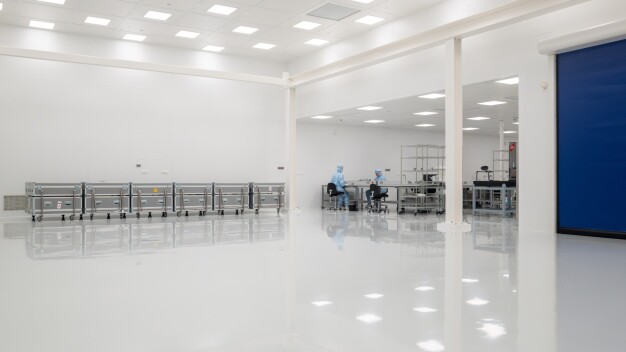
ICONIC is a cleanroom configured for speed. It is designed for organisations where time to market is the primary driver, delivering a fully validated, operational cleanroom in the shortest possible lead time. INTEGRA is a cleanroom configured for energy efficiency and long-term lifecycle performance. It is the choice for organisations where sustainability and total cost of ownership take priority over delivery speed.
Despite their different emphases, ICONIC, INTEGRA, and all other configurations are governed by the same guaranteed performance levels, referred to as the Olympic Minimum, that ABN's leadership defines and the ADAPTUS platform enforces. This means no client choosing ICONIC accepts a compromise on reliability. No client choosing INTEGRA accepts a compromise on speed. The platform protects what is not chosen just as rigorously as it delivers what is.
This is the distinction that separates Configure-to-Order Plus from conventional approaches. Clients do not negotiate between priorities. They define what matters most, and the platform protects everything else.
LEGOlization: One platform, multiple configurations
Configure-to-Order Plus: The ABN Cleanroom Technology Framework
Within CTO+, speed, reliability, sustainability, and budget control are treated as non-negotiable system fundamentals. Before any configuration takes place, ABN's leadership defines the guaranteed performance levels that must be maintained across all four values in every project. These levels are referred to as the Olympic Minimum.
The Olympic Minimum is not a contractual commitment made on a project-by-project basis. It is embedded directly into the architecture of the ADAPTUS platform, meaning it is enforced by the system itself rather than by individual project decisions or procedures. Within this framework, no configuration, regardless of its primary focus, ever falls below the Olympic Minimum across the remaining values. The platform architecture prevents it.
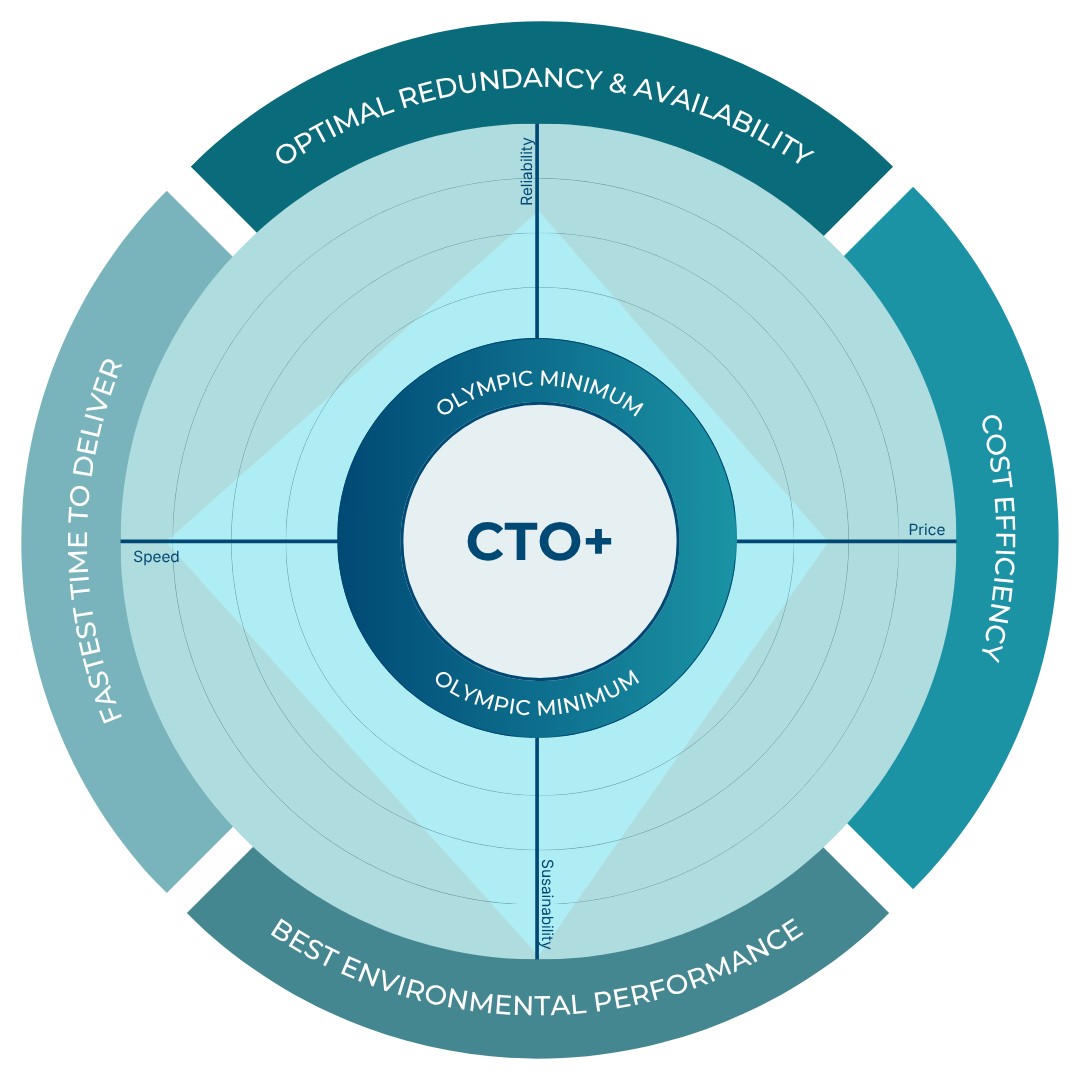
In most cleanroom projects across the industry, speed, reliability, sustainability, and budget control are treated as competing objectives. Faster delivery is assumed to reduce reliability. Tighter budgets are believed to limit long-term performance. CTO+ is built on the rejection of these assumptions.
CTO+ redefines the sequence of decision-making. Before configuration begins, it is made explicit which value must take priority based on the client's needs. The remaining values are then protected at platform level through the ADAPTUS library of pre-engineered, validated building blocks.
The client's priority value drives configuration choices. The other three values are never compromised in the process.
This is the distinction that separates Configure-to-Order Plus from conventional Configure-to-Order approaches. Standard CTO uses standardization to improve efficiency and reduce lead times. CTO+ goes further by ensuring that standardization never comes at the cost of critical values, regardless of which priority a client selects. Values are protected before configuration begins, not corrected after problems emerge.
"The cleanroom industry has been engineering from scratch for decades, and the inefficiencies have become invisible simply because they were accepted as normal. At ABN, we refused that premise. With Configure-to-Order Plus and the ADAPTUS platform, we shifted complexity away from individual projects and embedded it once, at platform level, where it compounds in value over time. Every cleanroom we deliver inherits validated performance from day one, not because we engineered it again, but because we engineered it right the first time. This is not an incremental improvement on how cleanrooms are built. It is a fundamentally different starting point, and it changes what clients can expect from a cleanroom partner."
Jo Nelissen
CEO / Founder ABN Cleanroom Technology
Defining the Four Values
Speed
Speed describes how quickly a cleanroom can be delivered into validated operation. It is measured as the time span between contract signature and validated handover to operations. When speed is selected as the primary value, configuration decisions are oriented toward minimizing total project lead time across design, construction, and commissioning, without compromising the Olympic Minimum for reliability, sustainability, or budget control.
Reliability
Reliability describes the ability of the cleanroom system to deliver stable and predictable performance throughout its operational life. When reliability is selected as the primary value, configuration focuses on architectural robustness through redundancy at both component and subsystem level.
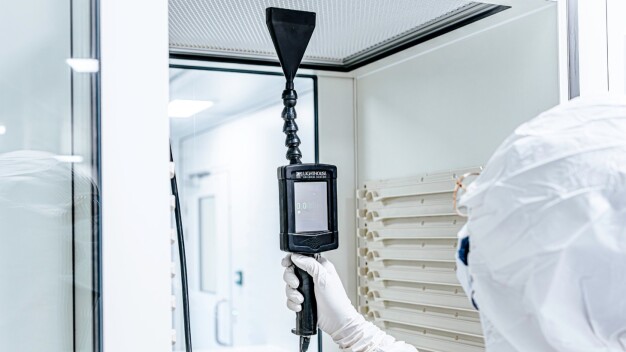
Continuous monitoring is provided through CleanConnect, ABN's IoT platform for ISO cleanrooms, and GMP-Connect, its equivalent for GMP-regulated environments. Together with the VIX system, ABN's dedicated reliability architecture, these platforms target 99.99% operational uptime, as documented across ABN's operational cleanroom portfolio.
Sustainability
Sustainability describes how the cleanroom performs over its full lifecycle rather than at a single point in time. When sustainability is selected as the primary value, configuration decisions are driven by total lifecycle performance. The focus lies on energy efficiency, the use of durable and sustainable materials, and optimization of total lifecycle cost, ensuring long-term environmental and economic resilience.
Price
Budget control describes the upfront investment required to deliver a compliant and fully operational cleanroom. When budget control is selected as the primary value, configuration decisions focus on minimizing initial capital expenditure while delivering all required performance and compliance standards. This means achieving the lowest possible upfront investment while remaining fully within the Olympic Minimum for speed, reliability, and sustainability.
ADAPTUS and Value Engineering: Making CTO+ Operational
Making Configure-to-Order Plus operational requires more than a framework. It requires a system in which value priorities and guaranteed performance levels are translated into executable decisions and enforced consistently throughout the project lifecycle.
At ABN Cleanroom Technology, this is achieved through the ADAPTUS platform.
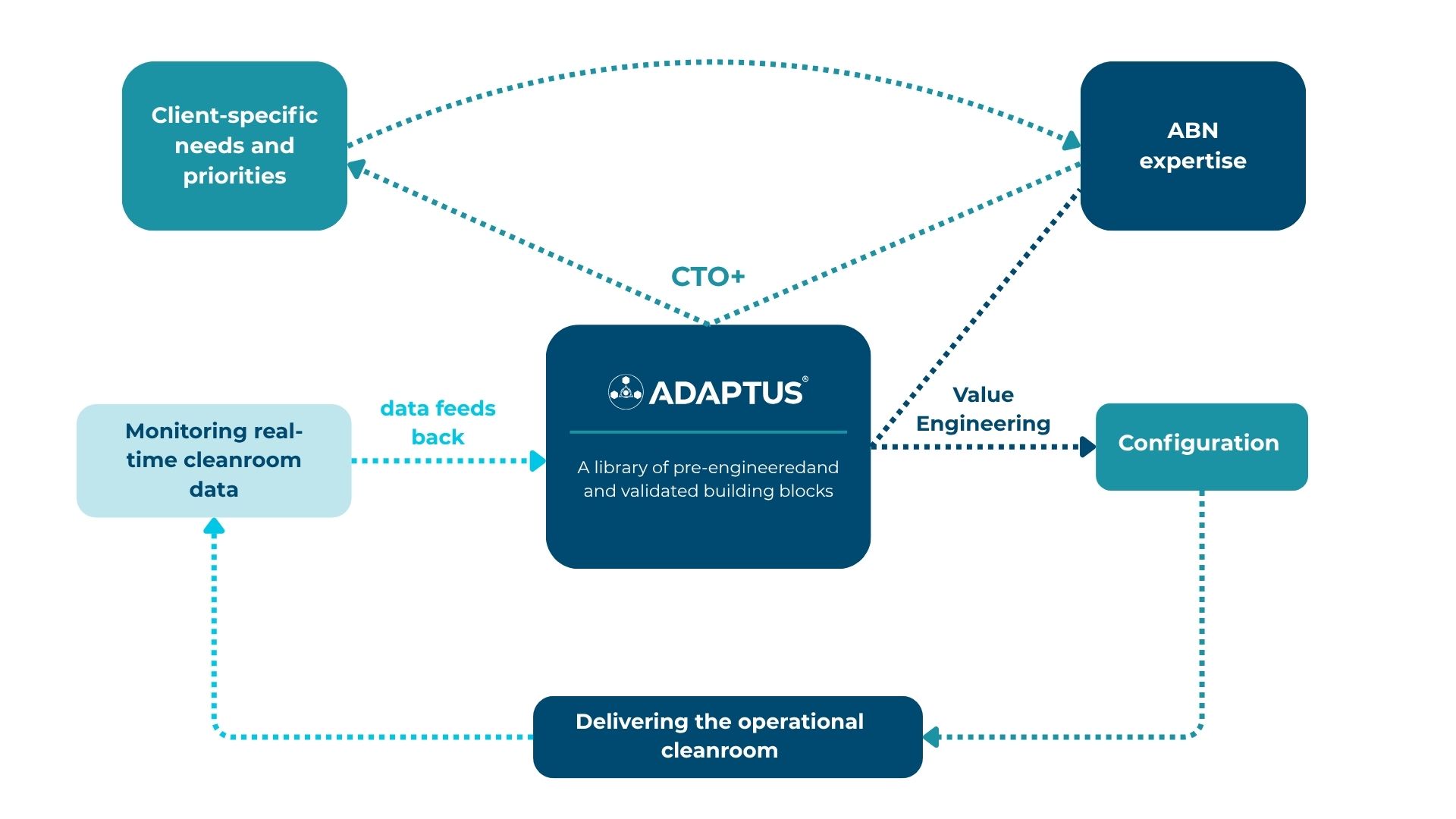
ADAPTUS is a cleanroom product platform built from pre-engineered and validated building blocks. Each building block is developed as part of an integrated architecture, with known interfaces and defined performance characteristics. Performance is embedded at platform levels and reused consistently across projects, rather than being re-established for each individual cleanroom. All building blocks meet ISO 14644 and applicable industry standards including GMP Annex 1.
Every building block within ADAPTUS is designed to meet or exceed the Olympic Minimum across all four critical values. The Olympic Minimum is not a contractual commitment applied after the fact, it is embedded into the architecture of the platform itself, making performance below this threshold architecturally impossible from the moment configuration begins.
Value engineering is applied only after value priorities have been established and the Olympic Minimum is already met. It is used to compare and refine configuration options within these protected boundaries. Improvements in efficiency, cost, or complexity are pursued only where they do not undermine the defined performance levels. Optimization is deliberate and controlled, never reactive.
This sequencing is critical. By placing value engineering after value definition and performance protection, CTO+ ensures that the drive for efficiency never introduces unintended trade-offs.
Verification extends beyond design and delivery into operation. Through CleanConnect for ISO cleanrooms and GMP-Connect for GMP cleanrooms (developed by our sister company Smartlog), cleanroom performance is continuously monitored against the defined baselines. This provides ongoing assurance that guaranteed performance levels are consistently met throughout the lifecycle, not only at the point of handover.
Operational data gathered through these platforms does not serve only as a verification record. This data feeds back into the ADAPTUS platform, strengthening validation evidence, refining performance assumptions, and enabling continuous improvement of the building blocks themselves.
Through this integrated approach, Configure-to-Order Plus becomes enforceable, verifiable, and repeatable across every project. Trade-offs below the Olympic Minimum are not controlled through procedures or prevented through experience. They are made architecturally impossible.
The result is a platform that becomes more precise, more validated, and more reliable with every cleanroom delivered.
Conclusion: The Cleanroom Trade-Off Is a Lie
Configure-to-Order Plus changes what clients can expect from a cleanroom partner.
Through the VIX system and ADAPTUS platform, ABN delivers cleanrooms with lead times starting from six weeks, operational uptime of 99.99%, cost savings of up to 20% compared to traditional Engineer-to-Order approaches, and full compliance with ISO 14644 and GMP Annex 1 from day one. These are not project-specific achievements. They are platform-level outcomes that every client inherits by default.
Beyond the numbers, CTO+ changes the nature of the client relationship itself. Clients no longer need to negotiate between priorities or accept that choosing speed means accepting risk elsewhere. They define what matters most, and the system protects everything else. Decisions that previously required trade-offs now require only clarity about priorities.
For industries where downtime, non-compliance, or cost overruns carry serious consequences, this is not a marginal improvement. It is a fundamentally different basis on which to commission, operate, and expand a cleanroom facility.
ABN Cleanroom Technology delivers cleanrooms that are faster, more reliable, more sustainable, and more cost-controlled, not as a choice between these qualities, but as a guaranteed combination of all four.
ABN Cleanroom Technology NV
3740 Munsterbilzen
Belgium