


- Translated with AI
Duri Barblan
Comprehensive solutions for cleanrooms
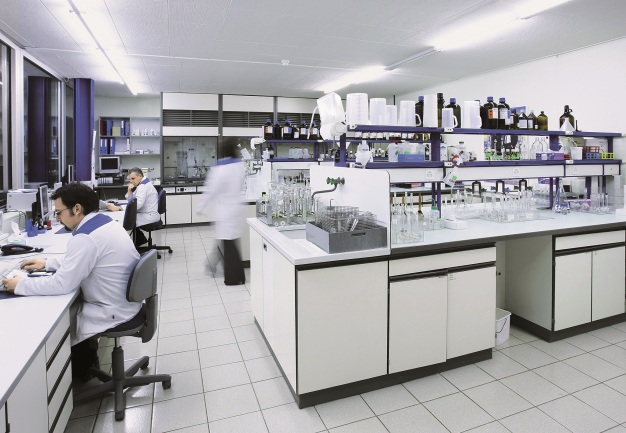
Fig 3_Lab 1
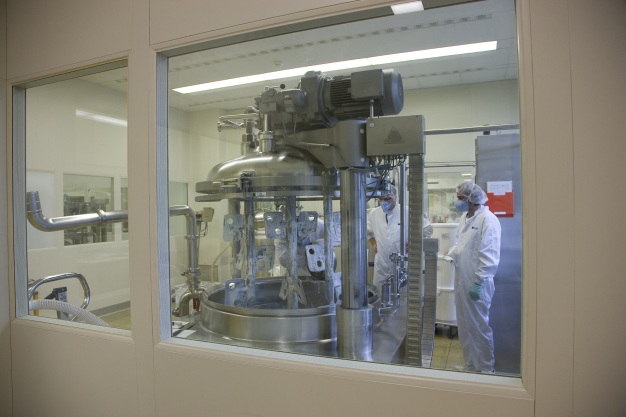
Fig 2_ Cleanroom 1

Fig 4_Labor 2

Fig 1_Siemens_Duri Barblan
The cleanroom is the heart of the production of sensitive, valuable goods. Any contamination, such as dust, microorganisms, or smoke, can disrupt the production processes and compromise product quality. Additionally, personnel safety presents a special challenge. Active ingredients in pharmaceutical production, dangerous pathogens in a security laboratory, flammable cleaning substances, or toxic chemicals in semiconductor manufacturing are fundamentally safety risks for employees and the environment. Since these potential hazards cannot be avoided, they must be reliably controlled.
As is well known, there is no such thing as 100% safety. Safety — so a widely accepted definition (ISO/IEC Guide 51:1999) — is the absence of unacceptable risks. Accordingly, companies and organizations must know and assess all potential risks, define the corresponding acceptance levels, and continuously monitor them. The standard ISO 31000:2009 provides the necessary methods for comprehensive risk management. Through analysis and assessment of risks, project-specific hazards can be identified. With appropriate combinations of organizational measures (e.g., processes, training), structural measures (room and location structures), and technical solutions, these risks can be controlled. Whether due to hazardous substances and processes or the highest quality standards — especially cleanroom environments impose the highest demands on product, personnel, and environmental protection, as a series of examples demonstrates.
Effective Explosion Protection
Gases and solvent vapors can cause a dangerous explosive atmosphere due to their specific properties. Special installations and specific solutions for fire and gas detection, as well as for the control, regulation, and monitoring of HVAC and process systems, are required for these explosion-risk areas. The gas detection system must reliably detect the expected flammable gases below the lower explosion limit, alert personnel, display the hazard location, and initiate measures to prevent a fire or explosion. Installing a gas detection system can, under applicable explosion protection regulations, lead to the lifting or shifting of a zone in a building that is considered explosion hazardous.
Comprehensive Fire Protection
A fire in a cleanroom represents the greatest individual risk. Typical causes of fires include short circuits, spontaneous ignitions, or leaks in containers of easily flammable or self-igniting liquids or gases. Fire damage to equipment and systems can cause losses worth millions within minutes. Even a small fire can cause significant damage.
Once a fire is detected, it usually leads to automatic safety shutdowns. In a cleanroom, the effects are particularly significant because shutting down ventilation systems and closing fire dampers can no longer maintain pressure cascades, which can lead to uncontrolled cross-contamination in the rooms. Products can no longer be used, and toxic substances may escape from controlled areas. It can take several days for a cleanroom, e.g., in sterilization production, to resume productive operation. A false alarm in fire detection has similarly serious consequences as a real fire. Experts therefore recommend a high safety level in cleanrooms. Preventive and active fire protection are especially important in this context.
Reliable Fire Detection
Critical for a reliable fire protection concept are the assurance that it is a real alarm and the time elapsed between the outbreak and detection of a fire. Rapid early detection reduces or even prevents process interruptions and secondary damage. To keep particle concentration low, high air exchange rates and thus air velocities and directed airflow are required in cleanrooms. Particles are flushed away with clean air. However, this concept significantly complicates fire detection because, during operation, a ceiling-mounted fire detector would detect a fire too late. Reliability and early detection can be increased: on the one hand, special cleanroom parameters can be used in fire detectors designed for the particularly clean environments. On the other hand, active sampling of room air from suitable locations in the cleanroom is performed and checked for tiny amounts of smoke particles.
If a real fire hazard is detected, the quick initiation of appropriate immediate measures is a critical factor. Modern cleanroom solutions therefore integrate fire detection, voice alarm, and extinguishing systems into a single system. This allows personnel in the control room to monitor alarms and system faults live and operate all integrated systems uniformly.
Efficient Extinguishing
The substances used in cleanrooms pose special risks that influence the appropriate extinguishing solution. Water as a extinguishing agent can only be used conditionally, and special measures are required to reliably collect contaminated extinguishing water, for example. Room protection presents a particular challenge due to the tightness of the rooms, demanding air circulation, and the necessary pressure cascades. Combined with the high fire risk and the high value of certain systems, this results in object protection as the primarily applied extinguishing strategy.
For example, safety cabinets (isolators) are equipped with autonomous object extinguishing systems to monitor critical areas separately and trigger immediate extinguishing in an emergency. Inert gases are preferred for this purpose. These are chemically neutral, and no reaction products are formed when the extinguishing agent contacts the fire. As a result, machines or the manufactured goods are neither damaged nor contaminated by the extinguishing agent — a clear advantage in cleanroom protection. Some inert gases (e.g., nitrogen, argon) are also non-toxic, colorless, odorless, and tasteless, which is especially important in the pharmaceutical and food industries.
Orderly Evacuation
If a particular danger, such as a fire, is detected, a prompt evacuation of the building or affected areas may be required. Cleanrooms also present special requirements here, as toxic substances must not be released during evacuation, and proper egress may no longer be possible. Due to these specific conditions, the use of voice evacuation systems is recommended: they can inform the present personnel in clear text about the current situation and provide clear instructions for behavior in the cleanroom. This guarantees a safe and orderly evacuation of the cleanroom and adjacent areas. Additional safety warnings and clear instructions can also prevent contamination from probing or firefighting teams entering the area.
The protection of employees, product quality, and the environment fundamentally depends on the respective environmental conditions. Especially cleanroom environments require technical protective measures at the highest level, without compromises on product and personnel safety. Only those who reliably protect their employees and assets from hazards are secure in the long term and can produce successfully. Comprehensive cleanroom solutions integrate the entire building technology for regulation, control, and monitoring of cleanrooms. This sustainably minimizes risks, increases efficiency, and provides verifiable compliance with relevant regulations. This offers maximum safety and ensures high system synergy, which pays off over the years.
Siemens Schweiz AG
6300 Zug
Switzerland