



- Translated with AI
Are electromagnetic fields dangerous for computer users?
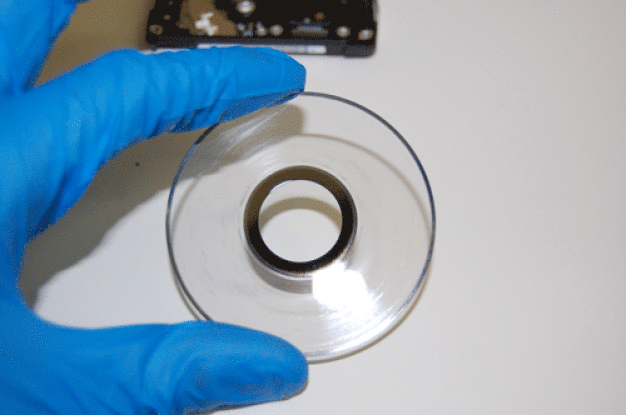
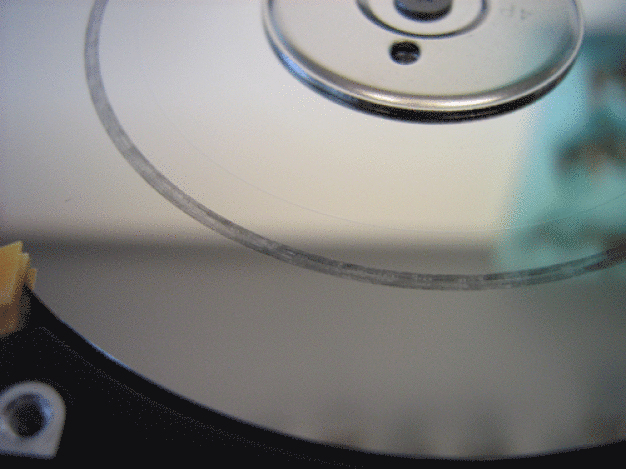
IT security must also consider health aspects when planning locations. Electromagnetic radiation can affect employees, hard drives, and wildlife. Professional data recovery relies on the undisturbed operation of a cleanroom. Plant safety is also for the protection of customer data.
Rescuing hard drives without a cleanroom? There are IT service providers who offer their customers to install spare parts into defective hard drives without a cleanroom. Most of these computer workshops have not invested in the necessary training and work equipment.
The uninformed customer generally does not recognize this lack of technical and personnel equipment of the workshop. Therefore, he is also unaware of the serious significance of this deficiency. As a result, he takes a high risk, which can range from partial loss to total loss of his actually recoverable data.
Certain hard drives have special stickers that cannot be broken through with a screwdriver. However, here one often sees tool marks, which indicate a lack of professional and technical knowledge of the workshop.
For work in a cleanroom, there are special chemicals that support several sub-tasks. They are not necessary for all hard drives and must not be used on some defective drives. The reason is that the materials used by the respective manufacturers react differently to the operational and auxiliary substances used in the laboratory. ACATO GmbH sources its operational and auxiliary substances from leading manufacturers and suppliers of such materials. Some of these products from leading manufacturers are also offered in other countries under different names but with the same or similar properties and are used there by knowledgeable laboratories.
When working with chemicals, certain protective measures are required to avoid any health risks. This begins with classic protective gloves and also includes the use of charcoal filters in air extraction systems.
On the other hand, a fully equipped laboratory also needs means to protect damaged data carriers as well as spare parts. The use of anti-static measures is an important protective factor, which is why work is carried out in various areas of the laboratory with protective mats and charge dissipation.
Furthermore, important location issues also play a role, because electromagnetic interference waves (EMF, Electromagnetic Fields) can pose a high risk to sensitive data carriers.
What is behind electromagnetic smog and the related EMF?
Biologist Henrik Mouritsen and his colleagues repeated, changed, refined, and re-checked their "electromagnetic smog" experiments over 7 years. Electromagnetic radiation is ubiquitous in our electrified houses and cities. Many perceive this as an impairment of their own well-being.
The World Health Organization (WHO) and the International Commission for Protection against Non-Ionizing Radiation have agreed on limit values. Below these limit values, which depend on the frequency and output power of the devices, no biological effects are expected to be detectable. Therefore, normal electromagnetic smog is considered harmless.
However, one does not have to agree with this. Researchers at the University of Oldenburg have found that weak electromagnetic radiation can even paralyze entire sensory organs. Electromagnetic radiation from common household devices and radio waves in the frequency range from two kilohertz to five megahertz can impair animals and humans. However, this impairment does not necessarily have negative effects on all living beings.
Also, amplitude-modulated radio signals measured several kilometers away from radio transmitters. Mobile phone radiation, which operates in the gigahertz range, and radiation from power lines in the 16 or 50 Hertz range, could be ruled out as causes of disorientation in migratory birds.
Do limit values protect humans and technology?
Switzerland has set a limit of 1 microtesla for such magnetic fields in the NIS regulation from the end of 1999. In Germany, the limit is 100 microtesla. However, magnetic fields may already be carcinogenic at continuous exposures of 0.4 microtesla. Since 2001, science has largely agreed on this (SICTA conference).
In a planned overhead line by an electricity company, about 10 microtesla are expected at a distance of about 40 meters from ground level. The research team of Alan Preece (Cancer Research Institute at Bristol University) statistically analyzed cancer cases of people living within 400 meters of power lines for southwestern England. The cancer risk there is on average 29 percent higher. Aerosols generated near high-voltage lines could become charged by the electric fields (see theory by physicist Denis Henshaw).
A similar situation occurs with railway tracks located very close (25 meters straight-line distance) to buildings. The Swedish limit of 0.2 microtesla is significant for humans and technology, as screen flickering has been observed at 0.3 microtesla.
If a commercial lease agreement is presented for such buildings, one must pay attention to hidden clauses. There, screen flickering is listed as an excluded reason for termination. If asked, no information is provided about the measured values.
If the landlord takes the trouble to point out in the lease that possible effects of such electromagnetic radiation known to the landlord in the offered property are not grounds for early termination, caution is advised. Then, detailed measurements should be carried out before signing the lease or, better yet, look for another property.
The brochure "Electromagnetic Fields at the Workplace" from the Bavarian State Office for Occupational Safety, Occupational Medicine, and Safety Technology provides an illustrative insight into this issue.
Considering the information on health and operational risks, finding a location in urban areas becomes an increasingly complex problem. The limit values of 0.4 microtesla in the Netherlands since 2005 are already cause for concern.
Operational risks must be assumed if S-Bahn and ICE lines are located in the immediate vicinity of a building. For subways, the damping effect of the concrete and earth above is considered good protection. For trams, the frequencies present there have only minor effects.
The risks for hard drives in such environments should not be underestimated, because degaussers (hard drive erasure devices) use 10,000 Gauss (equivalent to 1 Tesla) to penetrate the core of the hard drive. Consequently, lower values can already negatively influence parts of a hard drive.
Electromagnetic fields also exist at airports, where radar systems and other radiating systems are in use. Therefore, operating a cleanroom laboratory near an airport may be associated with health and operational risks. This applies not only to the cleanroom but also to data recovery companies, where hard drives outside the cleanroom are also present.
Prolonged exposure could subject these to damaging electromagnetic fields. When choosing their location, ACATO GmbH extensively examined the possible risks of different sites in 2011-2012 for the then-current relocation. Consequently, sites at airports and near S-Bahn/ICE tracks were classified as high risk and rejected.
Small and medium-sized enterprises assess risks to people and technology on a holistic basis, prioritizing safety over possible profit factors.
Therefore, IT security must also consider health aspects when planning locations. Electromagnetic radiation can have long-term effects on employees, hard drives, and wildlife. Professional data recovery relies on the undisturbed operation of a cleanroom. Plant safety is also for the protection of customer data.
ACATO GmbH
80339 München
Germany