




- 3D printing
- Translated with AI
Alternative to animal testing – now completely cruelty-free
First tissue model of the liver completely made without materials of animal origin
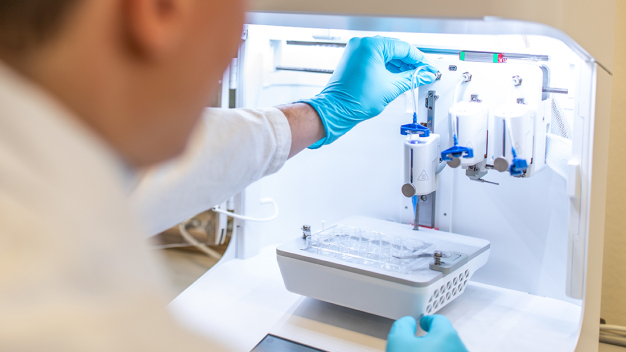
Scientists at the bioprinter
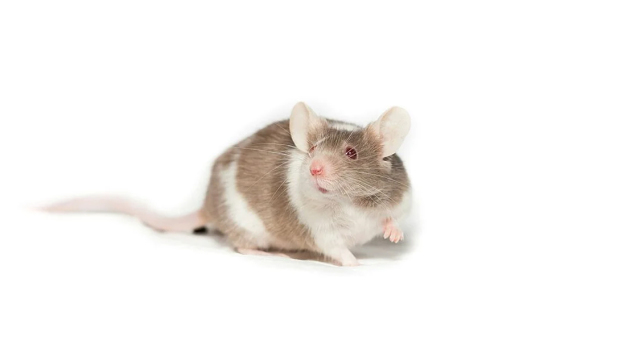
A mouse is not a human. This fact makes it so difficult for biomedical research to transfer findings from animal experiments to us. Scientists are therefore working on alternative methods to animal testing that ideally do not rely on any materials of animal origin. The mouse is also pleased about this.
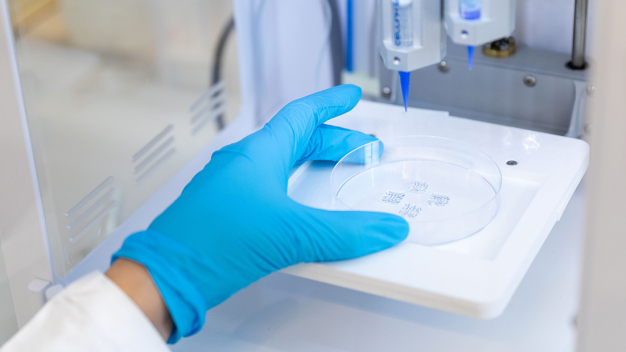
Biodruck of 3D tissue models
Scientists at TU Berlin have, for the first time, created a model of the liver using 3D bioprinting from human cells, without relying on materials of animal origin. This achievement is an important step towards biomedical research and education that fully relies on methods free of animal suffering. Until now, substitute methods for animal testing, for example, have used nutrient solutions derived from calf fetuses. And among other things, for the 3D printing of organ models, structural substances obtained from tumors grown in mice were previously necessary. In addition to these ethical considerations, biomedical research conducted entirely without animal components also improves the transferability of its results to humans – which offers hope for faster progress in drug development.
"In Germany, it is actually prohibited to slaughter pregnant cows," explains Prof. Dr. Jens Kurreck, head of the Department of Applied Biochemistry at TU Berlin. If pregnancy is not detected before slaughter, it is common to take blood from the fetus. Because this blood contains many substances that stimulate growth and are therefore ideal for cell proliferation in biological research. The "fetal calf serum" obtained from this blood is a standard product in every cell culture laboratory.
Likely more than two million calves' fetuses per year
"There are only rough estimates regarding the number of calves' fetuses needed for this purpose. A publication from 2021 estimates two million worldwide, and since then, the consumption of fetal calf serum has actually increased," says Kurreck. A large part of this comes from slaughterings outside the EU and can therefore hardly be monitored by German or European institutions. "Because calf serum is so well suited for cell cultivation, it is naturally also used by researchers who want to replace animal testing with cell cultures. So, until recently, also by us."
Mice with tumors representing a fifth of their body weight
Since Jens Kurreck's research group uses particularly promising 3D bioprinting methods to produce organ models as alternatives to animal testing, the scientists previously had to rely on a second animal product derived from specially bred animals. "With the help of 3D printing, we can produce small, three-dimensional organ models from human cells that can even contain artificial blood vessels. For this, we need substances like laminins and collagens, which give these structures the necessary firmer framework compared to normal cell cultures," explains the researcher. These substances are found in high concentrations in a special form of the so-called extracellular matrix, which surrounds cells in the bodies of humans and animals in a mesh-like manner and mediates contact between them.
This substance, abbreviated BME (for "Basement Membrane Extract"), is obtained from tumors grown in mice. "In the end, such a tumor weighs about four grams, compared to a mouse body weight of perhaps twenty grams. Even from this ratio, you can see that this process causes significant harm to the animal," says Kurreck. Since the structural-supporting substances from BME are also routinely used in other cell culture laboratories for various applications, the number of animals used for production likely runs into the thousands, he estimates.
Animal components make research less reliable
Human cells nourished with blood serum from calves and stimulated to proliferate, from which human organ models are then printed using substances derived from mouse tumors: "When you consider these production steps, you realize that there is potential for errors if you want to infer the actual processes in the human body from experiments with these organ models," Kurreck explains. Moreover, human organ models are fundamentally more predictive than corresponding animal tests when addressing the same question. Although human tumor cells are also introduced into animals, these human cells still exist within animal tissue as their environment and communicate with these animal cells, which makes transferring findings to humans very difficult.
Additionally, Kurreck notes, the exact composition of animal products like fetal calf serum varies. You cannot rely on one batch to stimulate cell growth in the same way as another. "Ninety percent of all promising candidates for drugs tested in labs and animal trials, and even 97 percent of all candidates for cancer drugs, ultimately fail during testing in humans. To improve this, the goal must be to eventually do without animal testing altogether and also to eliminate animal-derived auxiliary and supporting substances."
Chemically precisely defined nutrient media and structural substances from human sources
With the first tissue model of the liver made entirely without materials of animal origin, doctoral student Ahmed Ali and other members of Jens Kurreck's team have made a significant step in this direction. They replaced fetal calf serum with a chemically precisely defined nutrient medium composed of growth factors, insulin, selenium, sugars, and salts. "We not only had to adapt this nutrient medium to the specific type of human liver cells we used but also gradually acclimate the cells to the new environment," Kurreck recounts. The initial cells for starting the experiment were, of course, supplied by a company that had used calf serum for their proliferation.
As a substitute for the structural-supporting mixture BME from mouse tumors, the scientists used human collagen derived from placentas, which would otherwise have been discarded as waste after births in Vienna hospitals. "What sounds so simple was actually a complex process of adaptation, requiring much experimentation and extensive literature research," says Kurreck. For example, the plastic dishes in which the cells were cultured had to be specially coated with human collagen from placentas to achieve similar adhesion as with conventional methods.
Test results confirm the equivalence of the animal-free method
To test their new, animal-free liver model, the researchers exposed it to the toxin okadaic acid, produced by algae, which accumulates in mussels and can cause severe fish poisoning. It was found that two-dimensional printed cell structures exhibited the same sensitivity to the toxin, regardless of whether they were cultivated and printed with the old or the new animal-free substances. A three-dimensional liver tissue model also showed the expected sensitivity for this case.
Transition into practical application through interdisciplinary approach
The scientists involved are optimistic that their new, animal-free method will not only quickly find its way into practice but also see broad application. For example, Albert Braeuning from the Federal Institute for Risk Assessment (BfR), the national authority for food safety, was directly involved in the current publication as a potential user of the method. The Department of Food Biotechnology and Process Engineering at TU Berlin, led by Prof. Dr. Cornelia Rauh, also contributed to the study by measuring the mechanical parameters of the new 3D bioprinting ink. Researchers there are also working with Jens Kurreck's team on cultivated meat for human nutrition, which also requires cultivation methods free of fetal calf serum. Future optimization of the animal-free method is being pursued in collaboration with Prof. Dr. Peter Neubauer's Department of Bioprocess Engineering at TU Berlin. For example, human collagens could potentially be produced in the needed quantities by yeast cells in the future – or even directly from human cell cultures in the more distant future.
Technische Universität Berlin
10587 Berlin
Germany