


- Buildings & Rooms
- Translated with AI
22 °C with a minimal deviation of ± 0.2 K/h
New precision manufacturing room enables processing of printing machine components with ± 10 µm accuracy
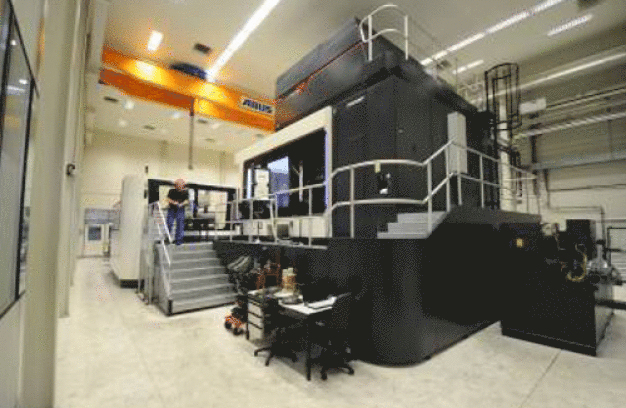
To give the lower parts of arch printing machines in the Würzburg plant a highly fine finish, KBA acquired a DIXI 270 machining center from the Swiss manufacturer DMG Mori in 2015. (Source: Nerling Systemräume GmbH)
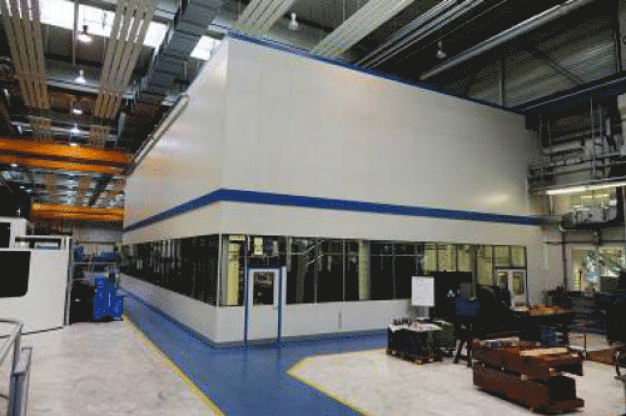
In order for the machine to maintain the required accuracy values of ± 10 µm, a temperature of 22 °C ± 0.2 K/h must be maintained in the machine room. To ensure these climatic conditions, KBA commissioned Nerling System Rooms GmbH to set up a precision manufacturing room with a pre-temperature room. (Source: Nerling System Rooms GmbH)
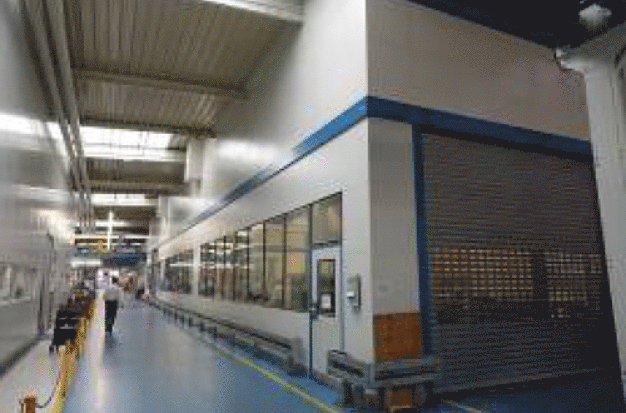
The system room experts already established a Class 2 measurement room at KBA in 2006, which was directly connected to the machine room. (Source: Nerling Systemräume GmbH)
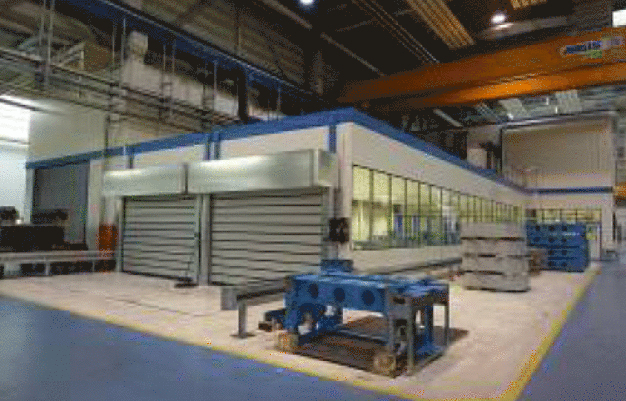
Overall, this resulted in a U-shaped system room setup consisting of the climate room (right in the background), its pre-temperature room (center of the image), the measurement room, and its pre-temperature room (left in the background). (Source: Nerling Systemräume GmbH)
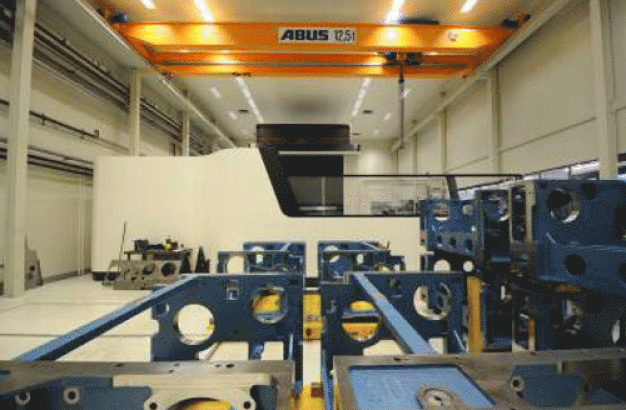
The room system consists of a steel structure that serves as the load-bearing framework for the ceiling and the on-site 12.5-ton crane. (Source: Nerling Systemräume GmbH)
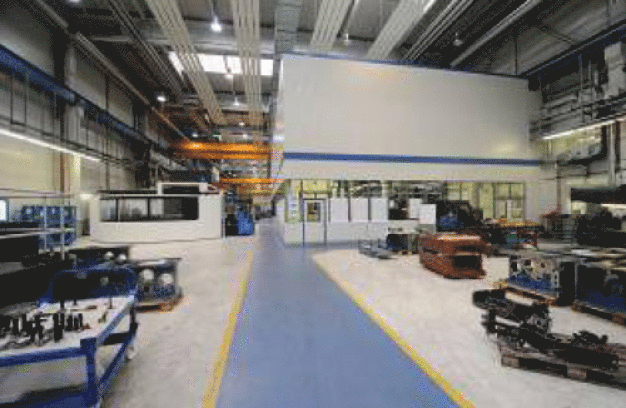
Since March 2015, the two new rooms have been successfully used. In addition, the lower parts of the arch pressing machines are also pre-fabricated outside the pre-tempering room on a DMG machine. (Source: Nerling Systemräume GmbH)
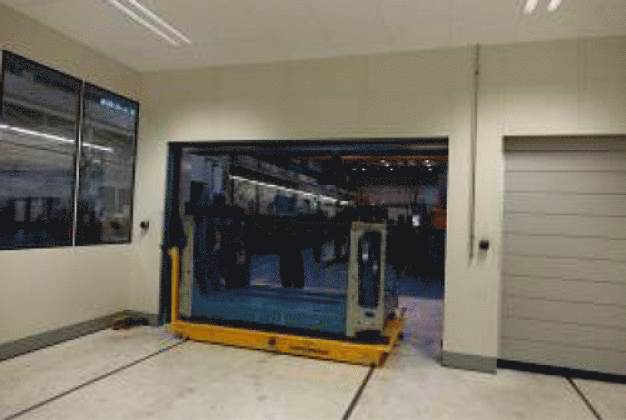
Then they are brought into the pre-temperature room on a lightweight rail system suitable for weights up to 8 tons. (Source: Nerling System Rooms GmbH)
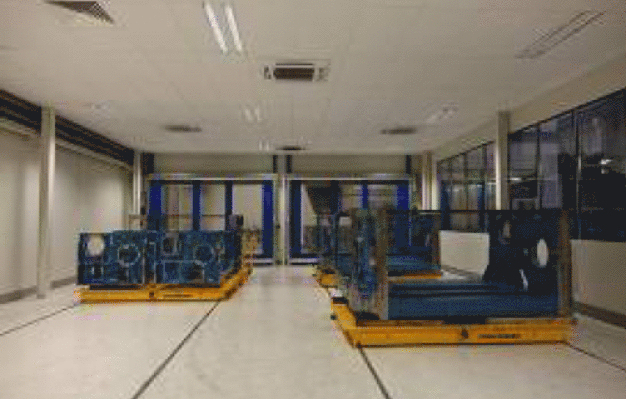
There they are stored for 24 hours at 22°C until the parts have also reached this temperature. (Source: Nerling Systemräume GmbH)
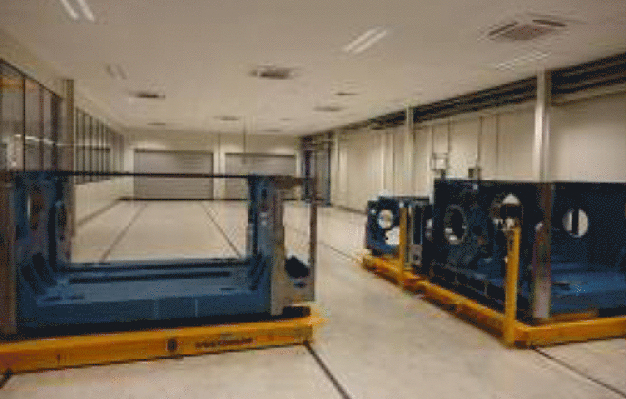
There they are stored at 22 °C for 24 hours until the parts have also reached this temperature. (Source: Nerling Systemräume GmbH)
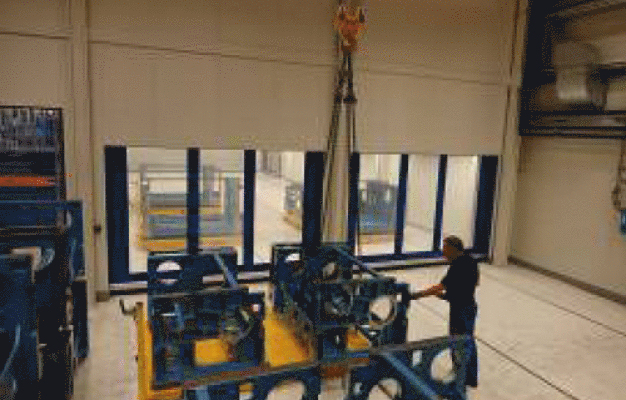
According to the First In – First Out principle, the parts are supplied to the DIXI 270 and machined with an accuracy of ± 10 µm. (Source: Nerling Systemräume GmbH)
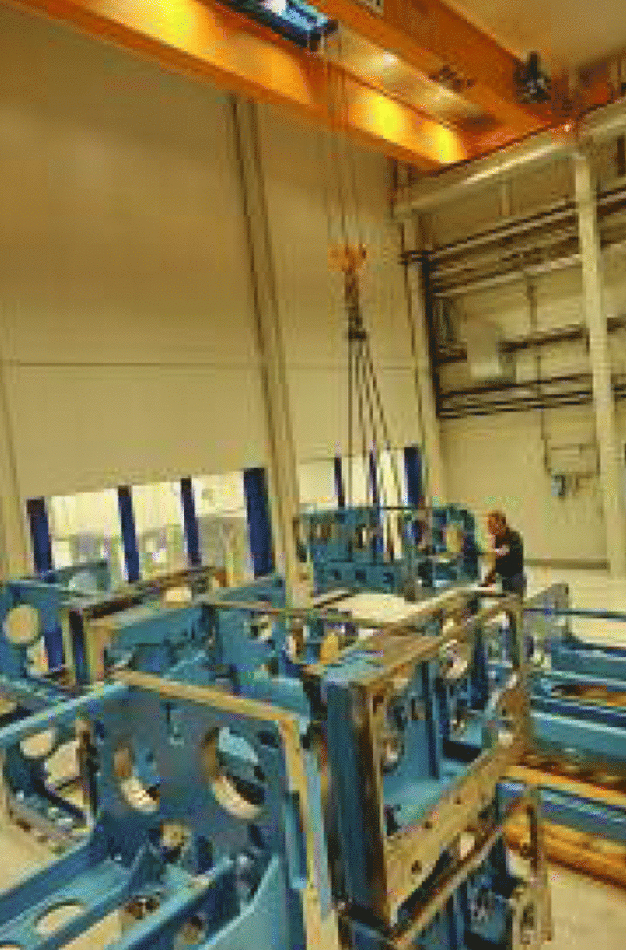
According to the First In – First Out principle, the parts are supplied to the DIXI 270 and machined with an accuracy of ± 10 µm. (Source: Nerling Systemräume GmbH)
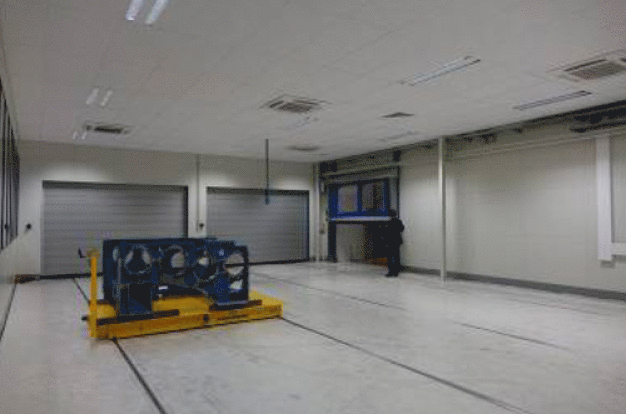
Finally, the parts are returned to the tempering area and from there to the pre-chamber of the measurement room. (Source: Nerling Systemräume GmbH)
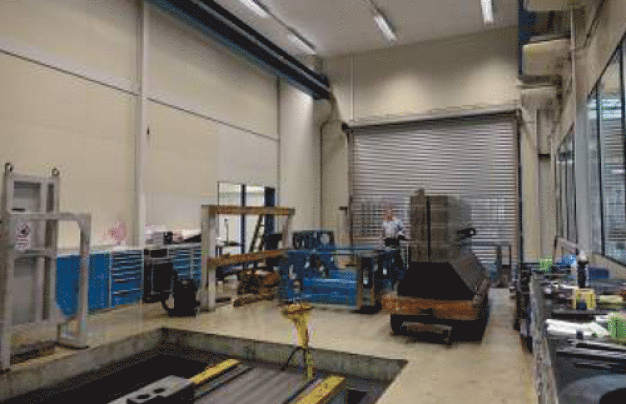
Finally, the parts are returned to the tempering area and from there to the pre-chamber of the measurement room. (Source: Nerling Systemräume GmbH)
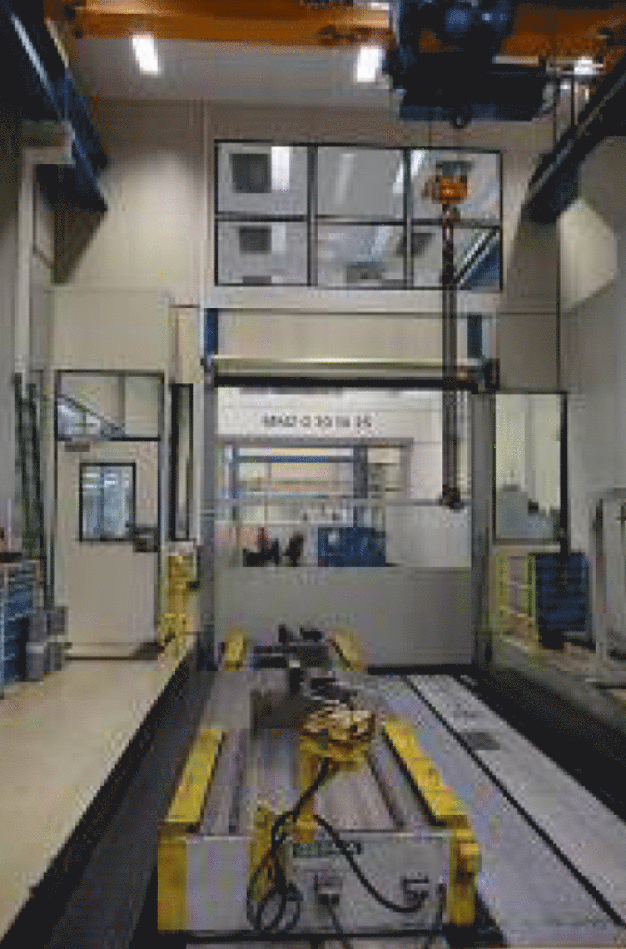
Finally, the parts are returned to the tempering area and from there to the pre-chamber of the measurement room. (Source: Nerling Systemräume GmbH)
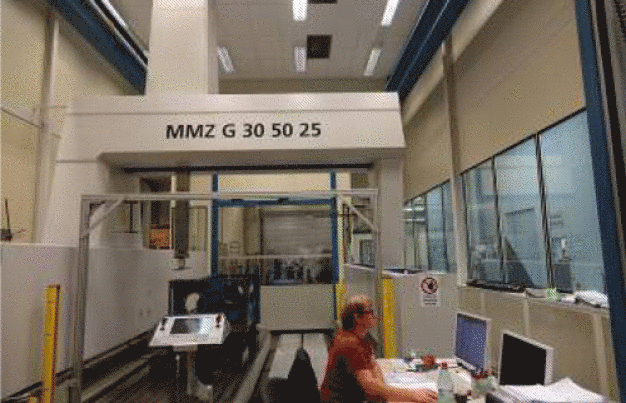
Measuring represents the final processing step. (Source: Nerling Systemräume GmbH)

"Through this circle, the constant temperature is maintained throughout the process, leading to significant time savings," says Ewald Baumeister, Head of Large Parts Manufacturing at the subsidiary KBA Industrial Solutions AG & Co. KG. (Source: Nerling Systemräume GmbH)
"A major challenge in this project was that there was no way to completely finish the room and bring it to the correct temperature for the processing center before it was moved to its new location," explains Olaf Nerling, Managing Director of Nerling System Rooms GmbH. "One end and half of the roof had to remain open so that the machine could be moved into the room using the hall crane as a whole." (Source: Nerling System Rooms GmbH)
To give the lower parts of arch printing presses in the Würzburg plant a highly fine finish, Koenig & Bauer AG (KBA) installed a DIXI 270 machining center from the Swiss manufacturer DMG Mori in 2015. For the machine to meet the required accuracy values of ± 10 µm, special conditions must be met in the machine room, primarily a temperature of 22 °C, with only a minimal deviation of ± 0.2 K/h allowed. To ensure this, KBA commissioned the experts from Nerling Systemräume GmbH to set up a precision manufacturing room with a preheating chamber. Due to the space requirements of the machining center, approximately 11.5 x 13 m, the room measures 23 x 14 m² with a ceiling height of 8.8 m, making the maintenance of precise temperature conditions a challenge for the climate control system. An additional difficulty arose during the setup of the machine: part of the roof at the front of the machine room had to remain open to lift the entire machining center into the room with a crane. Only afterwards was the room quickly sealed to immediately create the proper environmental conditions for the machine.
"In 2014, we decided to install a DIXI 270 machining center in our Würzburg plant to process the lower parts of arch printing presses," explains Ewald Baumeister, Head of Large Parts Manufacturing at the subsidiary KBA Industrial Solutions AG & Co. KG. "After the manufacturer DMG Mori conducted a study and finalized the configuration of the machining center, we were informed of the environmental conditions that must be maintained on site for it to operate with the precision we require." The Dixi 270 is responsible for the highly precise finishing of the lower parts, made of gray cast iron GG25, and mainly requires a consistent temperature of 22 °C ± 0.2 K. Larger temperature fluctuations are not permitted, as despite the size of the parts, the tolerance is only 10 µm. Every degree change in the ambient temperature would have a significant negative impact on the accuracy of the machining process.
Climate room directly next to existing measurement room
"With the manufacturer's specifications, we approached Nerling, who had already set up a Class 2 measurement room for us in 2006, with which we had good experiences," says Baumeister. "On the advice of the specialists, we decided not only to build a machine room but also a preheating room, where we can store the parts to be machined long enough at the required temperature until they also reach 22 °C." The designated location for both rooms was in a normal manufacturing hall, where older machining machines had been installed. Nearby was Nerling's measurement room, including an anteroom, directly attached to the machine room.
"The climate room for the DIXI machining center, together with the measurement room and preheating rooms, forms a system room with a basic dimension of 20.9 x 44.4 m and a height of 8.8 m," explains Olaf Nerling, Managing Director of Nerling Systemräume GmbH. These dimensions were necessary because the machining center measures approximately 13 x 13 m. The room system consists of a steel structure that serves as the support for the ceiling and the onsite 12.5-ton crane used for loading the machine with workpieces.
Precision climate technology for especially large machine room
"A fundamental challenge in this project was maintaining the required temperature values in a room of about 320 m²," says Nerling. Therefore, the experts installed a precision air conditioner that can provide temperature control according to the specifications of the machine. Its base temperature is set at the required 22 °C and can be adjusted in 0.1 K steps. The relative humidity can be seasonally adjusted and is limited to a maximum of 70 percent. "Currently, the room's humidity is at 60 percent," says Baumeister. "We want to reduce it to about 40 percent to improve the well-being of our employees." The machining center operates in three shifts, with one person constantly present.
The second challenge for the system room builders was that it was not possible to complete the room and bring it to the correct temperature for the machining center before it arrived at its new location. "One front side and half of the roof had to remain open so that the machine could be moved into the room entirely with the hall crane," explains Nerling. Afterwards, the room had to be immediately closed, inserting the missing roof section, including the steel structure, and the front wall over a length of 5 meters. The Nerling team worked in three shifts, including overnight, to complete the room system and bring the climate to 22 °C as quickly as possible. "When the machine was delivered in March 2015, it was cold due to the winter outdoor temperatures," Baumeister recalls. "It was absolutely crucial that it didn't get too warm."
Total material flow at 22 °C
Since then, both rooms have been used regularly. "Initially, DMG Mori staff provided production support for several weeks to ensure everything ran smoothly," says Baumeister. Since the climate control systems for maintaining a constant 22 °C are installed not only in the machine room and its anteroom but also in the measurement room and its anteroom—this temperature is necessary for the measurement process—the entire material flow occurs at a constant temperature: The lower parts of the arch printing presses are first pre-finished outside the preheating room on a DMG machine. Then, they are transported on a lightweight rail system suitable for weights up to 8 tons into the preheating room, where they are stored for 24 hours at 22 °C. Following the First In – First Out principle, the parts are fed into the DIXI 270 and machined with an accuracy of ± 10 µm.
Afterwards, the parts are returned to the temperature-controlled area and from there to the anteroom of the measurement room. The measurement is the final machining step, with a maximum cut thickness of 0.5 mm. The only remaining step is the final finishing of the parts, such as cleaning. "This cycle ensures a consistent temperature throughout the process, which leads to significant time savings," confirms Baumeister. Without these rooms, the parts would have to be separately brought to 22 °C for finishing and measurement. "Both rooms have proven to be very effective in practice. The cooperation with Nerling, as during the construction of the measurement room, was also flawless," summarizes the head of large parts manufacturing.

Nerling Systemräume GmbH
Benzstraße 54
71272 Renningen
Germany
Phone: +49 7159 16340
Fax: +49 7159 163430
email: ralf.nerling@nerling.de
Internet: http://www.nerling.de