



- CO2
CO2-Fußabdruck in der Reinraumtechnik
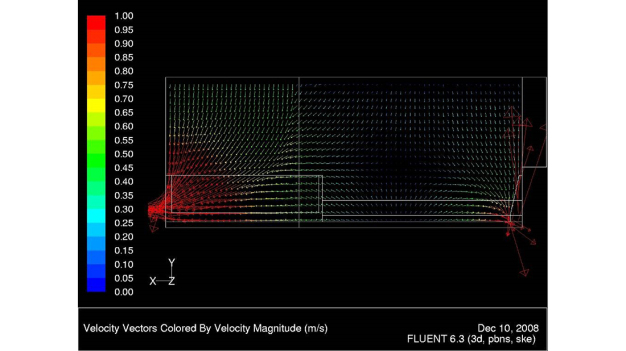
Strömungsbild einer Turbulenzarmen Strömung unter Einfluss der Ansaugstelle
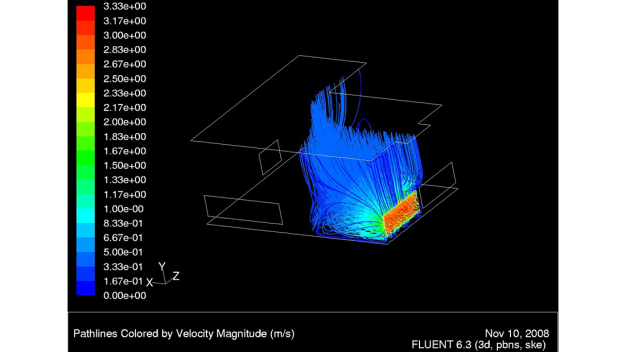
Einfluss einer Abluft-Ansaugstelle auf die laminare Strömung im Raum
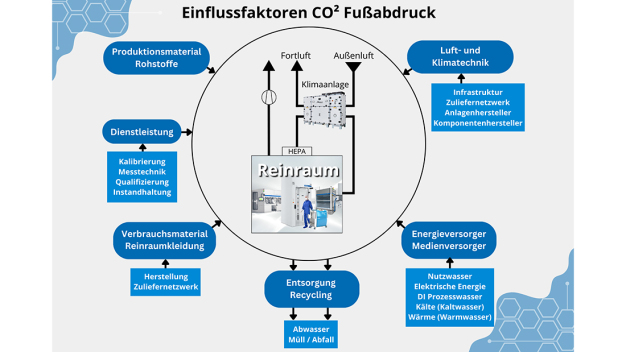
CO2 Fußabdruck - Einflussfaktoren in einem Reinraum
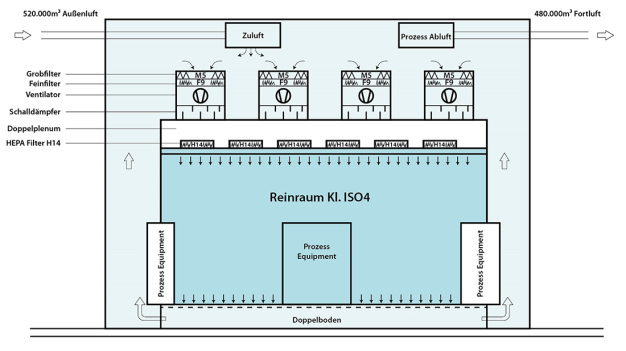
Prinzipschema des Reinraumkonzeptes mit Druckplenum und Umluftmodulen
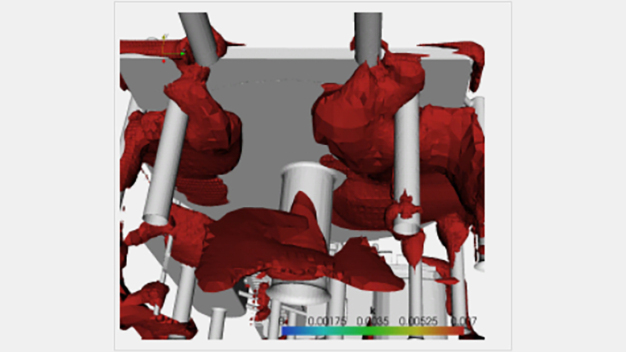
Detailaufnahme der kinetischen Energiefelder unterhalb der Abfüllanlage, die von einer laminaren Strömung nicht betroffen bzw. freigespült wird.
In Zeiten der wirtschaftlichen Hochkonjunktur und des grenzenlosen Warenverkehrs ist das Bewusstsein in Bezug auf unsere Umwelt nicht besonders ausgeprägt. Nun führen internationale Krisen uns unsere selbstgeschaffene Abhängigkeit drastisch vor Augen und dennoch blenden wir weitgehend die Folgen der Klimaveränderung aus. Außerdem stellen die hohen Energie- und Betriebskosten die Industrie, insbesondere auch die Reinraumtechnik, vor großen Herausforderungen.
Es ist an der Zeit, auf neue Wertigkeiten zu setzen. Umwelt, Energie, Sicherheit und Nachhaltigkeit haben oberste Priorität und die europäischen und regionalstaatlichen Gesetzgebungen stellen in Bezug auf nachhaltige umweltfreundliche Prozesse aktuell strenge Regeln auf.
Die CO2-Bilanz ist ein Maß für den Gesamtbetrag von Kohlenstoffdioxid-Emissionen, die direkt und indirekt durch Aktivitäten verursacht wird oder während der Lebensstadien eines Produktes entstehen. Der CO2-Fußabdruck eines Produktes (Product Carbon Footprint) zeigt, in welcher Lebenszyklusphase wesentliche CO2-Emissionen anfallen und wie diese kosteneffizient reduziert werden können. Von der Rohstoffgewinnung über Transport, Produktion, Nutzung und End of Life-Szenario wird alles durchleuchtet.
Um den Carbon Footprint von Produkten zu berechnen, wird die ISO14067 angewendet.
Dabei werden die emittierten Mengen an Treibhausgasen in einem Produktsystem erhoben und in CO2-Äquivalente umgerechnet, um den potentiellen Beitrag dieses Produktes zur Erderwärmung zu quantifizieren. Die moderne Messtechnik bietet die Möglichkeit die Messtoleranzen auf ein Minimum zu setzen und eine konstante Strömungsgeschwindigkeit sicherzustellen. Praxistest beweisen, dass die Reinraumqualität bei verringerter Strömungsgeschwindigkeit von 0,36 mS keine Beeinträchtigung ergibt. Mit Simulationen, innovativen Reinraumdesign, belastbaren Test und fundierten Risikobewertungen sind vielfach Strömungsgeschwindigkeiten unter der 20% Regelung vertretbar.
„Wir brauchen Mut zur Veränderung und den Willen für echte Kooperationen – gemeinsam Lösungen zu entwickeln und Verantwortung zu übernehmen“ -Josef Ortner
Strömungsgeschwindigkeit HEPA-Filter
Die DIN EN ISO 14644 schreibt für eine turbulenzarme Strömung eine Luftgeschwindigkeiten am Austritt von HEPA-Filtern von 0.45 ms +-20% vor. Diese Vorgabe wurde vor Jahrzehnten erstellt und begründet sich z.T. in der Abscheidewirkung der damaligen Filterqualität. Diese Vorgabe bewirkt bei flächendeckender Filterbelegung oder größeren Filterflächen enorm große Luftmengen. Zudem kommt ein erhöhter Luftwiderstand im Filterumfeld von ca. 200 – 500 Pascal, der sich im Filterwiderstand und den vorgelagerten strömungsgleichrichtenden Einbaukomponenten begründet. In dieser Betrachtung sind die Anlagenwerte inkl. der Verteilsysteme von den Lüftungs- und Klimaanlagen nicht berücksichtigt. Die Gesamtwiderstände in Lüftungssystemen belaufen sich in der Regel zwischen 800 bis 1000 Pascal. Das bedeutet hohe Antriebsenergien, hohe Kühlleistung, voluminöse Luftleitungen und große Einbaukomponenten. Die heutige Filtertechnik ermöglicht Luftgeschwindigkeiten weit unter den Normwerten, ohne dabei die Qualität zu beeinträchtigen. Die Widerstandswerte sinken deutlich und die Standzeiten erhöhen sich um ein Vielfaches. Verwendet man dann noch widerstandsminimierte PTFE HEPA Filter wird dieser Effekt noch deutlicher verbessert. In vielen Fällen können Reinraumsystem mit verringerten Strömungsgeschwindigkeiten betrieben werden, was zu Reduktionen für Investitions- und Betriebskosten bis zu 50% führen kann.
Strömungsgeschwindigkeit Isolatoren
Die DIN EN ISO 14644 bzw. die GMP-Guidelines schreibt für die Reinraumklasse A eine flächendeckende gleichmäßige Strömungsgeschwindigkeit von 0.45 ms +- 20% vor. Die Forderung einer Strömungsgleichmäßigkeit ist in den meisten Fällen absolut gerechtfertigt, diese wird aber auch bei Geschwindigkeiten deutlich unter den Vorgabewerten erreicht. Zu berücksichtigen sind immer mögliche störende Fremdeinflüsse die die Kolbenströmung beeinträchtigen können. Diese Vorgabewerte sind auch bei Isolatoren einzuhalten, was aber Hinterfragens wert ist. Isolatoren sind hochdichte Sicherheitsanlagen in denen i.d.R. Sterilisations- oder Dekontaminationstechniken eingebaut sind. Vor jedem Prozess wird der gesamte Innenbereich in einen 100% keimfreien Zustand gebracht. Eine Fremdkontamination von außen wird mit Sicherheit ausgeschlossen. Eine flächendeckende gleichmäßige Strömung bringt keine erhöhte Sicherheit, im Gegenteil, diese kann auch negative Auswirkungen bewirken. Strömungssimulationen und Visualisierungen beweisen, dass Kolbenströmung eine Freispülung in Nischen oder verdeckten Bereichen nicht garantieren. Eine turbulente Strömung ist in den meisten Fällen effektiver. Verändert man die Strömungstechnik von turbulenzarm auf turbulent, vereinfacht sich auch die Technik und die Bauweise deutlich. Aufgrund der geringen Kammervolumen können Luftwechselzahlen >400 fach leicht erreicht werden. (Rechenbeispiel: 4 Gloves Isolator 2m x 0,8m Kammergrundfläche = ca 2600 m³h bei turbulenzarmer Strömung im Vergleich zu turbulenter Strömung ca 800 m³h Luftwechsel 600 fach). Mit dem Begriff turbulenter Strömung ist keine hochturbulente Strömung gemeint. Zu erwähnen ist auch, dass die Strömungscharakteristik, vor allem die Kolbenströmung, wesentlich an der Absaugung, von den Ansaugstellen anhängt. Die Abluft beeinflusst in hohem Maß das Strömungsbild. Nicht außeracht gelassen werden dürfen die Einflüsse durch die Arbeitseingriffe und Arbeitsweise, die Materialien und Gebinde wie auch die technische Ausstattung, die die turbulenzarme Strömung negativ beeinflussen.
Außenluft, Fortluft und Umluft
Die meisten Anlagen und Geräte im medizinischen und pharmazeutischen Umfeld werden als reine Fortluftanlagen, oder zumindest als Mischluftanlagen mit einen gewissen Fortluftanteil betrieben. Die Begründung liegt meistens in den Herstellerangaben und in der Risikobetrachtung einer Kontaminationsverschleppung in die Arbeitsumgebung. Fortluft bedeutet zwingend auch Außenluft, die auf die Reinraumbedingungen aufbereitet werden müssen. Unabhängig von dem Installationsaufwand und dem Platzbedarf betrifft die Außenluftaufbereitung die Themen Heizen, Kühlen, Befeuchten, Entfeuchten und die ganze Kette der Filtertechnik. Wenn man sich mit der Thematik „Herstellerangaben“ näher beschäftigt, gelangt man zur Erkenntnis, dass Hersteller verschiedene Risiken bewerten und zudem noch Sicherheitsaufschläge hinzurechnen. Diese Feststellung ist kein Vorwurf, sondern soll nur dazu anregen, eine eigene Risikobewertung anzustreben. Dieses Thema betrifft insbesondere die Mikroelektronik, weil für die Herstellung von Mikro Chip tausende Produktionsanlagen gebraucht werden. Die Prozessfortluft von Prozess-Equipment ist in der Regel chemisch kontaminiert und muss über Absorptions- oder Adsorptionsanlagen behandelt werden.
Drei Praxisbeispiele:
1. In einer Messwertegegenüberstellung von Anlagen derselben Type und mit denselben Herstellungsprozessen hat sich gezeigt, dass es teilweise gravierende Unterschiede der Fortluftmengen gab. In einer mit der Produktion angestimmten Vorgehensweise wurden alle Anlagen schrittweise auf den Wert der Anlage mit dem niedrigsten Wert eingestellt. Das Ergebnis war eine Fortluftreduktion am Standort von ca 18.000 m³h = ca 160 Mio m³ im Jahr. Das bedeutet auch, 160 Mio m³ Außenluft, die nicht aufbereitet werden müssen.
2. Für die Installation einer Prozessanlage wurde die vorgegebene Lüftungsinstallation errichtet. Im Zuge der Inbetriebnahme wurde, ohne den Betreiber und das Inbetriebnahme Team zu informieren, die Prozessfortluft auf ca. 60% der Herstellerangaben voreingestellt, in Erwartung, dass nachgeregelt wird, wenn sich Probleme am Produkt oder bei der Inbetriebnahme ergeben sollten. Das Ergebnis war, dass die eingestellten Werte nicht verändert wurden und es zu keinen Qualitätsproblemen kam.
3. In den 80iger Jahren wurde eine hochmoderne Mikro Chip Fabrik errichtet. Eine der Neuheiten lag in der Druckplenum-Technik und in der vollflächigen Filterbelegung für ca. 1000 m² Fertigungsfläche. Für die Sicherstellung der Strömungsvorgaben von 0,45 ms wurden Umluftanlagen mit einer Leistung von ca. 1,6 Mio m³h installiert. Bei einer Raumhöhe von 3m ergab sich daraus ein ca. 600 facher Luftwechsel. Trotz massiver Bedenken zur Senkung der Luftmenge wurde, begleitet mit umfangreichen Qualitätskontrollen, schrittweise die Luftgeschwindigkeit auf 0,3 ms gesenkt. Ergebnis war, dass sich die Luftmenge um ca. 1 Mio m³h verringerte und sich eine deutliche Reduktion des Anlagenwiderstandes einstellte, was zu einer Energie- und Kühlleistungsreduktion von ca. 7,7 Mio KWh/J führte.
Diese simplen Beispiele sollen dazu anregen, Inbetriebnahmen von einem niedrigeren Wert aus zu starten, um damit die optimalen Betriebszustände zu erreichen.
Anlagen im Umluftbetrieb
Die technische Entwicklung der letzten Jahrzehnte hat viele Neuheiten und Verbesserungen hervorgebracht. Die moderne Luftfiltertechnik wie auch Techniken zur Behandlung von kontaminierter Abluft haben dazu geführt, dass Reinraum- und Prozessanlagen heute vielfach als reine infrastrukturunabhängige Umluftanlagen betrieben werden können. Das bewirkt, dass Luftmengenreduktionen bei einfachen Materialdurchreichen von ca. 0,7 Mio m³j oder bei Dekontaminations-Materialschleusen von ca. 4 Mio m³j oder bei Isolatoren von ca. 2 bis 6 Mio m³j erreicht werden können. Zudem fällt die lufttechnische Infrastrukturinstallation weg.

Ortner Reinraumtechnik GmbH
Uferweg 7
9500 Villach
Austria
Phone: +43 4242 3116600
Fax: +43 4242 3116604
email: reinraum@ortner-group.at
Internet: http://www.ortner-group.at