




Frank Kugler
Ergebnisse innerhalb von Sekunden
Durch Messungen von den Originalproben ermöglicht MALDI TOF MS schnelle Identifizierungen
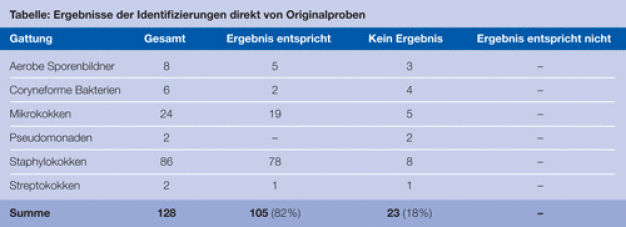
Abb. 1
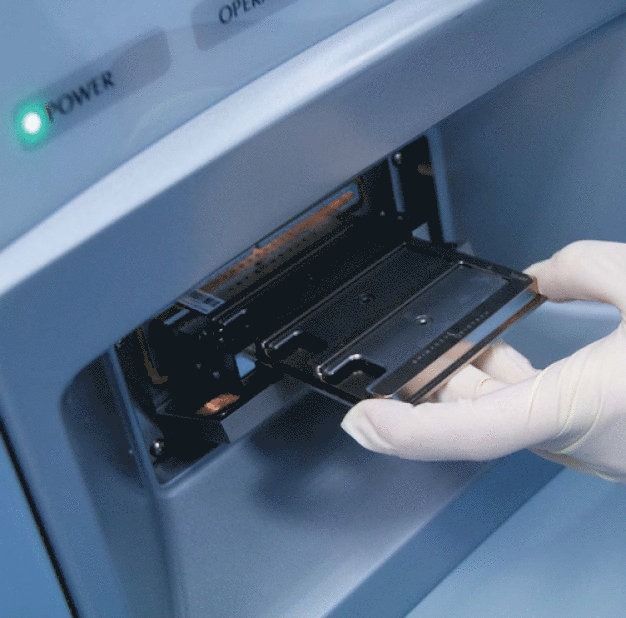
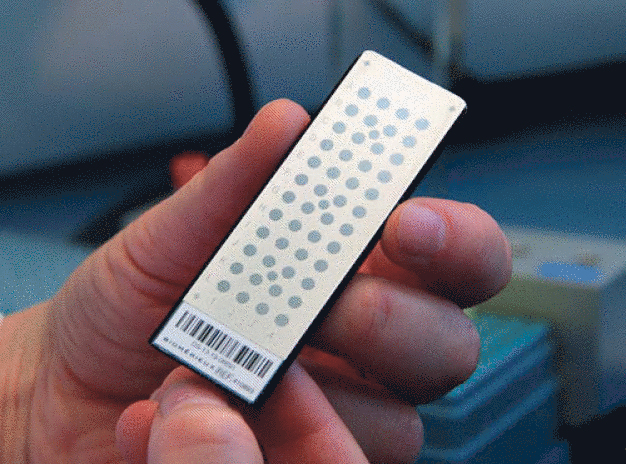
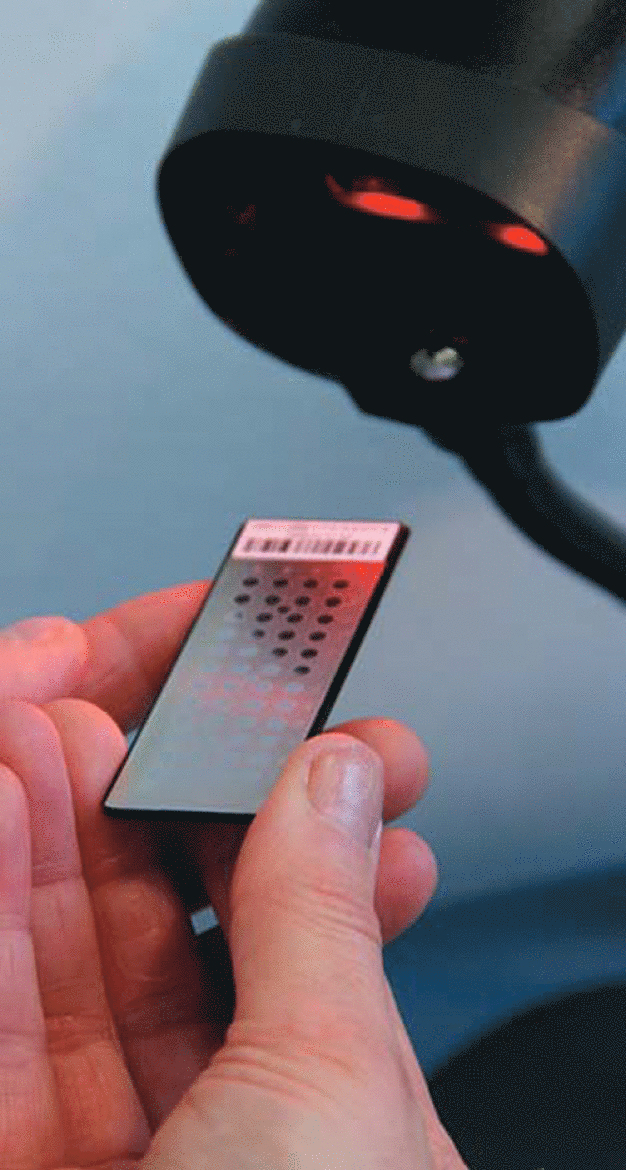
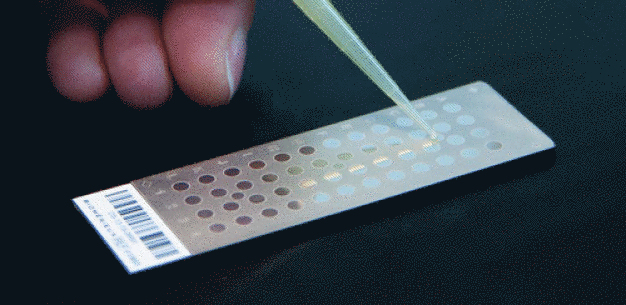
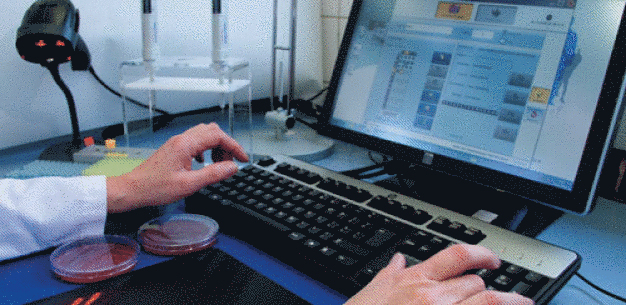
Durch das Scannen des Barcodes wird die Probe digital erfasst.
Quelle: Fa. bioMérieux
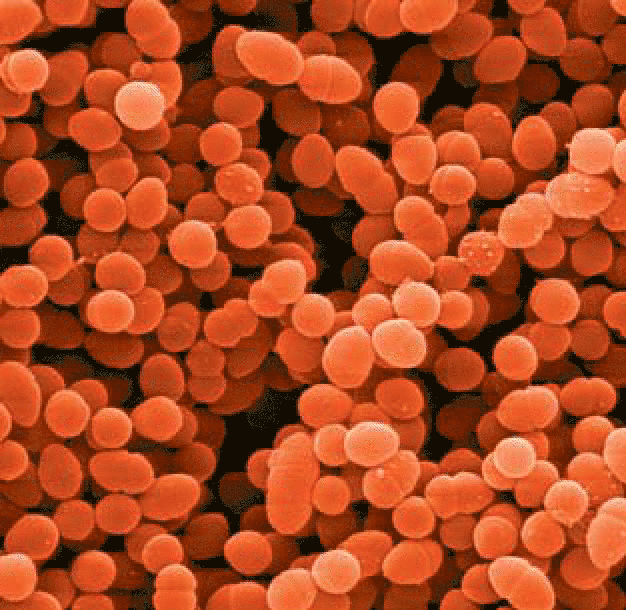
Enterococcus faecium

Staphylococcus aureus
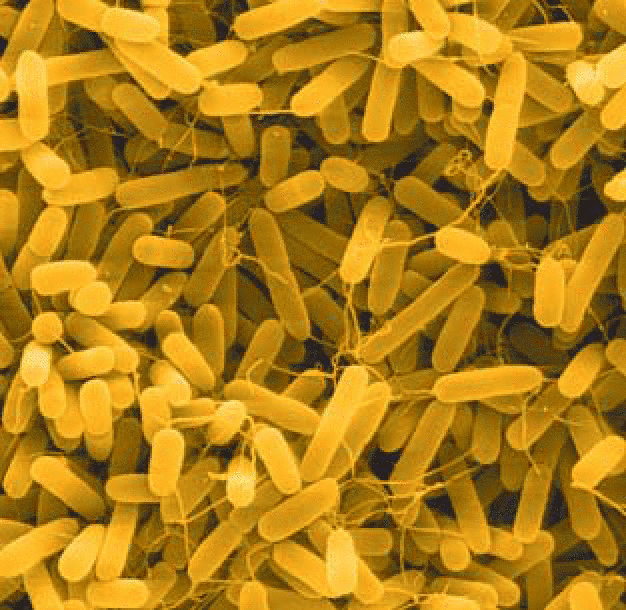
Pseudomonas aeruginosa
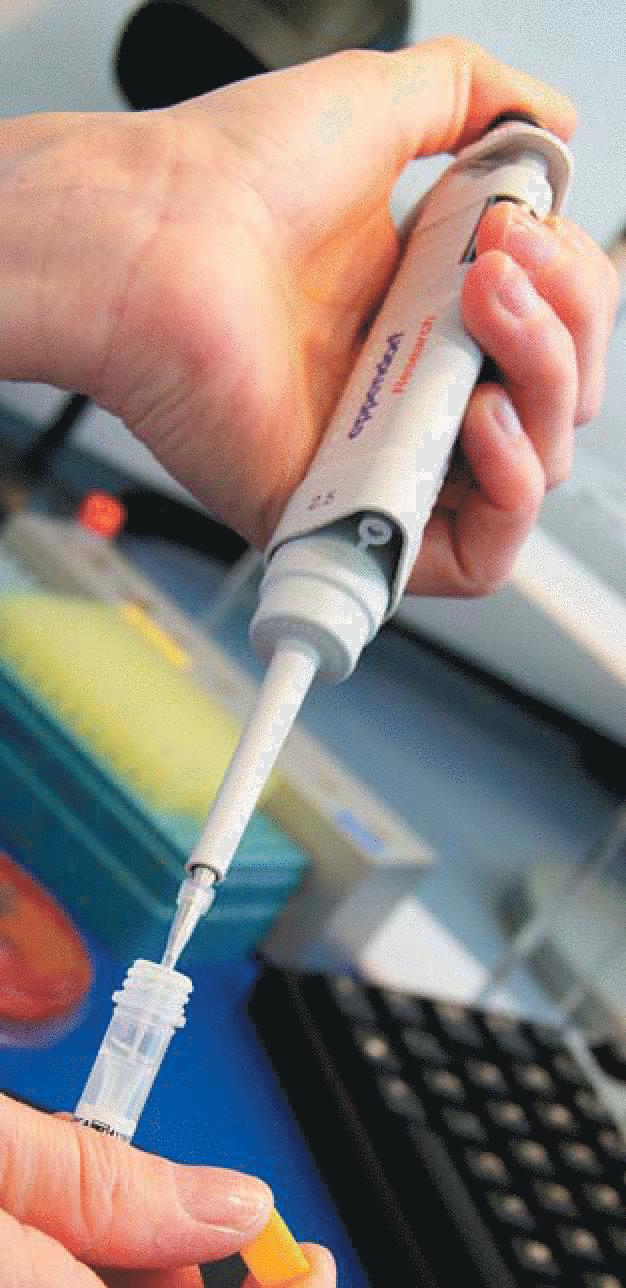
Bei der MALDI TOF-Massenspektrometrie (Matrix-assisted Laser / Desorption Ionisation Time Of Flight) werden geringe Mengen einer Probe in eine niedermolekulare Matrix gegeben. Laserbeschuss und Absorption der Laserstrahlung ermöglichen dabei die Anzeige von ribosomalen Proteinen und deren Darstellung als Fingerabdruck“. Die so erhaltenen Massenspektren werden von der Datenbank automatisch ausgewertet, die Ergebnisse aufgeführt.
Die MALDI TOF-Methode bietet im Vergleich zu herkömmlichen biochemischen oder molekularbiologischen Methoden zur Identifizierung eine Reihe von praktischen Vorteilen. An erster Stelle steht hier der Faktor Zeit: Nach Eingabe der vorbereiteten Probe in das Gerät liegen die gewünschten Ergebnisse innerhalb von Sekunden vor. Da eine vorausgehende Verdachtsdiagnose im Hinblick auf die Keimidentifizierung nicht notwendig ist, kann die Bearbeitung umso schneller erfolgen. Der Probenansatz ist dabei für die meisten Mikroorganismen gleich, nur für die Identifizierung von Hefen und Schimmelpilzen ist die Bearbeitung aufwendiger. Mit MALDI TOF können – unabhängig von Inkubationszeit und Nährmedium, von dem das Probenmaterial entnommen wird – gleichermaßen aussagekräftige wie korrekte Ergebnisse erzielt werden.
Betriebshygienische Identifizierungen
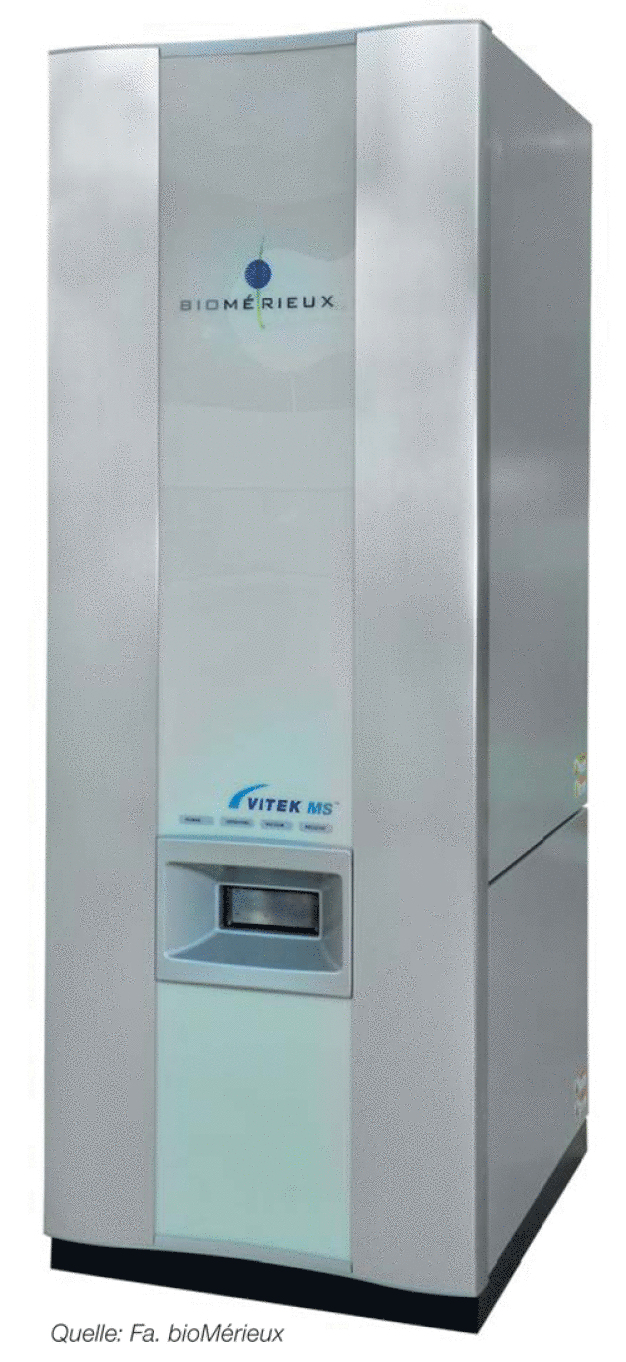
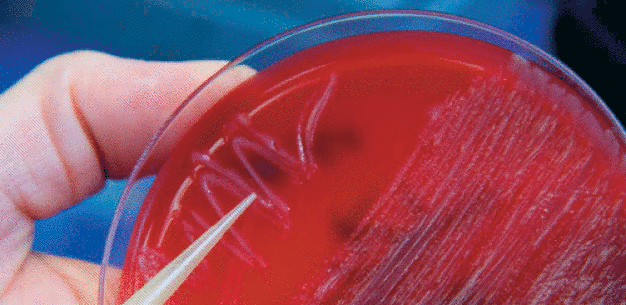
Validiert ist das MALDI TOF-Massenspektrometer (Fa. bioMerieux , VITEK MS,) für das Identifizieren von Mikroorganismen mit 24 bis 72 Stunden inkubierten Reinkulturen. Es liegt jedoch nahe, dass sich aufgrund der Vorteile der Methode die Möglichkeit bietet, Identifi zierungen unmittelbar vom Originalprodukt durchzuführen. Im Fokus stehen hier Kulturen auf festen Nährmedien wie Abklatsch- und Sedimentationsplatten sowie Medien aus Luftkeimzahlbestimmungen und Bouillons.
Ziel ist es, in einem möglichst kurzen Zeitraum zumindest eine grobe Identifizierung zu erhalten. Gerade bei der Auswertung von Proben aus dem Hygienemonitoring kann dies im Hinblick auf den Produktionsprozess eine Zeit- und Kostenersparnis bedeuten.
So führt eine zügige Bearbeitung der Hygieneproben in der Regel zu verkürzten Standzeiten der Produktionsanlagen. Weiterhin kann bei Auftreten von Aktionsgrenzen gezielt Ursachenforschung betrieben werden, was möglicherweise Einfl uss auf die Reinigungsprozesse hat. Liegen die Ergebnisse der Identifizierung schneller vor, kann der Untersuchungsgegenstand zeitnah freigegeben werden, sodass geringere oder gar keine Lagerkosten anfallen. Dazu können Reinigungsvalidierungen schneller abgeschlossen und damit Räume zügiger freigegeben werden.
Projekt: Identifizierung direkt von Originalproben
In einer Projektarbeit wurden die Mikroorganismen, die sich auf Originalproben aus dem Hygienemonitoring (Abklatschplatten sowie Nährmedien zur Luftkeimzahlbestimmung) befanden, ohne weitere Aufbereitung für die Identifizierung mit dem VITEK MS eingesetzt. Die Ergebnisse der molekularen Methode wurden mit denen der parallel durchgeführten biochemischen Identifizierung verglichen und in einer Tabelle (siehe Abb. 1) zusammengefasst.
82 Prozent der Ergebnisse entsprachen dabei den Ergebnissen der orthodoxen biochemischen Methoden. Bei 18 Prozent der Messungen wurde kein Identifizierungsergebnis angegeben. Die Resultate spiegeln die bereits vorhandenen Erfahrungswerte mit dem MALDI TOF MS wider.
Staphylokokken und Mikrokokken - aber auch Pseudomonaden und Enterokokken - werden dabei mit guten Konfidenzwerten identifiziert, vorausgesetzt, der jeweilige Mikroorganismus ist in der verwendeten Datenbank hinterlegt. Die Identif zierung einiger Bakterien bereitet jedoch noch immer Schwierigkeiten, etwa wegen ihrer spezifischen Wachstumseigenschaften.
Bilden sie zum Beispiel schleimig-wässrige Kolonien (Bazillen, Laktobazillen) oder weisen sie nur sehr feines Keimwachstum auf (coryneforme Bakterien, Listerien), werden zu wenige Massen detektiert. Das Gerät gibt dann kein Ergebnis an.
Mischkulturen werden nicht als solche erkannt, deshalb ist eine frische Subkultur auf einem Vollmedium unverzichtbar. Diese wird ohnehin für die abschließende Plausibilitätskontrolle benötigt. Aus diesem Grund sind auch Identifizierungen direkt aus einer Bouillon problematisch.
Hier müssen außerdem weitere Bedingungen erfüllt sein. So ist eine Keimzahl von mindestens 10⁶ KBE / ml nötig, um das durch Zentrifugation erhaltene Pellet für die Bearbeitung verwenden zu können. Dabei sollten keine weiteren Bestandteile, wie z. B. Gele oder Feststoffe, vorhanden sein, die die Messung stören.
Es ist generell möglich, Identifizierungen direkt von Originalproben durchzuführen, wobei dies vor allem für Kulturen auf festen Nährmedien gilt.

Labor LS SE & Co. KG
Mangelsfeld 4, 5, 6
97708 Bad Bocklet
Germany
Phone: +49 9708 91000
Fax: +49 9708 910036
email: service@labor-ls.de
Internet: https://www.labor-ls.de/