


- Workplace
Welche Vorteile bringen ergonomisch optimierte Arbeitsplätze im Reinraum?
Für eine bessere Gesundheit und effizientere Produktion.
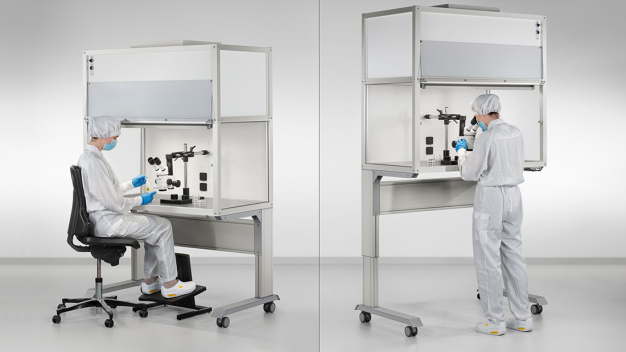
Ein nach ergonomischen Gesichtspunkten gestalteter Arbeitsplatz in Reinräumen wirkt sich positiv auf die psychische und physische Gesundheit der Beschäftigten aus. So lassen sich Fehlhaltungen und belastende sowie den Prozess gefährdende Bewegungen vermeiden. (Quelle: item)
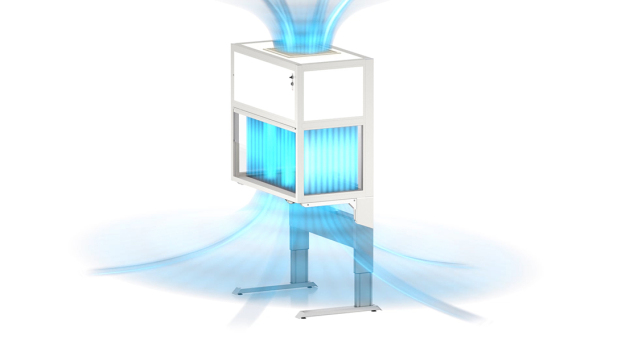
Um die geforderte Reinheit im Reinraum zu gewährleisten, muss die Ausstattung gewisse Kriterien erfüllen. Durch die eingesetzten Filter und Ventilatoren in Filter-Fan-Units und Laminar Flow Boxen wird eine turbulenzarme Verdrängungsströmung erzeugt und die Partikelkonzentration auf ein Minimum reduziert. (Quelle: item)
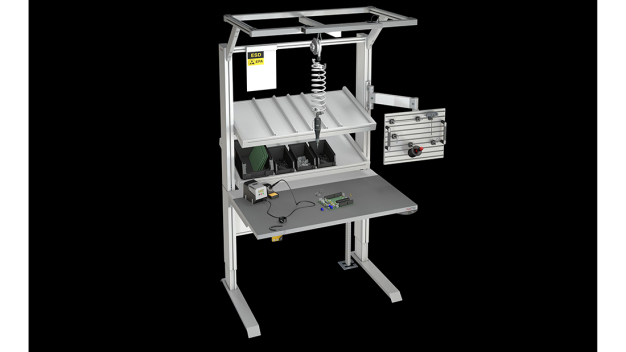
item bietet mit seinem Baukasten für die reine Produktion zahlreiche Möglichkeiten einer normgerechten Einrichtung. Die elektrisch höhenverstellbaren Arbeitstische beispielsweise ermöglichen eine reinraumtaugliche, ergonomische Produktion bis zur ISO-Klasse 5. (Quelle: item)
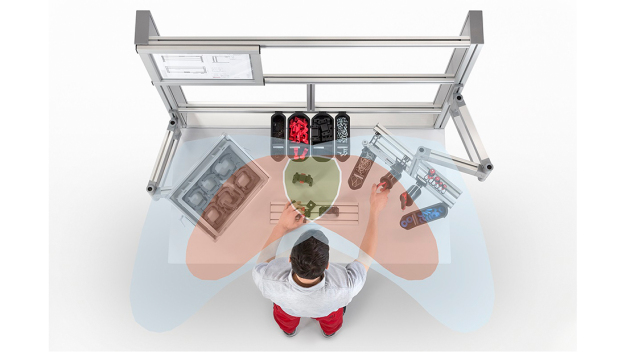
Material und Werkzeug sollten direkt im Greifraum des Beschäftigten platziert werden, um einen idealen Zugriff zu gewährleisten. Schwenkarme bieten dabei eine perfekte Unterstützung, da sie der Mitarbeitende individuell einstellen kann. (Quelle: item)
Eine ganzheitliche Betrachtung des Arbeitsplatzes ist unabdingbar, sollen ergonomische Verbesserungen erzielt werden. Dass item dies gelingt, zeigt die Auszeichnung mit dem unabhängigen Gütesiegel „geprüft & empfohlen“ der Aktion Gesunder Rücken (AGR). (Quelle: item)
Das Arbeiten im Reinraum ist an zahlreiche Vorgaben geknüpft. Es gilt, die hochsensiblen Komponenten bestmöglich zu schützen und einen störungsfreien Ablauf der Produktion zu gewährleisten. Dabei ist auch die Einrichtung der Räume von besonderer Bedeutung. Aber wie sieht die optimale Gestaltung von Reinräumen aus und welche Rolle spielt dabei die Ergonomie? Viele Aspekte müssen berücksichtigt werden, um nicht nur die Produktivität im Unternehmen zu erhöhen und Beschäftigte optimal zu unterstützen, sondern auch entscheidende Wettbewerbsvorteile zu schaffen.
Die Produktion in Reinräumen unterliegt strengen Regeln und Vorschriften. Oberstes Ziel ist, die Kontamination der Produkte durch Partikel und Mikroorganismen unbedingt zu vermeiden. Daher wird von den im Reinraum arbeitenden Personen erwartet, dass sie sich strikt an die Verhaltensregeln halten und diese verinnerlichen. Je nach Prozess gibt es festgelegte Vorschriften zur Arbeitskleidung und eine definierte Reihenfolge zum Anlegen der Kleidung. Zusätzlich zum korrekten Sitz von Haarnetz, Mundschutz, Overall, Schuhen und Handschuhen ist auch ein entsprechendes Verhalten im Reinraum unabdingbar. So sollten beispielsweise hektische und unkontrollierte Bewegungen vermieden werden, um eventuell vorhandene Partikel nicht unnötig aufzuwirbeln. Es ist empfehlenswert, regelmäßig Schulungen durchzuführen, um die Mitarbeitenden für die Gefahren im Reinraum zu sensibilisieren und damit ein konstant hohes Fertigungsniveau aufrechtzuerhalten. Denn kleinste Nachlässigkeiten können große Auswirkungen haben: Verschmutzungen von Halbleiter-, Medizin- und Pharmaprodukten machen diese unbrauchbar und erhöhen damit die Verlustquote. Doch nicht nur das Verhalten der Mitarbeitenden, sondern auch die Ausstattung der Räume ist von fundamentaler Bedeutung für die Einhaltung der Qualitätsmaßstäbe.
Spezielle Anforderung an die Arbeitsplätze in Reinräumen
Werden Prozesse oder Einrichtungen verändert, muss der gesamte Ablauf auf den Prüfstand gestellt werden, um zu garantieren, dass die geforderten Richtwerte eingehalten werden. Die Luftreinheit der Räume wird nach der DIN EN ISO 14644-1 anhand der vorhandenen Partikelkonzentration in neun ISO-Klassen unterteilt. Je niedriger die Klasse, desto höher sind die Anforderungen an die Reinheit. So liegt die Anzahl der erlaubten Partikel mit einem Durchmesser von 0,1 µm pro m³ für die Klasse 1 bei 10, für die Klasse 6 dagegen bei 1.000.000. Um die geforderte Reinheit zu gewährleisten, muss die Ausstattung von Reinräumen gewisse Kriterien erfüllen. „Oberstes Gebot ist die Verhinderung von Partikelablagerungen“, sagt Marius Geibel, Teamleiter Produktmanagement und Arbeitsplatzexperte bei item. „Daher versucht man, horizontale Flächen möglichst zu vermeiden und geschlossene Oberflächen zu erzeugen.“ Durch die eingesetzten Filter und Ventilatoren in Filter-Fan-Units und Laminar Flow Boxen wird eine turbulenzarme Verdrängungsströmung erzeugt und die Partikelkonzentration auf ein Minimum reduziert. Mit der Gestaltung der Arbeitsplätze innerhalb der Reinräume sollte diese Wirkung unterstützt werden. Beispielsweise werden dreieckige Regalstreben eingesetzt, um Schmutzablagerungen zu verhindern, oder andere Lösungen, die eine verwirbelungsarme Luftführung ermöglichen. Mit seinem Baukasten für die reine Produktion bietet item zahlreiche Anwendungsmöglichkeiten. Die elektrisch höhenverstellbaren Arbeitstische von item beispielsweise ermöglichen eine reinraumtaugliche, ergonomische Produktion bis zur ISO-Klasse 5. Nutabdeckungen der Aluminiumprofile sorgen für geschlossene Oberflächen und machen den Tisch besonders reinigungsfreundlich. „Sämtliche Materialien im Reinraum, wie Stühle, Tische und andere Gegenstände, müssen die hohen Anforderungen an Reinräume erfüllen“, erklärt Marius Geibel. „Das ist besonders schwierig, wenn sich Komponenten bewegen und damit Reibung erzeugen. Dabei besteht die Gefahr, dass sich Partikel ablösen.“
Wie bedeutsam ist die ergonomische Gestaltung von Reinräumen?
Schon in der herkömmlichen manuellen Produktion hat ein ergonomisch optimierter Arbeitsplatz seine Berechtigung. Durch gezielte Maßnahmen werden Mitarbeitende physisch und psychisch entlastet. Auf lange Sicht kann so die Gesundheit geschont und die Produktivität erhöht werden. Ein modulares Baukastensystem bietet da besondere Vorteile. Damit kann der Arbeitsplatz schnell und individuell an unterschiedliche Mitarbeitende sowie veränderte Prozessbedingungen angepasst werden. Höhenverstellbare Tische und Stühle erlauben einen dynamischen Wechsel zwischen Stehen und Sitzen beziehungsweise eine optimale Anpassung an unterschiedliche Körpergrößen. Material und Werkzeug sollten direkt im Greifraum des Beschäftigten platziert werden, um einen idealen Zugriff zu gewährleisten. Schwenkarme bieten dabei eine perfekte Unterstützung, da sie der Mitarbeitende individuell einstellen kann. Auch in Reinräumen bietet eine ergonomisch optimierte Arbeitsumgebung deutliche Vorteile. Wenn Werkzeug und Material optimal angeordnet werden, lassen sich unnötige Bewegungen vermeiden, die zu unerwünschten Verwirbelungen der Luft führen könnten. „Ein nicht unerheblicher Aspekt ist auch die Mitarbeiterbindung, die ein solch ergonomisch optimierter Arbeitsplatz mit sich bringen kann“, erklärt Marius Geibel. „Eine perfekt konzipierte Arbeitsumgebung ist nämlich auch ein Ausdruck der Wertschätzung und daher gerade in der heutigen Zeit ein wichtiger Faktor für Beschäftigte.“ Häufig müssen sie filigrane Arbeiten in der Reinraumumgebung durchführen. Höchste Konzentration ist dabei gefordert. Diese kann jedoch nur aufgebracht werden, wenn die Arbeitsumgebung dies zulässt und den Mitarbeitenden in seinem Arbeitsprozess unterstützt. Dabei spielt auch die passende Beleuchtung eine entscheidende Rolle. Harmonisches Licht muss zum einen den Mitarbeitenden und zum anderen der Sehaufgabe gerecht werden, die zu absolvieren ist. Idealerweise ist die Beleuchtung optimal auf die Arbeitsfläche gerichtet und homogen. So gilt es, harte und sich überlagernde Schatten zu vermeiden. Das Licht sollte weder flackern noch eine unangenehme Lichtfarbe haben, da sich diese nachteilig auf die Produktivität auswirken kann. Eine ganzheitliche Betrachtung des Arbeitsplatzes ist daher unabdingbar, sollen ergonomische Verbesserungen erzielt werden. Dass item dies gelingt, zeigt die Auszeichnung mit dem unabhängigen Gütesiegel „geprüft & empfohlen“ der Aktion Gesunder Rücken (AGR).
Fazit: zahlreiche Gründe für mehr Ergonomie am Arbeitsplatz
Ein nach ergonomischen Gesichtspunkten gestalteter Arbeitsplatz in Reinräumen wirkt sich positiv aus – sowohl auf das Empfinden und damit die psychische Gesundheit der Beschäftigten als auch auf deren physische Fitness. So lassen sich Fehlhaltungen und belastende sowie den Prozess gefährdende Bewegungen vermeiden. Unnötige Luftverwirbelungen entstehen damit gar nicht erst. Gleichzeitig steigen Konzentration, Motivation und Effizienz, was sich erheblich auf die Wirtschaftlichkeit auswirken kann. Mit einem ergonomisch optimierten Arbeitsplatz sichert der Arbeitgeber nicht nur langfristig die Arbeitskraft seiner Beschäftigten, sondern verfügt auch über einen möglicherweise entscheidenden Vorteil, um den „War for Talents“ gewinnen zu können.
item Industrietechnik GmbH
42699 Solingen
Germany