




- Ceilings
Reinraumdesign: Decken und deren Einbauten richtig planen und baulich umsetzen
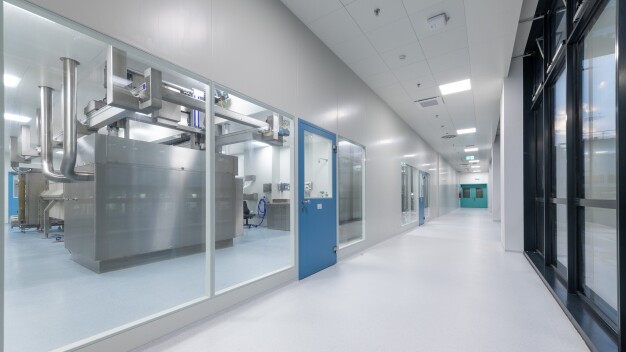
Abb. 1: Klemmkassettendecken sind nicht begehbare, abgehängte Metalldecken. Leuchten und Luftauslässe können hier nahezu flächenbündig in das System integriert werden. (Copyright: Jens Distelberg)
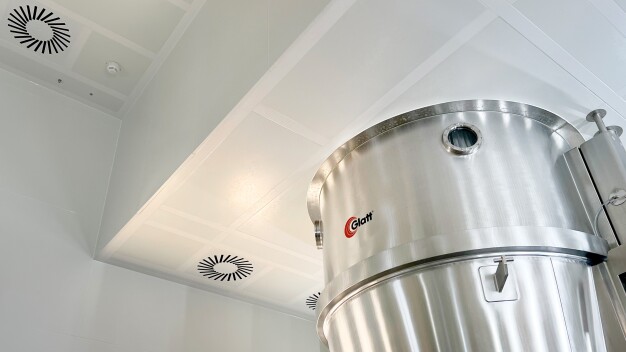
Abb. 2: Der Glatt Granulator GPCG wurde hier reinraumgerecht in eine abgestufte Tragrasterdecke integriert. (Copyright: Glatt)
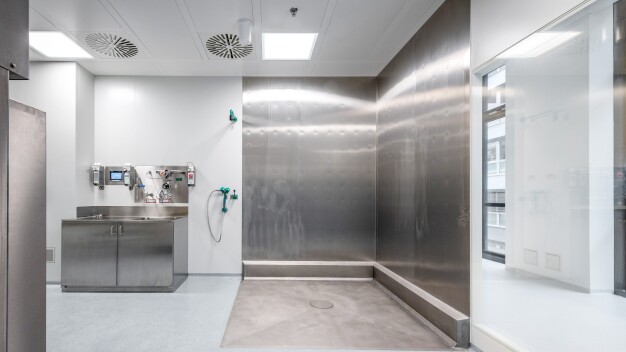
Abb. 3: Der von Glatt entwickelte vollverschweißte Reinraum-Waschplatz aus Edelstahl kommt komplett ohne Silikonfugen aus und lässt sich nahtlos an alle gängigen Reinraumdeckensysteme anschließen. (Copyright: Jens Distelberg)
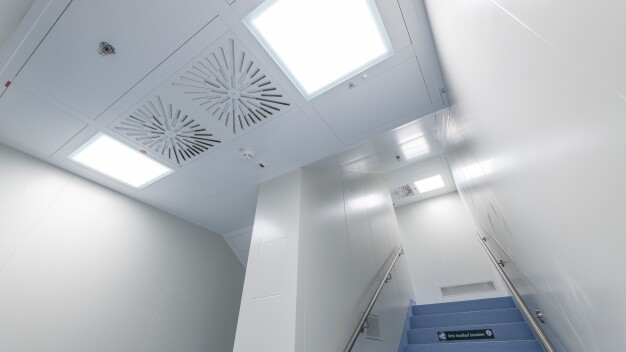
Abb. 4: Leuchten, Lüftungsauslässe, Sprinklerköpfe und Sensoren sollten soweit das möglich ist, immer flächenbündig in die Deckensysteme eingebaut werden. (Copyright: Jens Distelberg)
Klare Anforderungen in den aktuellen GMP-Regularien und weitere geltende Vorgaben definieren, wie ein Reinraum beschaffen sein muss. In der praktischen Umsetzung treffen sie auf die Bedürfnisse des Auftraggebers und müssen bei der Systemauswahl beachtet und in der Ausführung vor Ort berücksichtigt werden. Eine Vorgehensweise bei der Realisierung von Reinraumdecken erläutert Ronny Töpfer, Projektingenieur bei Glatt Ingenieurtechnik, Weimar.
Was bei der Konzeption von Türen, Verglasungen und Wänden im Reinraum gilt, spielt natürlich auch bei der Reinraumdecke eine große Rolle: Alle planerischen Fragen müssen vor der Umsetzung eines Umbau- oder Neubauprojektes sorgfältig aufgearbeitet und in enger Zusammenarbeit mit dem Kunden geklärt werden. Als Teil des Konzepts sollten Fragen rund um die Installationen im Zwischendeckenbereich wie einzusetzende Leuchten, Deckeninstallationen und Luftauslässe bereits früh abgestimmt sein. Entscheidend ist, dass alle beteiligten Gewerke eng in den Planungsprozess eingebunden werden. Glatt Ingenieurtechnik setzt beispielsweise auf eigene Inhouse-Fachleute für die Bereiche HVAC, EMSR, Prozess, Schwarz- und Reinmedien. So können alle Gewerke ohne Reibungsverluste direkt koordiniert werden. Bei Einbeziehung externer Dienstleister ist es geboten, diese so eng wie möglich in die Projektstrukturen zu integrieren.
Deckensysteme und ihre Anwendungsbereiche
Bei Reinraumdeckensystemen unterscheidet man im Wesentlichen zwischen Tragrasterdecken, Klemmkassettendecken und Paneeldecken. Sie werden in der Regel ab Reinraumklasse ISO 8 genutzt. Für mindere Reinraumbereiche ist der Einsatz von Trockenbau und reinraumgerechten Anstrichen denkbar. Wie bei den Wandsystemen gilt es auch hier, die Dichtheit durch minimalen Fugenanteil zu gewährleisten. Die Ausführung von Reinraum-Paneeldecken ist ähnlich der des Wandpaneelsystems. Je nach Lieferant gibt es freitragende, begehbare Decken bis zu einer Spannweite von sechs Metern, was die Fugenzahl minimiert. Dank integrierter Profile lassen sich auch solche großformatigen Elemente leicht an der Rohbaudecke oder an Stahlbau-Unterkonstruktionen befestigen. Leuchten und Auslässe werden bequem vor dem finalen Einbau angebracht. Das Nachrüsten von Einbauten ist hier im Gegensatz zu den anderen Systemen nur bedingt und mit größerem Aufwand möglich. Die Frage ob die Decken begehbar oder nicht begehbar sein sollen ist ein wichtiger Aspekt. Bei Paneel- und Tragrasterdecken ist die Begehbarkeit auf Wunsch möglich. So kann auf zusätzliche Gangways oder andere Konstruktionen verzichtet werden. Die Tragfähigkeit ist jedoch bei allen Systemen begrenzt. Sie dient eher zu Wartungszwecken und nicht zur Aufnahme von Rohrhalterungen oder anderen Lasten im Zwischendeckenbereich.
Systemabhängige Gestaltungsmöglichkeiten
Tragrasterdecken bestehen aus einem herstellerspezifischen, flexiblen Rastersystem mit Strangpressprofilen. Die Breiten der Stege sind je nach Hersteller unterschiedlich, wobei sich Einbauten, beispielsweise Drucksensoren, ab einer Breite von 80 mm gut integrieren lassen. Die Deckenfelder gibt es in gängigen Größen wie z. B. 625 mm x 625 mm, so dass dort auch Reinraumleuchten und Luftauslässe ohne zusätzliche Fugen eingebaut werden können. Der Markt bietet aber auch eine Reihe weiterer Größen oder Sondermaße an. Klemmkassettendecken sind nicht begehbare, abgehängte Metalldecken. Wie bei den anderen Systemen können Leuchten und Luftauslässe auch hier nahezu flächenbündig in das System integriert werden.
Die bereits erwähnte Dichtheit der Decke spielt eine tragende Rolle. Analog zu den Reinraumwänden können die Fugen im Deckenspiegel mit reinraumgerechtem Silikon abgedichtet werden. Bei Klemmkassettendecken wird nicht silikoniert, da diese nur in niedrigeren Reinraumklassen verbaut werden sollten. Neben dem Silikonieren der Decken können auch Trockendichtungen eingesetzt werden. Hier ist mit dem Auftraggeber im Vorfeld abzustimmen, in welchen Intervallen beispielsweise die Reinraumdecken geöffnet werden müssen. Eine Silikondichtung muss jedes Mal erneuert werden, wohingegen die Trockendichtung oberhalb der Fugen verlegt wird und bei Öffnung der Decke nicht ausgetauscht werden muss. Ein Nachteil der Trockendichtung ist die höhere Leckage-Rate sowie ein konstruktiv bedingter kleiner Spalt.
Enge Abstimmung in der Konzeptphase
Bereits während der Konzeption des Reinraumes sollte in enger Abstimmung mit dem Kunden und dem Architekten gearbeitet werden, wobei man im Gegensatz zu einem Neubau beim Umbau natürlich an die architektonischen Gegebenheiten gebunden ist. Die räumlichen Anforderungen und lichten Raumhöhen werden in der Regel durch den Kunden und seine Projektanforderungen bestimmt. Hier kann der Reinraumplaner selten eingreifen, da räumliche Bedingungen und Equipmentgrößen vom Prozess vorgegeben werden. Einflussgrößen, die die Architektur vorgibt, können zum Beispiel Behältermaße oder der Einbau von Hubsäulen sein. Teilweise kann man mit sogenannten Deckendomen arbeiten, um das eigentliche Reinraumvolumen effizient zu verkleinern. Je größer das Reinraumvolumen ist, desto höher sind die Anforderungen an das Luftmanagement mit entsprechend steigenden laufenden Kosten. Ein sehr wichtiger Part bei der Vorplanung eines Neubaus ist die Rohbauhöhe der einzelnen Etagen. Oft genug kommt es vor, dass erst während der Bauphase des Reinraums und der Montage der darüberliegenden Einbauten wie Rohre, Lüftungskanäle und Sprinklerleitungen festgestellt wird, dass das Plenum sehr knapp ausgefallen ist und nur mit sehr viel Engineeringaufwand alle Installationen untergebracht werden können. Genau hier muss bereits im Vorfeld eine genaue Abschätzung der Installationsdichte und der Größen, beispielsweise von Lüftungskanälen oder Leuchten, vorgenommen werden. Bequeme Wartungsmöglichkeiten an allen erforderlichen Stellen sind ein Muss und sollten entsprechend berücksichtigt und platzmäßig mitgeplant werden, insbesondere wenn es um sicherheitsrelevante Komponenten wie Sprinklerleitungen geht. Ihre Integration ist nicht zu unterschätzen. Sie sind je nach Projekt unumgänglich, meist sogar durch den Versicherer vorgeschrieben. Speziell Brandschutzeinrichtungen können nicht beliebig verlegt werden, sondern unterliegen strengen Vorschriften. Müssen gar Plenum und Reinraum gesprinklert werden, vermehrt sich der Platz- und Installationsaufwand in allen Bereichen wiederum deutlich.
Richtig integriert: Einbauten in der Reinraumdecke
Reinraumdecken können die verschiedensten Einbauten erhalten und alle müssen fachgerecht integriert werden, um der jeweiligen Reinraumklasse zu genügen. Am häufigsten sind:
– Leuchten,
– Luftein- und auslässe,
– Filter-Fan-Units,
– Sensoren wie Temperaturfühler, Druck- oder Feuchtigkeitssensoren,
– Notausgangsschilder,
– Rauchmelder,
– Sprinklerköpfe,
– WLAN-Antennen und vieles mehr.
Die Vorgaben für einen Reinraum, der glatt und flächenbündig ausgestaltet sein soll, spielen natürlich auch bei diesen Einbauten eine wichtige Rolle. Bei Leuchten und Lüftungsauslässen ist das weniger ein Problem, da die gängigen Reinraumhersteller diese Bauteile bereits flächenbündig für ihr Deckensystem anbieten. Es ist auch möglich die Deckensysteme so anzupassen, dass Leuchten und Auslässe anderer Anbieter nachträglich reinraumgerecht eingebaut werden können. Sensoren sollten möglichst in die Rasterprofile eingebaut werden, um alle Freiheiten für die Deckenelemente zu haben. Das ist bei vielen Lieferanten möglich. Alternativ werden die Einbauten in die Deckenfelder integriert, was die Freiheit im Deckenspiegel natürlich beschränkt. Nicht alle Sensoren lassen sich flächenbündig einbauen, der Markt bietet aber eine Vielzahl an reinraumgerechten Sensoren und anderen passenden Bauelementen an. Gerade bei Sprinklerköpfen gibt es gute reinraumgerechte Sonderlösungen, wie im Brandfall automatisch ausfahrbare Düsen.
Reinraumleuchten sind entweder von unten oder von oben revisionierbar. Bei der von unten zugänglichen Variante können defekte Leuchtenmodule einfach ersetzt werden, ohne den Reinraumstatus aufzuheben – ein großer Vorteil. Diese Variante bietet sich auch an, wenn der Zugang von oben durch Raumknappheit im Plenum erschwert oder nicht möglich ist. Auch bei der Beleuchtungsplanung bewahrheitet sich die Grundüberlegung für jedes Reinraumprojekt: Der Auftraggeber sollte von Beginn an mit eingebunden werden, um gemeinsam die beste Variante für das Bauvorhaben zu finden und alle Gewerke müssen sich eng abstimmen. Im Idealfall kommen alle Planungsleistungen koordiniert aus einer Hand.

Glatt Ingenieurtechnik GmbH
Nordstraße 12
99427 Weimar
Germany
Phone: +49 3643 471600
Fax: +49 3643 471271
email: jan.kirchhof@glatt.com
Internet: https://pharma-engineering.glatt.com/de/