- Universities
- Translated with AI
Young female researchers discover microtechnology
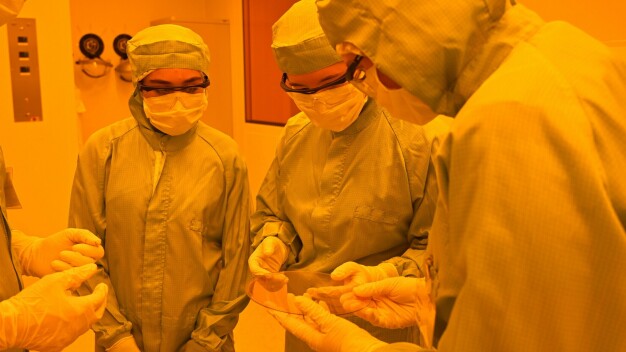
The Kantischülerinnen analyze a scratched glass substrate.

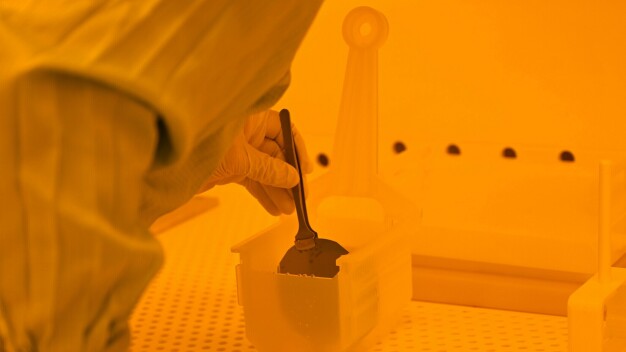
Photolithographic coating is spun onto the coated silicon wafer.

The wafers are carefully prepared for the exposure.
After exposure, the wafers are dipped in various acids through several process steps.

For an afternoon, the students were able to work on the high-tech devices at the Buchs campus.
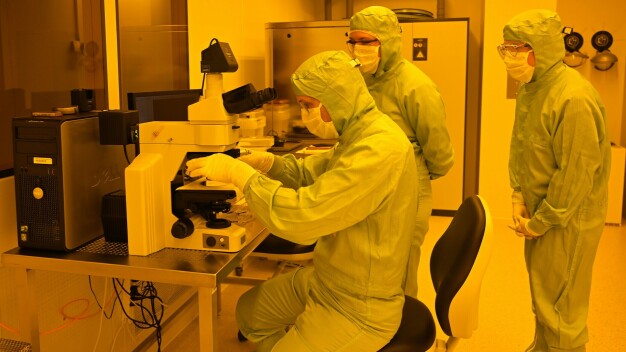
Finally, a brief quality check is performed.
Technological progress often occurs today in tiny particles: In the cleanroom at the OST campus in Buchs – Eastern Switzerland University of Applied Sciences – high school students were able to dive into the world of microtechnology and produce their own wafer. The workshop was held in collaboration with the "Swiss TecLadies" funding program of the Swiss Academy of Engineering Sciences SATW.
At the Buchs campus, three high school students explored the manufacturing processes involved in building microchips. As part of the "Swiss TecLadies" mentoring program, they worked in the cleanroom and, under the guidance of experts, a young physics laboratory technician, and an apprentice, structured the surface of a silicon wafer. A wafer is a thin disc made of semiconductor material, serving as the base for the production of integrated circuits and microchips.
In the cleanroom, OST conducts research and development on miniaturization, making controllers, sensors, and circuits smaller, more efficient, and more powerful. So small that even dust particles can impair the functionality of these microstructures. The rooms where such parts are manufactured and processed are therefore exceptionally clean; the air is filtered, and temperature, humidity, and air pressure are strictly controlled. The first step into the world of microtechnology took the students to the changing area, where synthetic coveralls, masks, hoods, and glasses were distributed. Only with this protective clothing could they enter the cleanroom to begin working on their flat silicon disc, which in just a few hours became a personally labeled wafer.
Showcasing the diversity of technology
Kerstin Kern, project leader and technical manager of materials testing at the IMP Institute for Microtechnology and Photonics, organized the workshop at OST. She is participating as a mentor for the third time with Swiss TecLadies and is guiding a mentee into the world of technology. "The goal is to inspire young women for technical careers and to showcase the diversity of technology," says Kern. Girls still often have a very one-sided image of technology. "In my experience, fears of contact can best be reduced through workshops like the one in the cleanroom. Additionally, personal contact with female researchers is inspiring for the students. As mentors, we support the young women one-on-one and are their direct point of contact for seven months," explains Kern. The specifics of the mentoring depend on the interests of the mentees.
Structuring ultra-thin layers
Kerstin Kern accompanied the girls into the cleanroom. Together with Marco Cucinelli, the head of the cleanroom, and Urs Lippuner, vocational trainer at OST, the group went through the various process steps necessary to structure the wafer surface. Very thin layers with dimensions in the nanometer range were applied. These were patterned at the right spots through photolithography and etching processes. The young women learned about the evaporation and sputtering processes that deposit the ultra-thin aluminum layer onto the silicon disc, exposed their wafers, bathed them in acids, cleaned, and dried them multiple times.
For an afternoon, they experienced how engineers at OST produce tiny parts for industry and had the opportunity to work with high-tech equipment themselves.
OST – Ostschweizer Fachhochschule
8640 Rapperswil
Switzerland