


- EDP, Hardware, Software
- Translated with AI
With Corona, there was a surge in hacking
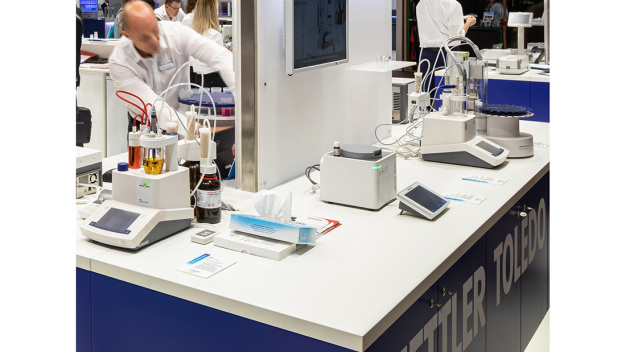
Software platforms for various table devices and specifically for thermal analysis methods: Under one roof, data integrity can be ensured from individual measurements to comprehensive documentation for FDA audits. (Image: MCH Messe Schweiz (Basel) AG)
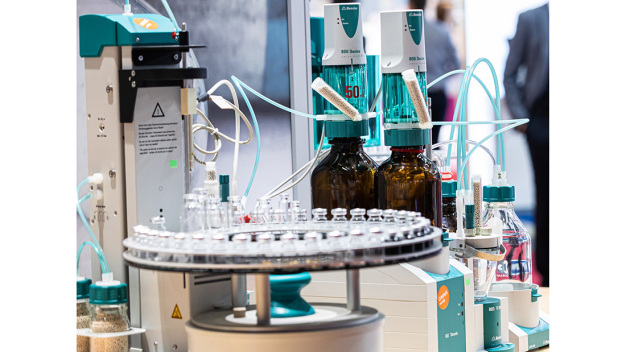
Starting point for titration: Thanks to collaborations between several companies, it is now possible to include extensive information about reagents in the protocol or integrate balances. (Image: MCH Messe Schweiz (Basel) AG)
Since the beginning of discussions about electronic voting, its integrity has been questioned: Are the results 100% correct and complete? Do they remain unchanged during processing in a database? Is there sufficient protection against possible hackers? In the processes of the life sciences industries, these questions are even more complex.
The general uncertainty involves two different risks. One concerns purely technical data transmission and processing. Furthermore, it also involves the potential loss of data, unauthorized modifications, and criminal manipulations or theft.
The crux of the matter: Security during FDA audits
At the latest, when four years ago, 65 percent of all warning letters from the US Food and Drug Administration (FDA) cited inadequate data integrity as the cause, this topic moved to the top of the agenda. One reason may lie in the history: Laboratory Information Management Systems (LIMS) and electronic lab notebooks (ELN) help avoid manual notes and the "typing in" of handwritten data. Naturally, this also leads to approaches for automating data collection, transmission, and processing.
But what happens if individual information is still recorded on paper (e.g., handwritten name of the responsible lab technician or weight results printed by a thermal printer)? Here, we approach "the crux of the matter": The primary purpose of electronic and digital tools is not to avoid handwritten records and increase productivity during analysis, but to ensure higher security by fully and traceably summarizing all laboratory results in a single document. This can greatly facilitate an FDA audit.
Computer System Validation
Some providers therefore connect their in-house desktop devices, such as titrators, density, and pH meters, into a multi-parameter measurement system. This is done via a specially designed software platform (e.g., LabX, Mettler Toledo, Greifensee). It guides the laboratory technician step-by-step through work instructions (SOPs) and ensures through prompts that all required data are entered. This also simplifies timely maintenance, calibration, and ensuring compliance with relevant standards (e.g., GLP, GMP, Gamp, and specifically for data integrity, Alcola+).
When implementing such software platforms, it is essential to consider computer system validation (CSV). Only then can one demonstrate that the measurement system is indeed suitable for its intended purpose. CSV is often indispensable and involves significant costs and time (e.g., three to six months for up to 30 integrated instruments).
The compatibility choices
The tasks related to data integrity are so complex that some providers enter into compatibility agreements. For example, complete information about certain reagents for titration (3S titration reagents, Merck, Darmstadt) can be imported into another provider's titration software using radio-frequency identification technology (RFID). (Omnis, Metrohm, Zofingen/Filderstadt). This way, titration conditions can be traced back to the reagents used.
Another compatibility option involves integrating third-party devices into existing software. For instance, in the case of "titration": a weighing process always precedes titration. It is convenient if certain balances can be integrated (e.g., Cubis II, Sartorius, Göttingen, into the Omnis software).
In such an integration, a new QApp is specifically programmed for the "connectivity software package" of the balance. This allows the device to be controlled via the software, ensuring compliance with important regulations (e.g., FDA 21 CFR Part 11; EudraLex, Volume 4, Annex 11) automatically. Additionally, all interactions between the balance and software are recorded electronically in the audit trail — a good preparation for inspections. Inspectors are particularly meticulous in analytical chemistry because the risk of result manipulation is generally higher here.
Hackers in the COVID fever
Manipulation can be understood neutrally as "alteration," but of course, there is always the fear of criminal attacks. For example, the notorious WannaCry virus in 2017 caused several days of production stoppages at some pharmaceutical companies. Last year, Novartis observed an increase in so-called spear-phishing attempts mentioning the coronavirus. These were fraudulent emails aimed at gaining external access to the company's computers. Since the outbreak of the COVID-19 pandemic, hacking worldwide has experienced a surge.
With extensive networking of software and devices, from office computers, analytics, and production, to proprietary systems and remote maintenance access, unauthorized, non-integrated guests can infiltrate a company through many channels and cause damage. Therefore, comprehensive security concepts are necessary. This year's Ilmac in Basel offers visitors perhaps the best opportunity to compare different strategies from device and software providers. They can extract the optimal concept for their laboratory and production — focusing on data integrity and IT security, as well as productivity enhancement.

ILMAC
MCH Messe Schweiz (Basel) AG
Messe Basel
4005 Basel
Switzerland
Phone: +41 58 206 3106
email: anne.klipfel@ilmac.ch
Internet: http://www.ilmac.ch