



- Lecture
- Translated with AI
With bio-intelligence to a smart transformation
Lectures on Biological Transformation at the Württemberg State Library
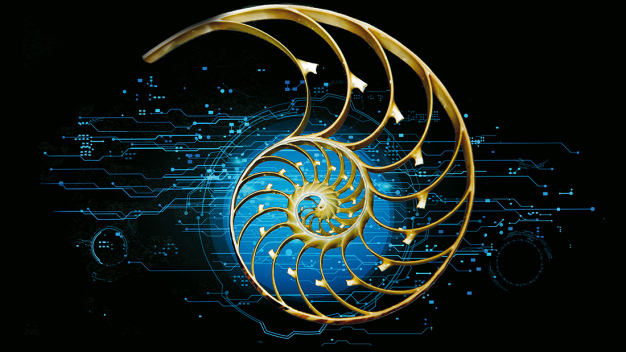
Source: iStock/Fraunhofer
The Württemberg State Library (WLB), the Fraunhofer Institutes IPA, IGB, and UMSICHT, as well as the Biointelligence Competence Center Stuttgart, are launching a joint lecture series on the topic of Biointelligence starting July 13, 2021. Over the course of more than a year, interested individuals can attend 17 events on aspects of Biological Transformation at the WLB. The lectures will begin on various weekdays at 6 p.m.
As soon as the Corona pandemic subsides here, we are again living at the expense of the environment and future generations. Since the Earth Overshoot Day in Germany on May 5, we have been consuming more resources than our planet can regenerate. Climate change and species extinction continue. We are destroying our livelihoods and not responding decisively enough with concepts like the energy transition.
Balancing resource consumption and prosperity remains the key challenge of the 21st century. Current production methods cannot adequately satisfy the material needs of future generations. "The Digital Transformation of production, already advanced under the slogan Industry 4.0, is not sufficient to master the essential societal challenges. Simultaneously with the Digital Transformation, a new revolution is emerging with Biological Transformation. It is at least of equal, if not greater, importance than Industry 4.0," explains Professor Thomas Bauernhansl, head of the Fraunhofer Institute for Production Technology and Automation IPA.
Soft-, Hard-, and Bio-ware – the building blocks for a reorientation of industrial value creation
Sustainable value creation without loss of prosperity requires production methods modeled after nature, utilizing tomorrow’s technologies: for example, robots whose control modules generate their energy through photosynthesis, or biointelligent viruses used in personalized tumor therapy, or microalgae producing individualized antioxidant food ingredients with self-learning biointelligent control – Biological Transformation aims to enable this.
A fundamental part of this reorientation of industrial value creation is the increasing use of materials, structures, processes, and organisms from living nature in technology. Such systematic application of knowledge about biological processes leads to a merging of production, information, and biotechnology. "This will profoundly change future products, manufacturing processes, and our way of life. Biological Transformation culminates in so-called biointelligent systems and the technologies needed for them. Its potential ranges from disruptive innovations to the modernization of German corporate and educational culture, and to a sustainable economic approach," adds Dr. Markus Wolperdinger, head of the Fraunhofer Institute for Interfacial Engineering and Biotechnology IGB.
Societal Discourse at the Württemberg State Library
Almost all industrial and societal sectors will be massively influenced by the establishment of biointelligent value creation. The prerequisite for the success of Biological Transformation is discourse in politics and society. To facilitate this necessary discourse, Dr. Rupert Schaab, director of the Württemberg State Library, will open the new building of the Württemberg State Library in Stuttgart’s Cultural Mile and invite the public to "use the library as a platform and showcase for science to better inform the city community about the contribution of science to addressing human and societal challenges."
From Bionics to Bioeconomy to Biointelligence: the lectures cover many aspects of Biological Transformation
Lecturers from Fraunhofer IPA, Fraunhofer IGB, and Fraunhofer UMSICHT in Oberhausen are happy to accept this invitation. Additional speakers include representatives from the University of Stuttgart, the University of Natural Resources and Life Sciences Vienna, the Natural Science and Medical Institute (NMI) in Reutlingen, and the company Trumpf.
The series begins with three fundamental lectures introducing key aspects of Biological Transformation. On July 13, Professor Bauernhansl from Fraunhofer IPA will kick off with a lecture on biointelligence as a new perspective for sustainable value creation. Biology is making its way into value creation. Biointelligent production systems offer the chance to increase innovation, competitiveness, and sustainability. The technologies exist; what is crucial is transdisciplinary research and development!
A research focus of Fraunhofer IGB is biointelligent solutions for producing sustainable products from renewable raw materials, residuals, and CO2. Institute director Wolperdinger will also speak on July 20 about the possibilities of the bioeconomy for a transition to a sustainable economy, representing the Strategic Research Field of Bioeconomy of the Fraunhofer Society, and serving as deputy chair of the national Bioeconomy Council of the German government, as well as co-chair of the "Sustainable Bioeconomy" advisory board of Baden-Württemberg.
In his introductory lecture "What We Can Learn from Nature" on July 29, Professor Oliver Schwarz will explore the role and relevance of bionics (an acronym from biology and technology) for Biological Transformation. The scientist will show how knowledge from nature, gained by biology as a descriptive science, can make an impact: the three "B"s—Bionics, Biotechnology, and Bioeconomy—transfer biological knowledge into an economically applicable context.
Most of the subsequent speakers will cover various aspects and fields of action of biointelligence. For example, NMI director Professor Katja Schenke-Layland will present new approaches for personalized medicine (September 13, 2021), and Ivica Kolaric, head of the Functional Materials Department at Fraunhofer IPA, will speak about artificial muscles (September 23, 2021). Lukas Kriem and Bryan Lotz from Fraunhofer IGB will discuss intelligent water use (November 9, 2021). Johannes Full from the Department of Sustainable Production and Quality at Fraunhofer IPA will introduce bio-hydrogen from residual and waste materials (December 7, 2021). Junior Professor Hanaa Dahy from the University of Stuttgart will address intelligent, bio-based housing on April 26, 2022.
The Biointelligence lecture series will be held in person, hybrid, or online format depending on the pandemic situation. Admission is free. All dates and registration information are available at: www.wlb-stuttgart.de

Fraunhofer-Institut für Produktionstechnik und Automatisierung IPA
Nobelstraße 12
70569 Stuttgart
Germany
Phone: +49 711 970 1667
email: joerg-dieter.walz@ipa.fraunhofer.de
Internet: http://www.ipa.fraunhofer.de



