

- Monitoring & Measurement
- Translated with AI
Sustainability in the Construction and Operation of Hospitals according to VDI Guidelines
Practical examples of the use of monitoring systems
(Photo: ©ipopba - stock.adobe.com)
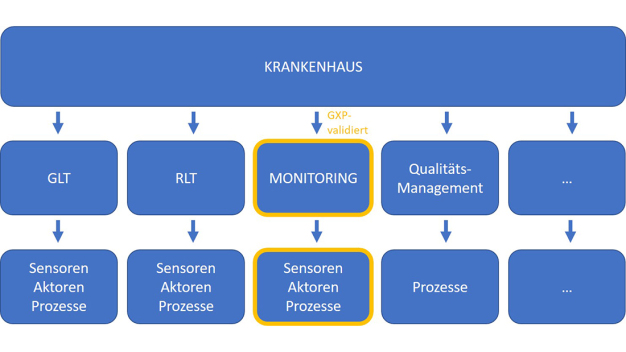
Synergies and more efficient processes help to use resources wisely and save costs. (Photo: Briem)
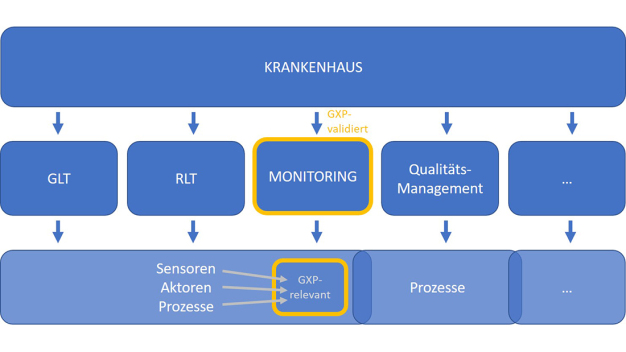
Synergies and more efficient processes help to use resources wisely and save costs. (Photo: Briem)
In the construction and operation of hospitals, the topic of sustainability is playing an increasingly important role. The VDI 5800 Sheet 1 guideline provides a good overview and covers the entire lifecycle, from planning, new construction and renovation, to usage and maintenance, and finally disposal. The aim of the guideline is to avoid friction losses and unnecessary costs and to make the best possible use of limited resources of personnel and materials.
BRIEM Steuerungstechnik GmbH is a provider of monitoring systems for cleanrooms, laboratories, and other quality-relevant areas, e.g., storage rooms. The BRIEM monitoring system has already been implemented numerous times nationwide in hospitals. A monitoring system in hospitals is mainly used in GxP-relevant areas such as pharmacies, nuclear medicine, or central laboratories to reliably record room parameters such as pressure, temperature (in rooms, refrigerators, freezers, or transport boxes), humidity, or particle concentrations.
But how can a monitoring system support operators in implementing the contents of the VDI guideline, utilizing synergies effectively, and thereby making workflows and processes more efficient?
The first important approach is "to avoid friction losses and unnecessary costs." By using intelligent interfaces, the monitoring system can be well integrated into existing systems such as HVAC (Heating, Ventilation, and Air Conditioning) or building management systems. Standardized interfaces like Modbus, Profinet, or Bacnet enable the effective, secure, and cost-optimized transfer of measurement data from existing systems to the monitoring system.
If a direct interface between the systems is not possible or economically feasible, data from relevant sensors can be made available to multiple systems, for example, through the use of optocouplers.
The topic of centralized alarm management also plays a role. Independent alarm and notification systems for BMS, HVAC, and monitoring are not in line with the VDI guideline. Through well-planned integration of these systems, unnecessary multiple alerts can be avoided, and the GxP-compliant operation of the monitoring system can be maintained.
The second point of contact between the monitoring system and the VDI guideline is the requirement "to make the best possible use of limited resources of personnel and materials." For example, the particle counter resource: this resource, which is quite costly to purchase and operate, can be used as a mobile variant by integrating it via WiFi or an intelligent plug-in mechanism at different measurement points (and assigned to each measurement point). This way, costs can be saved throughout the entire lifecycle during operation.
The most important resource is humans. Especially in hospital operations, it becomes clear how valuable they are, and no device or system should take more time from responsible personnel than absolutely necessary. Automatic and freely configurable reports, as well as intuitive operability, are important features of Briem's monitoring software. The system can be seamlessly integrated into daily workflows through extensive customization options and reduces the time required for analyses, approvals, or evaluations. It is also essential to keep the number of alarms as low as possible to minimize preventive effort. For example, different profiles such as night shutdown, cleaning operations, or changing room uses can be represented in the software, and different alarm parameters can be activated depending on the profile.
If deviations (alarms in the monitoring system) also need to be documented or processed on other platforms, such as document management or batch record systems, the BRIEM monitoring system offers the possibility of custom system integration, so that, for example, alarm acknowledgment can be done directly within the document management system, avoiding redundant steps.
New technologies offer further ways to implement processes effectively, such as smart authentication systems in the form of a wristband, allowing users to authenticate quickly and easily on all systems.
RFID tags can be used so that a smartphone or tablet serves as a flexible measurement display, perfectly integrating into the information and alarm process.
These practical examples demonstrate how a monitoring system can help implement the VDI 5800 Sheet 1 guideline in the construction and operation of hospitals and sustainably utilize valuable resources.

BRIEM Steuerungstechnik GmbH
Lauterstraße 23
72622 Nürtingen
Germany
Phone: +49 7022 60920
Fax: +49 7022 609260
email: info@briem.de
Internet: http://www.briem.de