



- Products, devices, systems, plants for applications
- Translated with AI
Stricter efficiency requirements, clear system boundaries, and new manufacturer obligations
ErP: What is changing now for OEMs, plant builders, and operators
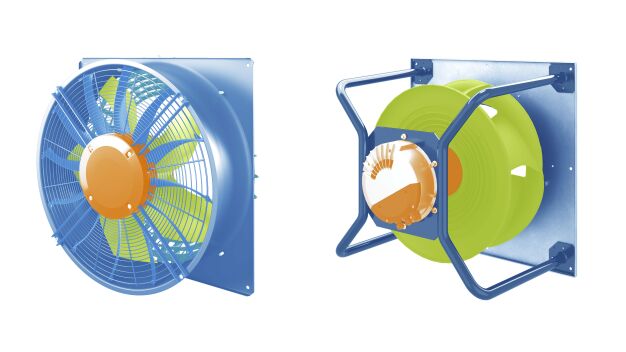
The central functional areas of the fan in axial (left) and radial fans (right): the impeller as the aerodynamic core (green), the motor with integrated electronics as the drive unit (orange), and the stator, meaning the air-guiding and supporting structures (blue). (Image: ebm-papst)
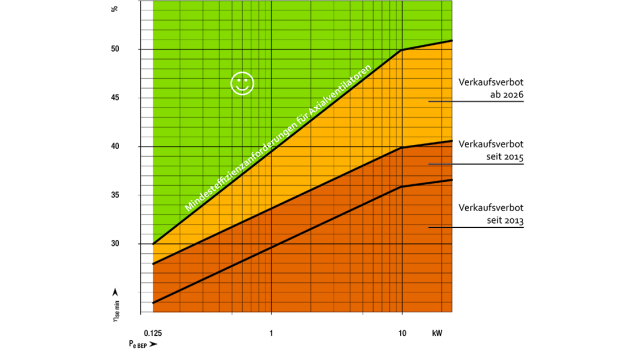
The minimum efficiencies for axial fans have been gradually increased since 2013. Starting in 2026, a minimum Fan Efficiency Grade of 50 percent will apply – the static total efficiency at the Best Point is decisive. (Pe = electrical input power; ηmin = minimum fan efficiency; ηse = static total efficiency; BEP = Best Point) (Image: ebm-papst)
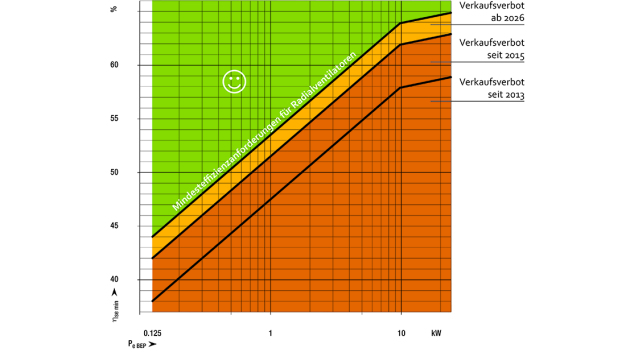
The requirements for radial fans with backward-curved blades are also increasing. From 2026, the minimum required Fan Efficiency Grade will be 64 percent, setting a new efficiency standard. (Pe = electrical input power; ηmin = minimum fan efficiency; ηse = static overall efficiency; BEP = best point) (Image: ebm-papst)
With the ErP 2026, the European Union is significantly tightening the requirements for fans starting in July. New efficiency thresholds, revised assessment methods, and expanded documentation obligations affect not only fan manufacturers but also OEMs, system integrators, and operators. ebm‑papst informs about the key changes and shows what users should prepare for now.
Higher efficiency requirements – especially under partial load
The new fan regulation significantly raises the minimum efficiencies and continues to evaluate efficiency via the Fan Efficiency Grade (FEG), but based on updated measurement conditions. New is the stronger focus on partial load behavior. This shifts the emphasis from just the optimal point to the entire efficiency level across the actual operating range.
The complete fan comes into focus
For the first time, the regulation clearly defines when a fan is considered complete. The decisive factor is the interaction of the impeller, motor, and stator. Those who complete incomplete fans or integrate them into their own systems and market them under their own name are considered manufacturers from a regulatory perspective – with all obligations for conformity assessment and CE marking.
New obligations for information, documentation, and repair
With ErP 2026, transparency requirements are also significantly increased. Manufacturers will need to provide extensive information on efficiency performance, reparability, and disassembly. Additionally, defined spare parts must be available up to ten years after product discontinuation, while product information must be maintained digitally for up to 20 years.
Timely consideration of transition periods
The regulation applies from July 24, 2026, to so-called standalone fans and new products. For fans integrated into other products or applications – such as ventilation units, heat pumps, or refrigeration systems – and marketed before this date, the requirements apply from July 24, 2027. Replacement fans will be subject to clear restrictions from 2027 and may only be used under defined conditions.
Support from a single source
ebm‑papst has been specifically preparing its portfolio for the requirements of ErP 2026 for years. Fully developed fans, system-related efficiency assessments, and transparent documentation make it easier for customers to switch safely. Additionally, ebm‑papst supports early implementation of compliant solutions through consulting, measurements, and digital design tools.
ebm‑papst Mulfingen GmbH & Co. KGaA & Co. KG
74673 Mulfingen
Germany