

- Translated with AI
Research Focus Areas in Cleanroom Technology
Rosenheim University of Applied Sciences
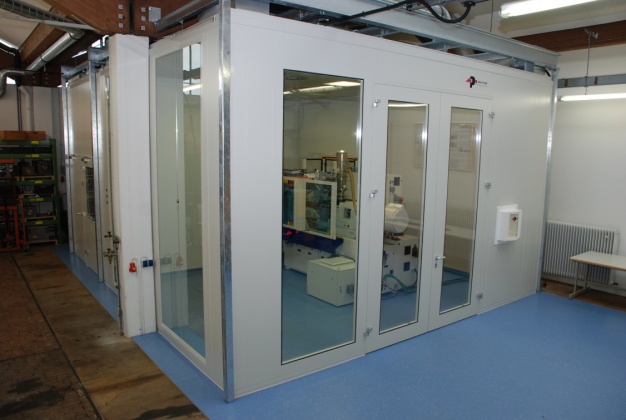
Figure 1: Cleanroom after completion and machinery installation in 2010.
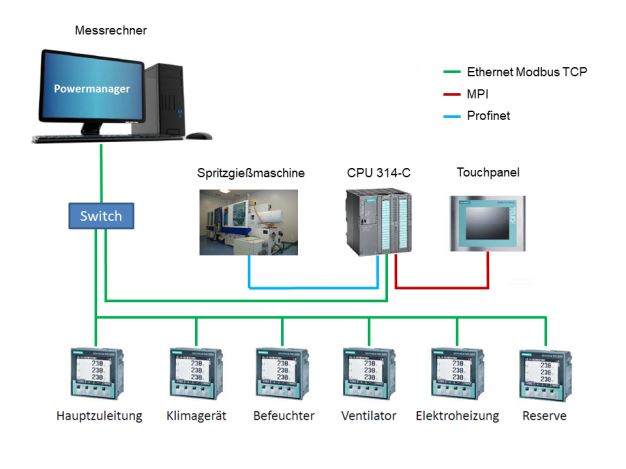
Figure 2: Built energy management system with used fieldbuses.
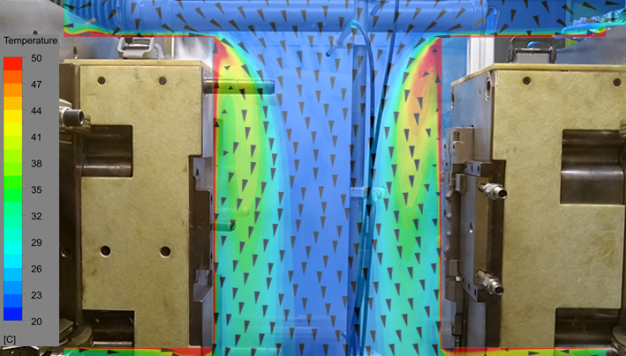
Figure 3: Tool area of the injection molding machine in the cleanroom with simulation of the optimized flow.
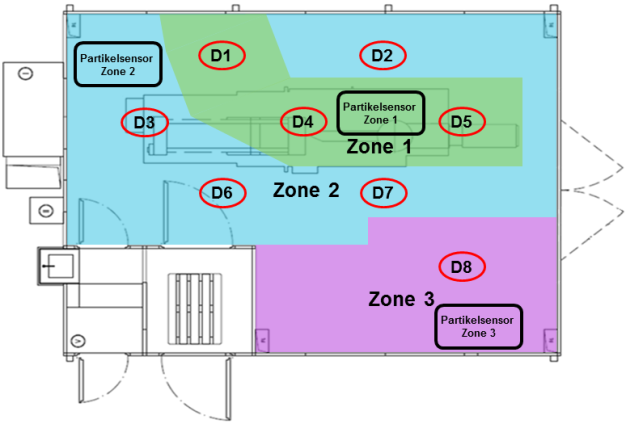
Figure 4: Floor plan of the cleanroom with zoning and the ceiling penetrations D1 to D8. Zone 1 includes the injection molding machine and the extraction area, Zone 2 the peripheral zone to the manufacturing area, and Zone 3 the area not relevant for manufacturing.
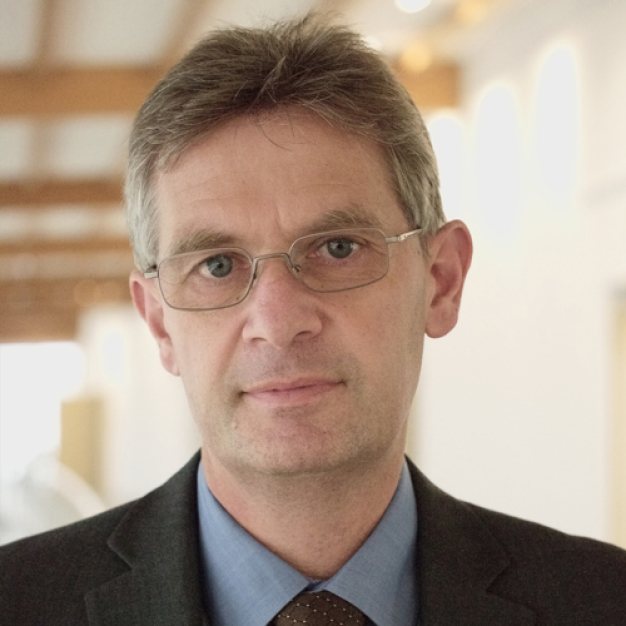
Prof. Dipl.-Ing. Peter Karlinger

Stephan Puntigam
As the leading educational institution in Southeast Upper Bavaria, the Technical University of Rosenheim combines a regional profile with international renown. A family-friendly atmosphere, state-of-the-art infrastructure, and intensive student support create optimal conditions in four departments: Business, Engineering, Design, and Health. Both at the central Rosenheim location and at the campuses in Burghausen and Mühldorf am Inn, we educate with the highest standards of teaching and great practical relevance. Therefore, we are the number one university partner for local companies and a respected cooperation partner for applied research and development well beyond the region.
Cleanroom at the Technical University of Rosenheim
Since 2010, the Technical University of Rosenheim has had its own cleanroom in the Plastics Processing Technical Center. As a cleanroom with turbulent dilution airflow (TVS), it is designed for cleanliness class ISO 7, but can partially reach up to ISO class 5. The cleanroom was established as part of a research project and has already demonstrated its potential as a research environment. The energy consumption of the system was significantly reduced through individually controlled volumetric flows at the ceiling diffusers, depending on the local particle concentration.
Digitization of Cleanroom and Plant Technology
The control system developed during a research project records all relevant data of the cleanroom. In addition to classic control parameters such as air temperature, humidity, and pressure, data on the energy consumption of individual components are also collected. More than 100 signals are processed. The automatic archiving of energy and process data allows for easy creation of measurement reports.
Flow Optimization in Systems and Cleanrooms
As part of the Plastics Processing Technical Center, improving technical applications in the cleanroom is currently the focus. Using the extensive measurement technology available for determining airflow velocity and direction, various systems can be examined for their influence on cleanroom airflow. The comprehensive measurements enable a deeper understanding of the prevailing air currents and further serve to validate simulations (CFD). Through simulations, a quick transfer to similar applications is possible, and testing new concepts and prototypes can be carried out efficiently. This approach has already been successfully applied to high-temperature applications in injection molding.
Energy Efficiency and Particle Measurement
Within the scope of a research project, the energy consumption of the cleanroom was significantly reduced. In addition to a newly introduced maintenance operation outside of production with reduced air exchange, the ventilation power was decreased by zoning the cleanroom into areas with different cleanliness requirements. The adjustment of the fresh air volume flow for each zone is continuously carried out by recording and logging particle emissions in the respective areas. The existing measurement technology was also successfully used to validate energy-efficient and cleanroom-compatible prototypes for peripheral devices.
Technische Hochschule Rosenheim
83024 Rosenheim
Germany