

- R+D & Community of Interest
- Translated with AI
Guido Kreck / Yvonne Holzapfel
Purity validation of contamination-critical products
cleanroom_IPA_web
![Figure 1: Representation of the need for research on critical contamination parameters in the manufacturing industries operating under cleanroom conditions [2].](/uploads/images/_scale/abb01_kontaminationsfaktoren_626x300.jpg "Figure 1: Representation of the need for research on critical contamination parameters in the manufacturing industries operating under cleanroom conditions [2].")
Figure 1: Representation of the need for research on critical contamination parameters in the manufacturing industries operating under cleanroom conditions [2].
![Image 2: Overview of markets that rely on purity in production [3].](/uploads/images/_scale/abb02_branchenbersicht_626x931.jpg "Image 2: Overview of markets that rely on purity in production [3].")
Image 2: Overview of markets that rely on purity in production [3].
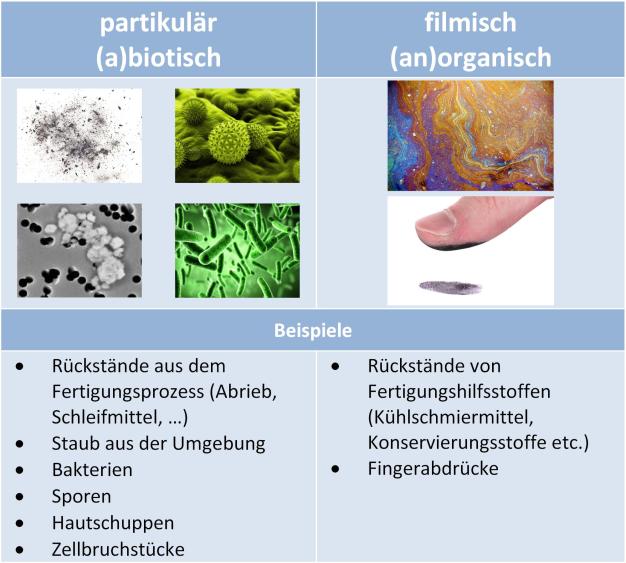
Image 3: Overview of critical contaminations on product surfaces.
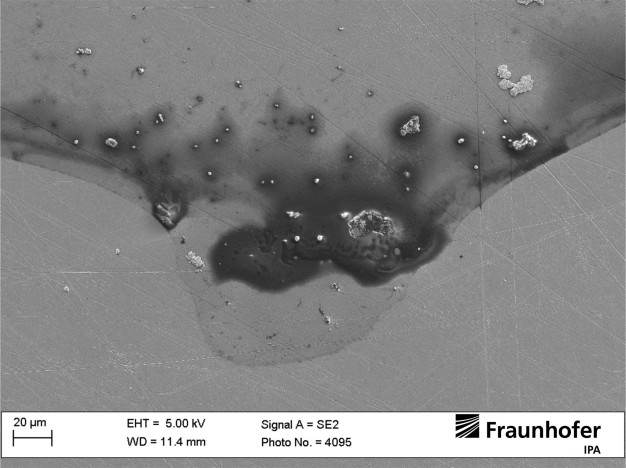
Figure 4: REM image of a surface with a mixed contamination (film and particulate).
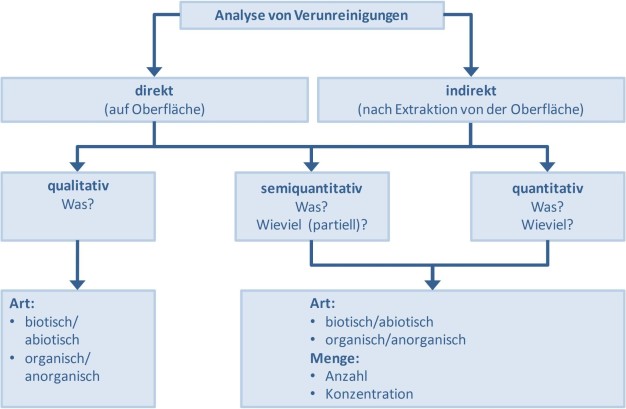
Figure 5: Procedure for validating the purity status of products.
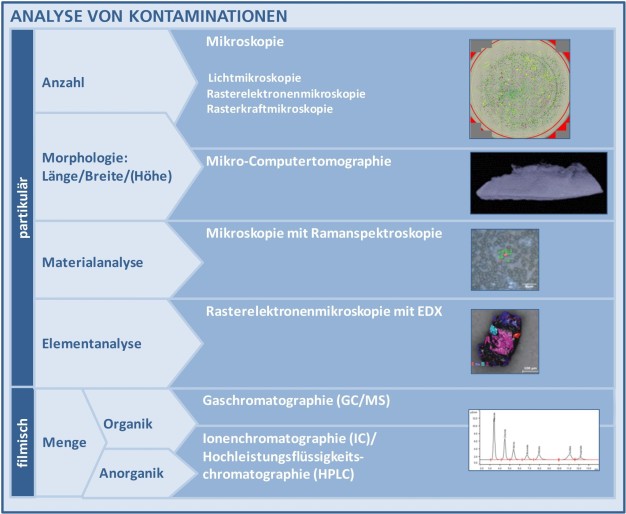
Figure 6: Overview of possible analysis methods.
![Figure 7: Critical particle sizes for functional components and systems [6].](/uploads/images/_scale/abb07_kritische_partikelgren_626x491.jpg "Figure 7: Critical particle sizes for functional components and systems [6].")
Figure 7: Critical particle sizes for functional components and systems [6].
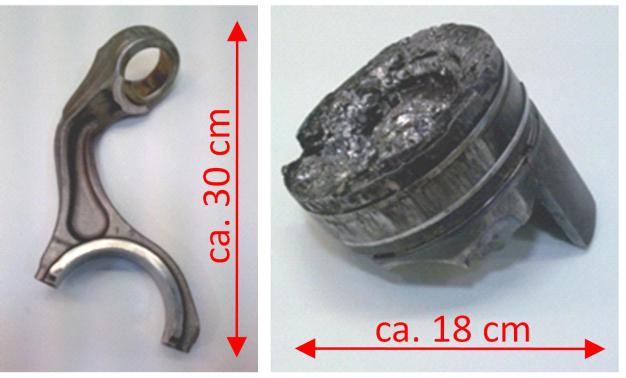
Image 8: Damaged connecting rod (left) and cylinder (right). The cause of failure was a continuous injection caused by a particle in the size range of a few micrometers.
![Image 9: Cleanliness analysis according to VDA 19: Overview of the procedures [7].](/uploads/images/_scale/abb09_sauberkeitsanalyse_626x481.jpg "Image 9: Cleanliness analysis according to VDA 19: Overview of the procedures [7].")
Image 9: Cleanliness analysis according to VDA 19: Overview of the procedures [7].
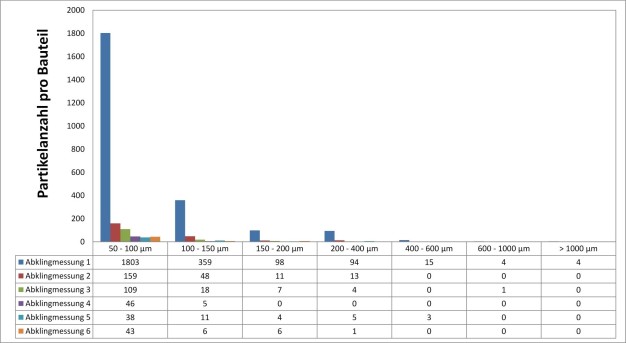
Image 10: Cleanliness values of a decay measurement.
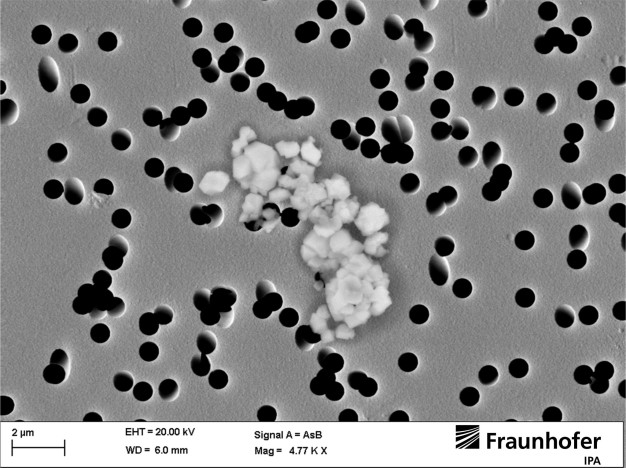
Image 11: SEM image of contamination on a filter membrane.
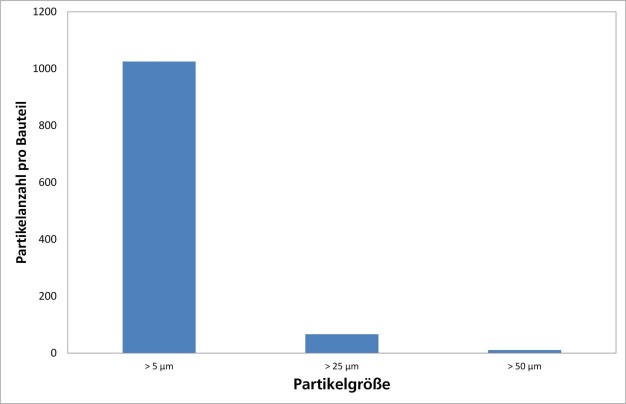
Figure 12: Quantitative results of the cleanliness analysis of a medical device.
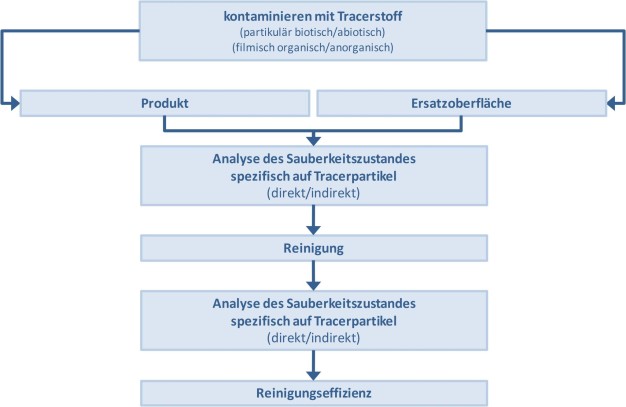
Figure 13: Procedure for cleaning validation.
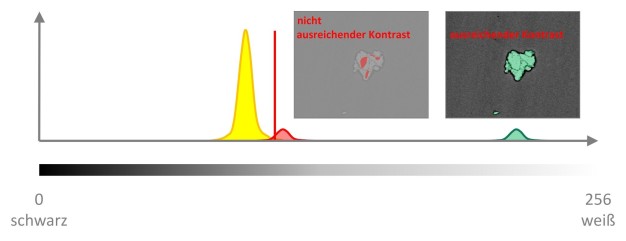
Figure 14: Setting a threshold value for the microscopic analysis of an automated particle count.
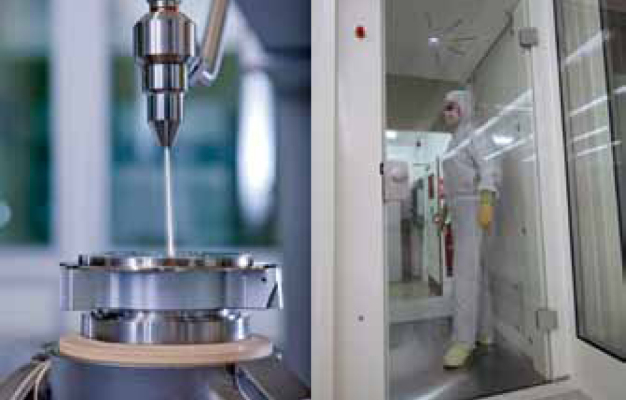
Image 15: CO2 snow cleaning (left), integrated into a cleanroom at ESTEC, Noordwijk (right).
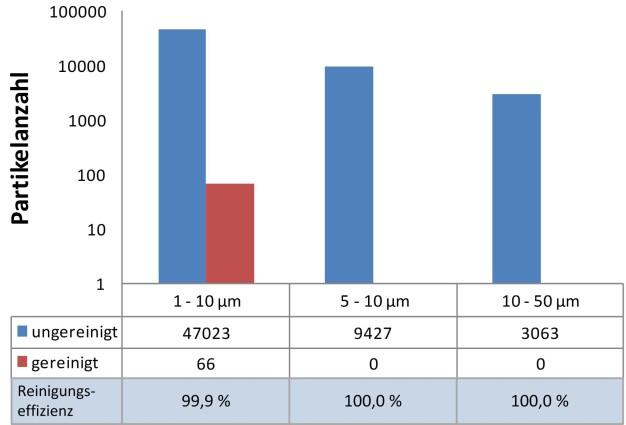
Figure 16: Cleaning efficiency of the CO₂ snow jet cleaning process for particles on a selected surface
In a variety of innovative products, contamination control plays a crucial role. Despite the use of state-of-the-art cleanroom technology, critical contaminations in mass production cannot be completely ruled out. Therefore, the purity of contamination-critical products must be continuously monitored and validated.
The knowledge of the importance of purity is very old: Already in ancient times, for example in the Roman Empire, it was known that quarantine and hand washing, basic hygiene measures, could prevent the spread of infectious diseases. In the 19th century, these initial purity principles for controlling microbiological contamination were revived by doctors like Semmelweis and Lister. They scientifically demonstrated that the application of disinfection methods, e.g., on hands, surgical instruments, and surfaces, could drastically reduce infection and mortality rates among their patients. The recognition of their work led to the understanding of the dangers of "invisible" contaminations and the development of measures for targeted control.
Initially, this knowledge was mainly applied in medicine to protect and preserve patient health. But soon, in the first half of the 20th century, the principle of contamination control was also applied to purity-critical products, initially for the production of integrated circuits in the semiconductor industry, but now also for various other high-tech products such as flat screens, hard drives, photovoltaic modules, pharmaceuticals, medical technology, and automotive systems. This list can be extended almost indefinitely and demonstrates the increasing and highly diversified fields of application where purity plays a decisive role [1].
Purity requirements
The diversity of contamination-critical applications across industries results in different purity requirements concerning the critical types of contamination that can originate from the manufacturing process or other contamination scenarios. These contaminations mainly need to be controlled due to their damaging effects on the product. Protecting humans from dangerous contaminations is currently a focus in life sciences sectors, such as the pharmaceutical industry.
A market survey conducted in 2003 by Fraunhofer IPA identifies the critical contaminations with the greatest potential for damage to products (Figure 1): Particles are the primary concern, followed by outgassing products ("Airborne Molecular Contamination AMC") and electrostatic discharge phenomena ("Electrostatic Discharge ESD").
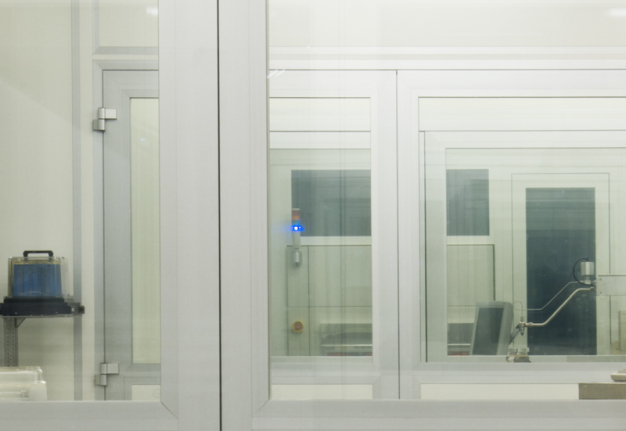
To reduce these contaminations to a product-safe, acceptable level, clean manufacturing environments are provided. These so-called cleanrooms are mainly created through constant air circulation combined with air filtration and air exchanges (Figure 2).
Despite the use of modern cleanroom technology, critical contaminations in mass production cannot be entirely excluded: personnel, process equipment, and process media can introduce contaminations into the manufacturing environment and distribute them uncontrollably [4], [5].
Therefore, the purity of contamination-critical products must be continuously monitored and validated, especially regarding particulate and filmic contaminations on product surfaces (Figure 3). Particulate and filmic contaminations rarely occur in pure form in reality; more often, they are found in mixed forms (Figure 4).
Validation of purity
Ideally, contamination levels are determined directly on the product under investigation to avoid losses from sampling and the risk of cross-contamination. However, direct full-surface inspection is often not possible due to component geometry and surface structure. Therefore, various extraction methods are used to remove contaminations from the sample surface (Figure 5).
Following this procedure, a contamination-specific analysis method can then be employed depending on the required information (Figure 6).
Technical cleanliness in the automotive industry
The current development of resource-efficient and innovative alternative vehicle technologies has been confronting the automotive industry with a significant quality problem for about ten years: even the smallest amounts of critical particles in the micrometer range can cause errors and system failures (Figures 7 and 8).
To prevent critical errors, quality agreements are made regarding the maximum residual contamination of components. This naturally also involves controlling and validating the set cleanliness limits for the parts.
In the automotive industry, the approach according to VDA 19 or ISO 16232 for the quantitative determination of particles on components has become established (Figure 9): Contaminants on the component surface are removed using various extraction methods (ultrasound, spraying, rinsing, shaking) and transferred onto a filter membrane, which can then be analyzed using different procedures depending on the required information (size, material, etc.) [7].
Decay measurement and blind value criterion
A special feature here is the procedure for checking the suitability of the chosen extraction parameters. This involves conducting a so-called qualification test (also called decay measurement), where the same component is repeatedly tested to determine whether all relevant particles are removed from the surface with the selected extraction parameters, such as duration, flow rate, or ultrasound power. The parameters are considered suitable if 90% of the particles are removed (decay criterion, Figure 10).
Another factor to consider is fulfilling the blind value criterion before starting the actual cleanliness analysis: To demonstrate the test capability of the equipment used, a cleanliness test is performed without a component. The extracted particle count should not exceed 10% of the particle count expected in the actual analysis to ensure a reliable result without interference from dirt on the testing equipment. Figure 11 shows the filter membrane image from a cleanliness analysis examined with a scanning electron microscope.
Transfer of the procedure
Although the concept of purity has been deeply rooted in medical technology for many decades and is mandatorily specified in relevant national and international standards, problems still occur due to inadequate hygiene or purity. Over the past ten years since 2001, there have been 243 recalls of medical devices by the FDA (Food and Drug Administration), 64 of which (about 26%) due to contamination, with a rising trend [8]. This is partly due to how the cleanliness of products, instruments, or other surfaces is checked in medical environments.
For example, in bioburden determination of medical devices according to ISO 11737-1, contamination extraction is performed in a component-specific manner, but the effectiveness of sampling is not verified. At this point, the approach according to VDA 19 can be adapted, which checks the suitability of extraction procedures and parameters for each component (Figure 12). This validation ensures quantitatively reliable results.
Another important step toward reliable cleanliness results is employing qualified personnel with expertise to exclude false results caused by cross-contamination due to possible misconduct of testing staff.
Cleaning validation for evaluating cleaning procedures
If the determined cleanliness level of a product is insufficient, cleaning may be necessary as a targeted removal of contamination. To select an appropriate cleaning method, it is essential to quantitatively and comparably determine the efficiency of cleaning procedures beforehand.
The methods for cleanliness validation can also be used to evaluate cleaning procedures or validate cleaning processes. The cleaning efficiency is determined by comparing the cleanliness of a defined contaminated sample before and after cleaning (Figure 13).
Assessment and selection of highly precise cleaning procedures for space technology
Technological advances from space exploration accompany us unnoticed and are no longer absent from everyday life: modern navigation systems, telecommunications, weather, and climate forecasts—just to name a few—are impossible without space satellites. The requirements for longevity, reliability, and performance of satellites and spacecraft under the extremely demanding conditions of space can only be met and guaranteed with the latest cleaning and cleanroom technology.
Besides increasing performance and reliability, it is also necessary to meet internationally ratified requirements within the framework of "Planetary Protection": According to these, terrestrial life forms (e.g., microorganisms such as bacteria and spores) must not be transported into space by space missions. This aims to avoid influencing evolution and to prevent falsification of measurement results, for example, in the search for extraterrestrial life.
To meet the very demanding purity requirements regarding particulate and filmic contamination for spacecraft components, such as those of the planned ESA ExoMars rover, it is necessary to verify the suitability of the selected cleaning procedures beforehand. For a reliable validation, all tests must be conducted in a quasi-contamination-free, AMC- and particle-controlled environment (ISO Class 1 according to ISO 14644-1). Simultaneously, the use of tracer contaminations that do not originate from the test environment provides protection against misinterpretations caused by cross-contamination.
To apply the cleaning validation concept shown in Figure 13 for particulate and filmic contamination, suitable analysis methods that can detect each contaminant clearly and quantitatively must be available. Particles on surfaces with sufficient material contrast can be automatically selected using a scanning electron microscope (SEM). The threshold value for the gray level in the image processing software is set so that objects on the surface are counted as particles (Figure 14). For organic filmic contamination, a combination of gas chromatography and mass spectrometry (TD-GC/MS) can be used.
Following the approach in Figure 14, the CO2 snow cleaning process for space components was also investigated using surrogate surfaces. This cleaning method is particularly promising for space industry applications because it can efficiently remove both particulate (biological and abiotic) and filmic organic contaminations (Figure 15).
The validation of the CO2 snow cleaning process ultimately confirmed its suitability for the high purity requirements in space technology. Exemplary results for particulate removal efficiency are shown in Figure 16.
This approach can also be applied to evaluate the effectiveness of other cleaning methods and offers the advantage that, using the same procedure, different cleaning processes can be compared in a preliminary assessment to enable targeted selection. Of course, this approach is not limited to space industry applications: it can also be used in sectors like pharmaceuticals and medical technology for targeted comparison and selection of cleaning procedures.
References
[1] L. Gail, U. Gommel, H.-P. Hortig: Cleanroom Technology, 3rd Edition, Springer, Berlin, Heidelberg, 2012.
[2] U. Gommel, Methods for determining the cleanroom suitability of material pairings (English: A method for determining the cleanroom suitability of material pairings), Jost-Jetter, Heimsheim 2006.
[3] The McIlvaine Company: World Cleanroom Markets Online Report, 2005.
[4] U. Gommel, G. Kreck, Y. Holzapfel: Customized cleanliness suitable cleanrooms and manufacturing equipment: Industrial Alliance "Cleanroom Suitable Materials CSM", VCCN Cleanroom Symposium 2012.
[5] Verband der Automobilindustrie e. V. (VDA): Volume 19.2 Technical Cleanliness in Assembly – Environment, Logistics, Personnel, and Assembly Equipment, 1st Edition, 2010.
[6] Rochowicz, M.: Challenges for the Future. Seminar: Technical Cleanliness for Developers and Designers, Stuttgart, 2010.
[7] Verband der Automobilindustrie e. V. (VDA): Volume 19 Testing of Technical Cleanliness – Particle Contamination of Functionally Relevant Automotive Parts, 1st Edition, 2004. U.S. Food and Drug Administration: Recall of Medical Devices. URL: http://www.fda.gov/MedicalDevices/Safety/RecallsCorrectionsRemovalR/ListofRecalls/default.htm; accessed June 4, 2012.
__________________________________________________
Guido Kreck is a graduate engineer and seminar speaker on "Manufacturing Under Clean Conditions". He works at Fraunhofer IPA in the Department of Reinst and Microproduction, focusing on the optimization and certification of equipment for cleanrooms as well as in the area of cleanliness validation.
Yvonne Holzapfel is a trainer/examiner for VDA Volume 19 "Testing of Technical Cleanliness". She works at Fraunhofer IPA in the Department of Reinst and Microproduction in the field of cleanliness validation as the head of the Technical Cleanliness Laboratory.
__________________________________________________

Fraunhofer-Institut für Produktionstechnik und Automatisierung IPA
Nobelstraße 12
70569 Stuttgart
Germany
Phone: +49 711 970 1667
email: joerg-dieter.walz@ipa.fraunhofer.de
Internet: http://www.ipa.fraunhofer.de