
- Evaluation means and methods
- Translated with AI
Process automation for everyone through an intuitive networking tool
![The data analysis of laboratory processes is still often done manually in many places, which adds extra stress. When automating such processes, there is a fear of errors occurring and that staff will have less control. (Source: [iStock/Getty Images])](/uploads/images/_scale/labor_169_1_626x352.jpg "The data analysis of laboratory processes is still often done manually in many places, which adds extra stress. When automating such processes, there is a fear of errors occurring and that staff will have less control. (Source: [iStock/Getty Images])")
The data analysis of laboratory processes is still often done manually in many places, which adds extra stress. When automating such processes, there is a fear of errors occurring and that staff will have less control. (Source: [iStock/Getty Images])
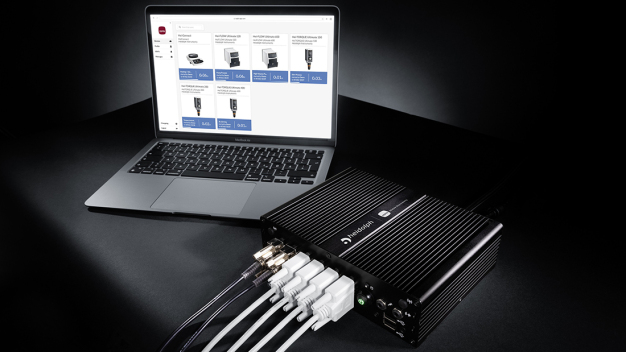
With the laboratory automation tool Hei-PROCESS, users are enabled to plan, track, document, and precisely analyze process chains anytime and anywhere via a browser-based interface. (Source: Heidolph Instruments GmbH & Co. KG)
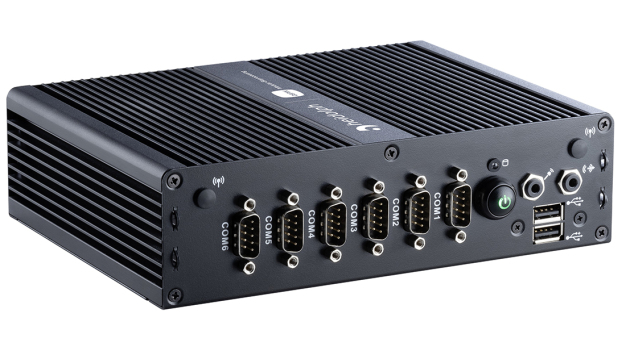
The inconspicuous black box functions as a control center and secures communication between all involved actors – from individual device components to the web application for process monitoring. (Source: Heidolph Instruments GmbH & Co. KG)
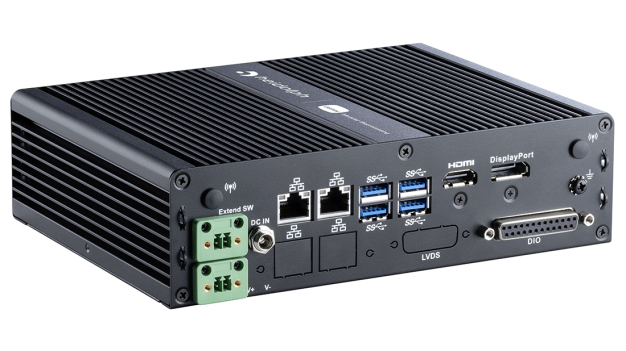
The inconspicuous black box functions as a control center and secures communication between all involved actors – from individual device components to the web application for process monitoring. (Source: Heidolph Instruments GmbH & Co. KG)
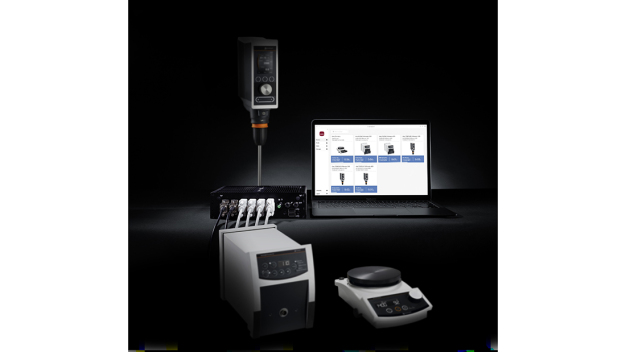
The desired equipment is simply connected to the OSPIN gateway via the serial interface. This allows up to six laboratory devices to be connected in parallel. (Source: Heidolph Instruments GmbH & Co. KG.)

""The inconspicuous, small box acts as a control center and enables communication between the individual device components such as pumps, stirrers, or pH sensors, and establishes the connection to the web application where the desired parameters and process steps are selected," explains Dr. Jan Saam, CTO at OSPIN GmbH. (Source: OSPIN GmbH)

"Hei-PROCESS is the ideal entry-level solution when you want to start with smaller process automations and gradually move towards Lab 4.0 without complicated networking steps and increasing costs," explains Mesut Yilmaz, Business Development Manager at Heidolph Instruments GmbH & Co. KG. (Source: Heidolph Instruments GmbH & Co. KG.)
An increasing number of laboratories in clinics, industry, and research are facing the challenge of improving efficiency, reproducibility, and data analysis through automated processes. Existing cloud and software solutions often turn out to be very complex and require a steep learning curve. For many laboratories, this is intimidating and creates apprehension regarding digitization processes. Therefore, Heidolph Instruments GmbH & Co. KG, together with OSPIN GmbH, developed the laboratory automation tool Hei-PROCESS: Users are enabled to plan, execute, monitor, document, and analyze process chains anytime, anywhere, via a browser-based platform. Compared to other solutions, this is a scalable platform that allows for a gradual transition based on individual process requirements, significantly reducing costs—without sacrificing user capacity. The flexible automation of daily laboratory routines ensures intuitive, recipe-based process control as well as remote control of individual devices. Transparency and security are guaranteed through live monitoring and revision-safe documentation of all process data. Thanks to the intuitive user interface, the long onboarding times required by other software solutions are eliminated.
Many processes in laboratories are still performed manually under constant supervision of laboratory personnel. This is not only time-consuming but also ties up lab staff with tasks that could easily be automated. "The idea of Laboratory 4.0 promises to automate manual and repetitive tasks, thereby increasing productivity, reducing processing times, improving personnel safety, and minimizing error rates," explains Mesut Yilmaz, Business Development Manager at Heidolph Instruments GmbH & Co. KG. However, many laboratories still hesitate to automate their workflows despite modern equipment: "On the one hand, there are process control systems that are rather static, allowing less flexibility and requiring trained process engineers to operate them. These systems are intended for production environments and are often unchanged over years," explains Dr. Jan Saam, CTO of OSPIN GmbH. Therefore, such variants are more suitable for large plants, as the transition and investment only amortize over time. "On the other hand, many digital solutions for laboratories are designed so that the entire organization switches to the same tool at once, which is obviously a huge hurdle and does not meet the individual needs of different labs," Saam continues. Additionally, the market offers only a few cloud variants besides local server solutions, which differ significantly in application scope and orientation, further complicating flexibility in daily lab operations with limited user licenses.
To enable a flexible and lab-specific transition to Laboratory 4.0, Heidolph, together with OSPIN GmbH, developed the laboratory automation tool Hei-PROCESS. Instead of applying automation to the entire laboratory environment, the intuitive platform is scalable and allows for a step-by-step transition starting with individual process requirements. This allows laboratories to automate processes without lengthy onboarding, specialized knowledge, or disproportionately high investments—within a budget that fits the decision-making scope of laboratory managers. Hei-PROCESS solutions can be expanded and interconnected at any time, enabling decentralized and location-independent control and documentation of all process steps in research, development, and production on selected devices.
Access to connected devices via a user interface
With Hei-PROCESS, routine tasks of up to six Heidolph or third-party devices can be automated in the basic version. The desired equipment is simply connected via the serial interface to the OSPIN gateway. "The unobtrusive, small box acts as a control center and enables communication between individual device components such as pumps, stirrers, or pH sensors, and provides the connection to the web application where the desired parameters and process steps are selected," explains Saam. "Compared to other solutions, there's no need to install and configure special software on a specific computer—just plug in the gateway, log into the web application, and start immediately." Hei-PROCESS is designed so that devices can be accessed from any browser via a single user interface, which also mirrors images and status displays. A color code provides a quick overview of which devices are currently running, which processes are completed, and what is in preparation.
"Of course, there is a sophisticated rights management system that precisely controls who has access to which devices and data. While process creation, management, and monitoring of data take place in the cloud application, process control occurs locally on the gateway," says Saam. "The individual processes are executed directly on the gateway, and all recorded sensor values and process data are cached so that, for example, a loss of internet connection or communication disruption with the cloud does not affect the process flow. The buffered data is also automatically synchronized with the cloud application once the connection is restored," adds Yilmaz.
To ensure that laboratory processes run as efficiently and autonomously as possible, leaving time for actual research tasks, recipe-based process control is the focus when operating via browser or OSPIN web app. "Just like in cooking, a recipe is a sequence of instructions whose execution leads to the desired product. This approach makes it easy to automate analysis and production processes in industrial and academic laboratories," says Yilmaz. Accordingly, Hei-PROCESS allows users to define, modify, and save process workflows for reproduction in advance. This means staff do not need to be present at every intermediate step and do not have to manually initiate process transitions. Depending on the Hei-PROCESS variant chosen, target values for various device parameters can also be set at each stage. Transition phases can be triggered based on time or manually, and repetitive steps can be grouped.
Automatic data collection for easy process reproducibility
A special feature of Hei-PROCESS is its high flexibility, as unlike comparable solutions, there are no restrictions on the number of licensed users. "To get started with Hei-PROCESS, only a one-time license fee is required in the entry-level version. Afterwards, an unlimited number of users can be defined," says Yilmaz. The integrated device and user rights management via web app ensures high transparency and facilitates organization, especially in workgroups and regulated environments. The tool automatically captures and documents all data from individual process workflows for complete reproducibility. Deviations from the set parameters can be traced, and documentation obligations are met with minimal effort—even when different users operate the devices. On the one hand, it is possible to precisely trace who carried out which processes based on user IDs. On the other hand, the documented data is non-manipulable after the process ends. Finding errors is thus straightforward, and their occurrence is minimized. At the same time, Hei-PROCESS remains up-to-date by automatically applying updates at application startup, ensuring users regularly benefit from new features and security updates. "Hei-PROCESS is the ideal entry-level solution for those who want to start with smaller process automations and then gradually move towards Lab 4.0 without complicated networking steps and rising costs," summarizes Yilmaz.
Heidolph Instruments GmbH & Co.KG
93309 Kelheim
Germany