

- Translated with AI
Pioneering Packaging Automation
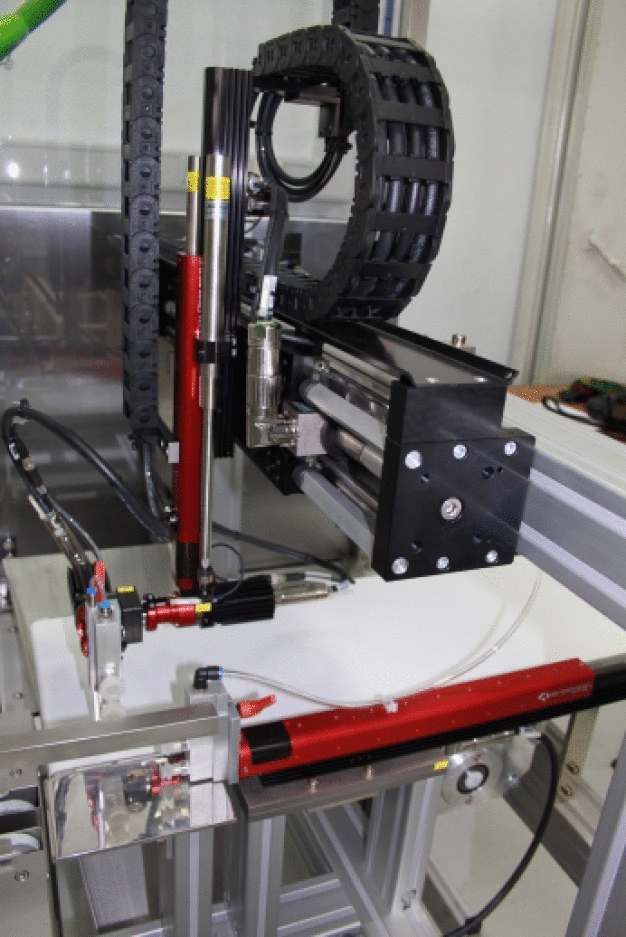
The handling technology complete solution at the end of the vertical case packer VCL 180 S is equipped with the two handling systems supplied by Afag for removal positioning (bottom) and for correct orientation of the folding cartons for further processing (top). (Image: Afag Automation AG)
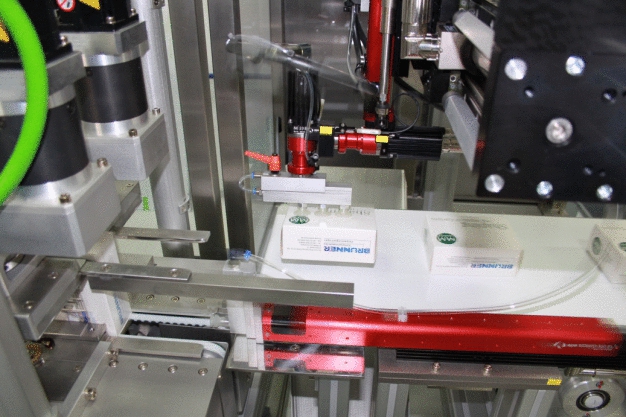
For continuous delivery of the folding carton, a handling unit is installed that uses a vacuum gripper to pull the standing folding carton out of the transport belt area and place it in the removal position, ready for multi-axis handling. (Image: Afag Automation AG)
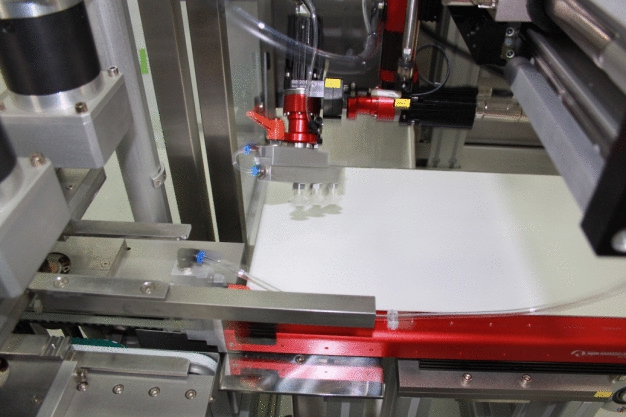
The illustration shows the synchronized double swinging/rotating process (2 x 90°) for the correct orientation of the folding cartons on the discharge conveyor belt. (Image: Afag Automation AG)
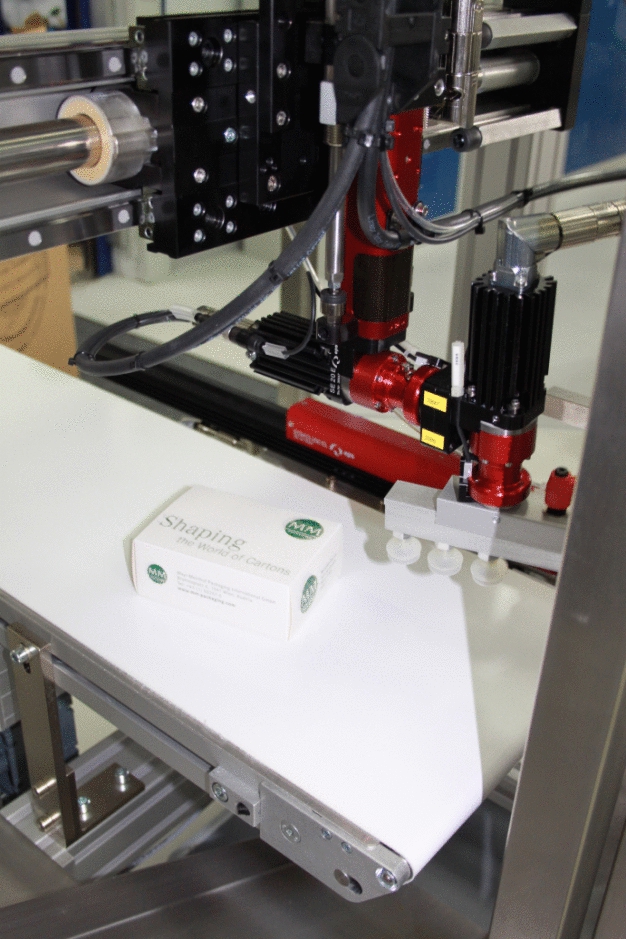
After the completed folding process, the now positioned folding carton is ready for further transport to the final packaging. (Image: Afag Automation AG)
With the creative combination of fully electric and standardized handling and linear motor modules from Afag, the packaging technology specialist Brunner Engineering from Durmersheim is increasing the utilization and application flexibility of its systems.
"Brunner Cartoning for all industries and applications" – the slogan is program and clearly reflects the performance capability and system solution competence of a typical, technology-oriented mid-sized company. But let's go step by step. In 1965, Otto Brunner founded a company for the development and manufacture of packaging machines. Later, Ludwig Brunner took over the company and focused on building cartoning machines, packaging systems, special machines, and product feeds. Over time, this resulted in a standard program of vertical and horizontal cartoners as well as the associated peripherals. Based on standardized units and customer-specific adjustments, it is possible, depending on the design, machine type, division, and operating mode, to process or output folding carton formats from 20 x 15 x 45 mm up to a maximum of 270 x 120 x 350 mm at cycle rates between one and 300 pieces per minute. Brunner Engineering's customers come from the pharmaceutical, cosmetics, food, technical products, and consumer goods sectors, and appreciate the performance and utilization flexibility of the machines and systems, which are designed and built according to prevailing guidelines (such as GMP). Not only many end customers but also some manufacturers of packaging systems rely on the expertise and know-how of Brunner Engineering from Durmersheim – especially when it comes to the vertical and horizontal cartoners for fully automatic and manual packaging.
Focusing on the essentials
Ralf Mohr, Managing Director of Brunner Engineering, has over 30 years of experience in packaging technology. He sees great added value in the solutions offered by the 18-strong company: "Our advantages lie in the wide format variety and the possibility of quick, simple, and reproducible format changes. Additionally, the folding cartons are usually transported in a product- and pack-safe manner via timing belts. The machines are built as GMP versions in balcony construction. For movement sequences, direct drives with servo motors are used. The machines can be operated automatically, manually, or in a mixed mode, and can be expanded later due to their modular design. To keep the costs of the systems manageable, we rely on the aforementioned standardization and on components available on the market that meet the required quality. Always in the foreground are high and, above all, reliable performance, requirement-oriented flexibility, easy maintenance and service, and finally, cost. At the same time, we emphasize quality and quick responsiveness, which is why we consider a high degree of in-house manufacturing essential and set very high standards for our suppliers." These requirements are also met by the handling technology specialist Afag Automation, which was recently confronted with a special handling technical challenge by Ralf Mohr.
Articulated-arm robot vs. electric handling technology
Alexander König, Sales Southwest at Afag Automation and responsible for the customer Brunner Engineering, describes the company's requirements: "This involved simultaneously picking up, double swiveling or rotating by 90°, and placing initially standing arriving folding cartons, which are then oriented correctly in the storage position and transported crosswise on the discharge conveyor to the end packaging line. This was to be achieved at cycle rates of 80 pieces per minute, based on the output of a vertical cartoner of the type VCL 180 S. Previously, such complex movement sequences were carried out with several pneumatic linear, swiveling, and rotational handling modules, which proved increasingly difficult due to the effort involved in components, assembly, installation, and limited cycle rates. The end customer wanted higher performance, which could only be reliably achieved with a higher degree of automation and, in this case, consistent use of electrically operated handling modules." Ralf Mohr and his colleagues also considered using a robot but dismissed this due to space and cost reasons. Moreover, the complete solution presented by Alexander König and Afag's application technology offered more than just a very good alternative. The requirement-oriented, creative combination of electrical handling modules into a multi-axis X-Z-C handling system (according to DIN 66217 axis definition) is based on the following standardized components: a linear motor-driven portal axis (X-axis), a linear motor-driven linear axis (Z-axis), an electrically driven rotation axis (B-axis), plus an electrically driven rotation axis (C-axis).
Synchronous movement sequences for high cycle rates
To continuously supply the folding cartons from the feed belt of the packaging machine, another handling unit (linear motor-driven linear axis, X-axis) is installed, which uses a vacuum gripper to pull the cartons from the conveyor area and position them for multi-axis handling. Both the multi-axis handling system and the single handling unit were assembled and equipped by Afag ready for installation and connection, so Brunner Engineering only had to perform the final assembly and the mechanical and control integration. The scope of delivery also included all controllers with motor cables and connector sets, as well as various accessories. The standardization of all components practiced by Afag also offers the advantage that the handling systems can be perfectly synchronized and controlled in a master-slave operation, which results in optimized cycle rates and higher throughput. Furthermore, it is possible to program and retrieve various product-related movement profiles according to system flexibility at any time. The pragmatic, satisfied Ralf Mohr concluded: "From needs analysis, conception, dimensioning, and calculation to constructive integration and later commissioning, we received full support from Afag. The solution based on standardized electrically or linear motor-driven handling modules advances us and our customers in many ways, making us even more flexible regarding stack patterns and formatting. Accordingly, we will continue to automate with Afag and further reduce handling-related tasks."
Afag Automation AG
6144 Zell
Switzerland