- Particles
- Translated with AI
Markus Hansel
Norm particles – The next generation in 3D
Current research project enables the free dimensioning of standard particles in their length, width, and height.
Matrix
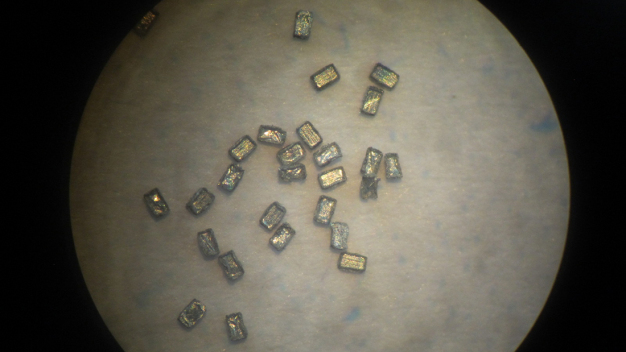
Test and standard particles have become indispensable in many areas of technology in recent years. Their range of applications includes, for example, validation of technical cleanliness, tests on the short-circuit behavior of electronic components, or the behavior of particulate contaminants in fluid-carrying systems. So far, the classification of particles has been limited to their length due to manufacturing constraints. With a newly developed manufacturing process, the particles can now be specified in all three dimensions with significantly tighter tolerances.
The new manufacturing process was developed as part of a research project funded by the Federal Ministry for Economic Affairs and Energy, focusing on the development and testing of a testing methodology ("fault injection testing") for E/E systems to ensure failure probability during product development. One subproject aimed to create a particle type that is specified across all three dimensions beyond the previous one-dimensional characterization, with manufacturing tolerances that significantly surpass the previous limit of +/- 50 µm. During the two-year development phase, the two project partners responsible for implementing this subtask, Spies Lasertechnik GmbH and BIDAG Technologies GmbH & Co. KG, succeeded in creating a two-stage process that allowed them to significantly exceed the initial goals.
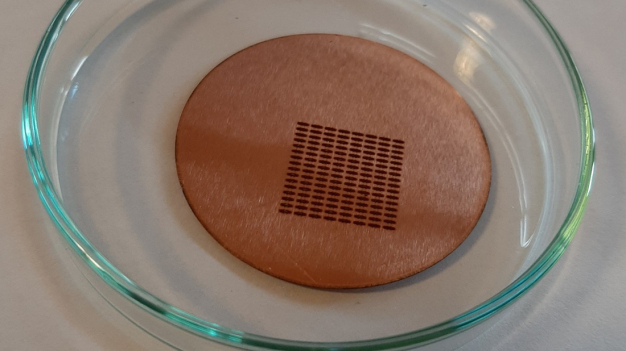
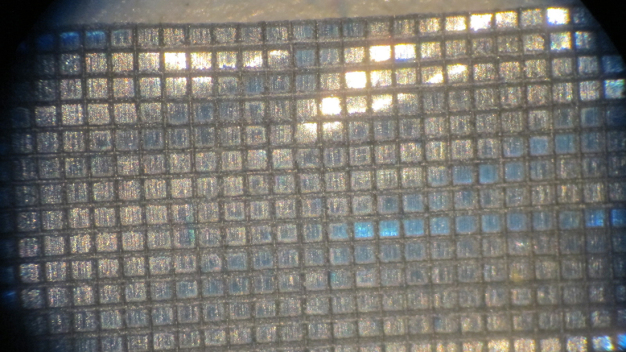
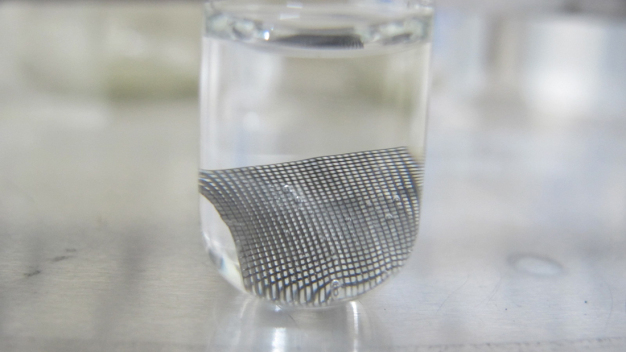
In the first stage of the process, the particles are pre-cut in a matrix. Due to the matrix-like arrangement of the particles during the cutting process, an initial preliminary fractionation occurs at this manufacturing stage, enabling the selection of parameters for subsequent steps. The second stage involves chemical post-processing of the particles and precise fractionation. During this post-processing, the laser-cut particles are first separated individually, then reduced to the target dimensions, and finally chemically cleaned and polished. With this method, standard particles can be produced with pinpoint accuracy in their length, width, and height for the first time. The height of the particles can be realized in steps of 50 µm, starting from a minimum height of 100 µm. The length and width of the particles are freely adjustable. Currently, particles made of aluminum, stainless steel, and copper are available. Additional materials will be added during further development. The manufacturing tolerance of +/- 20 µm set during the project planning phase was reduced to +/- 10 µm due to the two-stage manufacturing process. Compared to the original test particles, these specially designed particles, with their three-dimensional shape and tight manufacturing tolerances, enable a significantly broader range of applications. This includes tests in areas where, for example, distances are bridged with micrometer precision or flow behavior in narrow channels is examined, with other influencing factors minimized as much as possible. The testing of the short-circuit behavior of electronic components is cited here as a classic example. Furthermore, numerous other applications are possible across various sectors. Since their introduction at the beginning of the year, the particles have already been successfully used in industries such as automotive, optical, and medical technology. Because the newly developed manufacturing process allows nearly free dimensioning of the particles, it is advisable to plan the dimensions and material of the particles in advance based on their future application area in consultation with the experts at BIDAG Technologies GmbH & Co. KG, which has been marketing the 3D particles since the beginning of the year. The high demand and numerous positive feedback from field users already indicate the need and broad application scope of these precise three-dimensional standard particles.

BIDAG Technologies GmbH & Co. KG
Zum Bolzenbach 7
35236 Breidenbach
Germany
Phone: +49 6465 4380
Fax: +49 3222 3190149
email: info@bidag.de
Internet: https://www.bidag.de