

- Translated with AI
New Research Center for Nanosatellites at TU Berlin
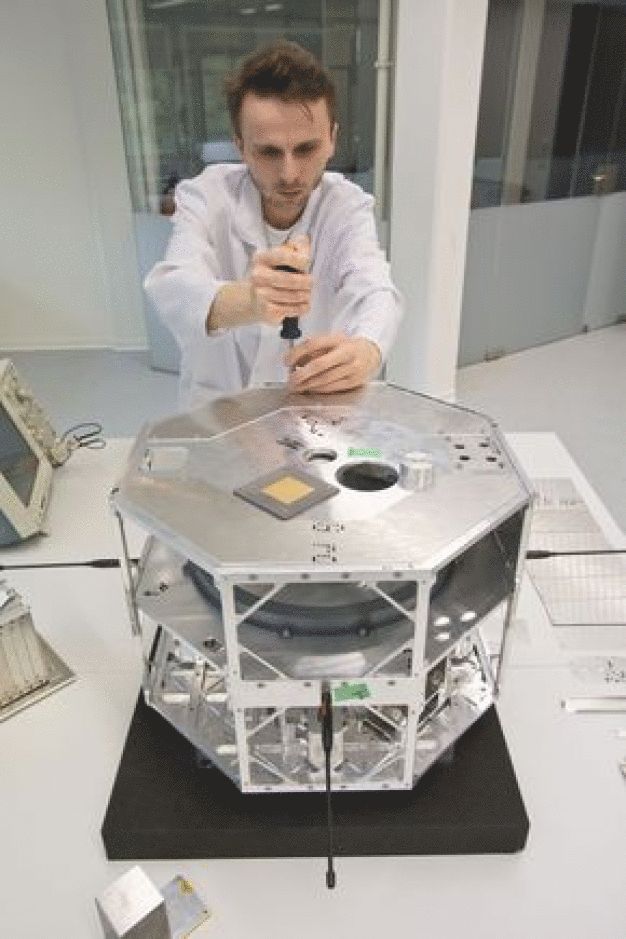
Merlin Barschke, doctoral student in the Department of Aerospace Engineering, is building the satellite TechnoSat. (© TU Berlin/PR/Ulrich Dahl)
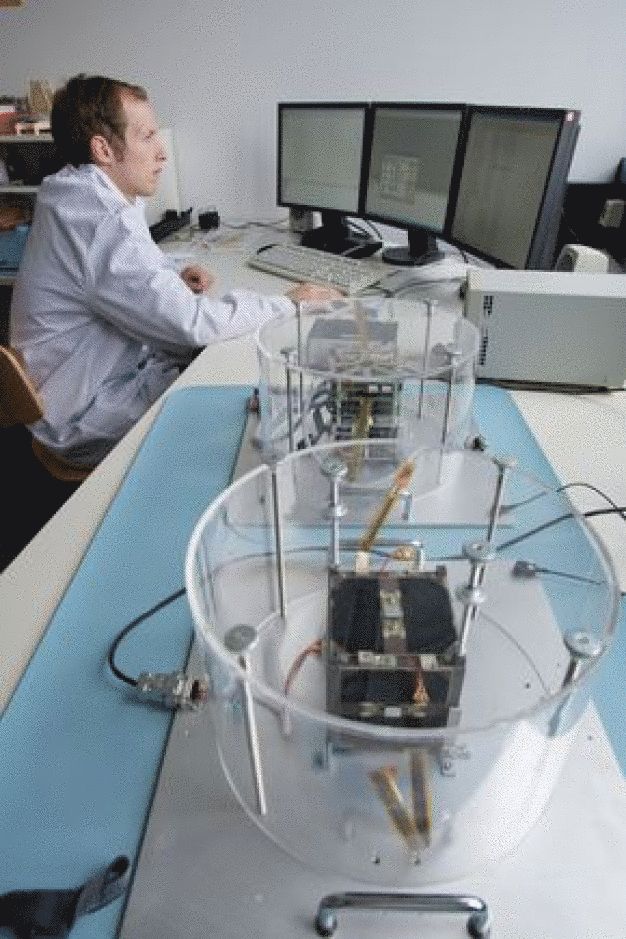
Sascha Weiß, doctoral student in the Department of Aerospace Engineering, with two BEESAT models. (© TU Berlin/PR/Ulrich Dahl)
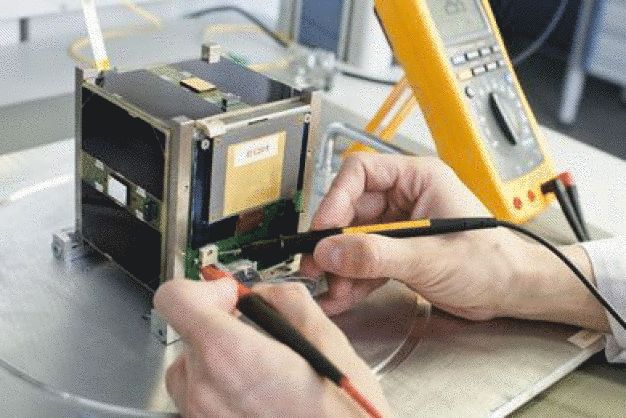
Measurements on the engineering qualification model of the BEESAT-2 pico satellite. (© TU Berlin/PR/Ulrich Dahl)
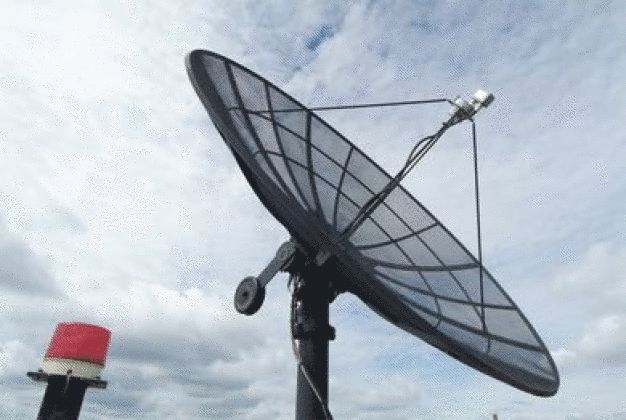
The antenna system on the roof of TU Berlin belongs to the ground station technology of the Department of Aerospace Engineering. (© TU Berlin/PR/Ulrich Dahl)
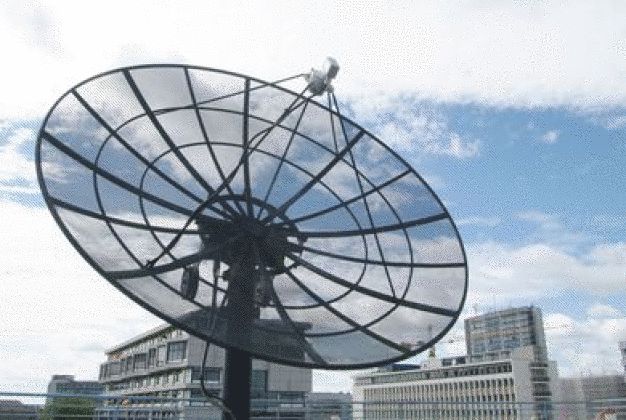
The antenna system on the roof of TU Berlin belongs to the ground station technology of the Department of Aerospace Engineering. (© TU Berlin/PR/Ulrich Dahl)
The smaller and lighter a satellite is, the more affordable it is to launch. You need to raise 10 to 100 million euros to send an ordinary satellite weighing a few hundred kilograms and several meters long into orbit with a rocket. The launch costs are estimated at 20,000 euros per kilogram. At TU Berlin, small satellites are developed and operated that fit in a handbag and weigh only 1 to 15 kilograms. With the recently opened research center for nanosatellites, which is unique worldwide as a university facility, the university has a place on the Charlottenburg campus where scientists and students are currently researching and building seven new satellites. These can use infrared cameras to detect forest fires, test new space technologies, or establish a communication network for satellite swarms.
"At the Department of Aerospace Engineering at TU Berlin, research and teaching mutually enhance each other in a very impressive way," explains Prof. Dr. Christian Thomsen, President of TU Berlin. "The satellites, which are co-developed and built by students and doctoral candidates, set milestones in the field of small satellite research worldwide. The nanosatellite research center is not only a place for innovations but also for training the next generation, who can prepare very well for challenges in science and industry here."
Prof. Dr.-Ing. Klaus Brieß, head of the Department of Aerospace Engineering at TU Berlin, says: "The class of nanosatellites with a mass of 1 to 15 kilograms is still at the beginning of its development into full-fledged tools for environmental monitoring, remote sensing, or communication. We are researching new components for small satellites as well as demonstrating new instrument platforms and satellite systems in space."
The new nanosatellite research center covers a total of 330 square meters and includes a mission control center, an electrostatically protected integration and testing area with thermal chambers, vacuum chambers, and storage control stations, as well as computer workstations and a conference room. The total cost for building and equipping the research center amounts to around 100,000 euros. In this laboratory, the nanosatellites TUBIN, TechnoSat, and four S-Net models are integrated, which are being developed within projects funded by the Federal Ministry for Economic Affairs and Technology. The satellites are intended to undertake demanding research tasks.
With TUBIN (TU Berlin Infrared Nanosatellite), the development and testing of Earth remote sensing with optical instruments are underway. The satellite has a total mass of about 15 kilograms and external dimensions of approximately 30 by 45 by 45 centimeters. It carries a payload of two infrared cameras and a camera sensitive in the visible wavelength range. The infrared payload aims to demonstrate the applicability of the so-called bolometer technology for detecting and observing hotspots such as forest fires from space. The mission is scheduled to launch in 2016.
The primary goal of the TechnoSat mission (planned launch in 2015) is to demonstrate and test in space newly developed components and subsystems for nanosatellites. A secondary mission goal is the development and deployment of the adaptive and reusable nanosatellite bus TUBiX20 (TU Berlin innovative next-generation 20 kg nanosatellite platform). Adaptability here refers to the satellite bus's ability to adjust to different payloads, orbits, and mission scenarios. TechnoSat will have a launch mass of about 15 kilograms and external dimensions of approximately 30 by 45 by 45 centimeters.
The four S-Net satellites are intended to investigate and demonstrate the methodological, theoretical, and technical foundations for reliable modern communication between satellites. Possible application areas include environmental and climate research, global early warning systems, disaster monitoring, traffic surveillance, as well as on-orbit servicing and planetary robotics. Four radio transceivers for inter-satellite communication, developed at TU Berlin, are to be integrated into four low-flying satellites in the 10-kilogram class. The nanosatellites will fly in formation and form a communication network in the S-band. The experiments in space are expected to start in 2016.
The work based on minimalist principles at the Department of Aerospace Engineering at TU Berlin, both in terms of technology and energy consumption, was originally intended for teaching and training purposes. Since 1963, the university has been teaching the fundamentals of aerospace engineering and has been developing and building micro-, nano-, and picosatellites together with students for the past 25 years. Now, TU Berlin is at the forefront of small satellite research worldwide. Ten TU satellites have already been successfully launched into orbit, including the three BEESAT picosatellites (Berlin Experimental and Training Satellites), whose first series is considered a technological milestone. They are the smallest satellites built at the department, with each roughly 10 centimeters in edge length and a total mass of 1 kilogram. The launch of BEESAT-4 is planned for 2015.
The new nanosatellite research center enriches the Charlottenburg campus with another modern research facility. Recently, the BasCat laboratory for catalysis research, an energy laboratory for gas turbine research, and a house for biochemistry were opened. Additionally, the Wüstenrot Foundation announced at the end of 2013 that it would provide 3.5 million euros for the renovation of the large pink orbit tank on the Charlottenburg campus, in order to preserve the extraordinary architecture and enable further research in the building.
Technische Universität Berlin
10587 Berlin
Germany