



- Buildings & Rooms
- Translated with AI
More peace where it matters
Study: Rubber floors best reduce noise generation
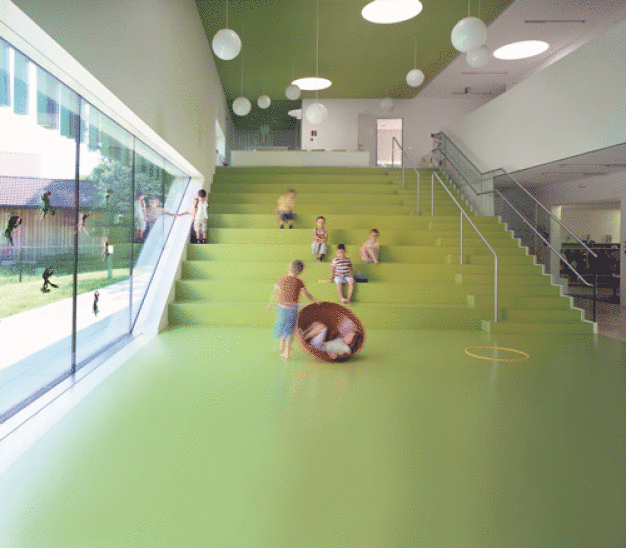
Kita Sigharstein, Neumarkt am Wallersee (© Angelo Kaunat)
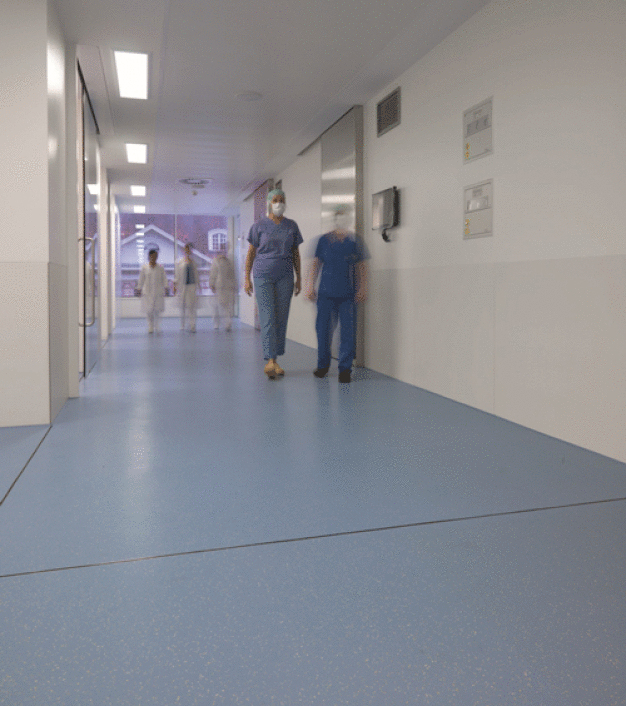
Hospital Salem, Heidelberg (© Thomas Goos)
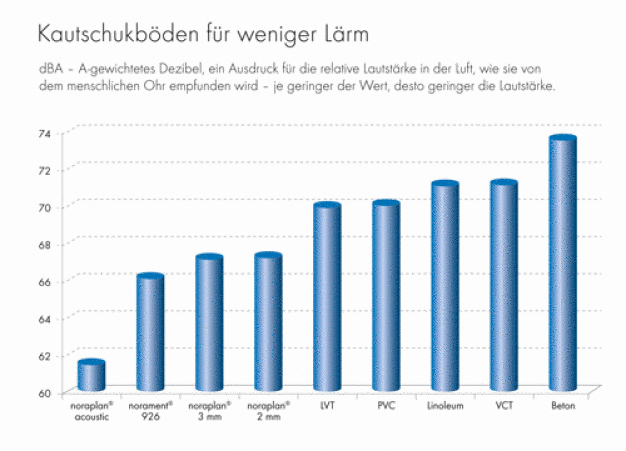
Acoustics Study, Graphic
Noise means stress and can even cause illness: An increased noise level over time leads to significant mood disturbances such as headaches, sleep issues, and concentration problems. Therefore, noise is one of the most common complaints in patient surveys in hospitals – studies show that it can even delay recovery. But children, students, and university attendees in daycares, schools, and universities are also affected by high noise levels, which impair their well-being and performance. And the staff of these facilities are also impacted: The volume is not only stressful for medical personnel as well as teachers and caregivers but also causes many misunderstandings and communication errors.
Flooring has a significant influence on room acoustics. For planners and building managers, it is often difficult to identify the floor with the most favorable acoustic properties from the multitude of available products. Scientists from the Intertek research laboratory in Cortland/New York have now tested various elastic floors in a comparative noise generation test – with a clear result: Rubber flooring, such as those offered by nora systems, best reduces the generation of noise on the floor and thus significantly contributes to reducing the noise level within buildings.
Measurement method mimics human hearing perception
The ASTM E492 "Standard Test Method for Measurement of Impact Sound Transmission by Floors and Ceilings Using the Laboratory Hammer" is a new, recognized test method for measuring the noise level generated within a room by the movement of people or objects on the floor – such as walking or running, the backrest of chairs and tables, or pushing carts and beds. Standard test methods typically only measure impact sound, i.e., the sound generated in the room below or adjacent through impact sound transmission.
In the experimental setup, common elastic flooring types – noraplan acoustic 4 mm, norament 926 3.5 mm, noraplan 3 mm, noraplan 2 mm, Luxury Vinyl Tile (LVT) 3 mm, PVC 2 mm, Linoleum 2.5 mm, Vinyl Composition Tile (VCT) 3 mm – were installed directly on a concrete subfloor in the center of an acoustic test stand. A hammer with four standard hammer positions generated noise, the loudness of which was measured at one meter distance at a height of 1.53 meters. This height roughly corresponds to the human ear. The noise level was determined in A-weighted decibels (dBA), meaning the sound signals in the measuring device were filtered to realistically mimic human hearing sensations. The result: The noise level generated on the floor mainly depends on the type of flooring. In the test, nora flooring produced the best results (see graphic). Compared to the reference products, they could reduce the noise level by up to nearly ten dBA, which corresponds to halving the perceived loudness. The reason for this is the material properties of the permanently elastic rubber, which significantly reduces the impact noise generated on the floor.
The use of rubber flooring is therefore an effective means of significantly lowering noise levels in clinics, daycares, educational institutions, and other buildings with high foot traffic, reducing stress, and permanently enhancing well-being and performance.

nora systems GmbH
Höhnerweg 2-4
69469 Weinheim
Germany
Phone: +49 6201 2743934
Mobile radio: +49 172 6330484
email: frank.baehr@nora.com
Internet: http://www.nora.com