- Buildings & Rooms
- Translated with AI
Minimized heat input: Custom-made LED lights facilitate the planning of cleanrooms and measurement rooms
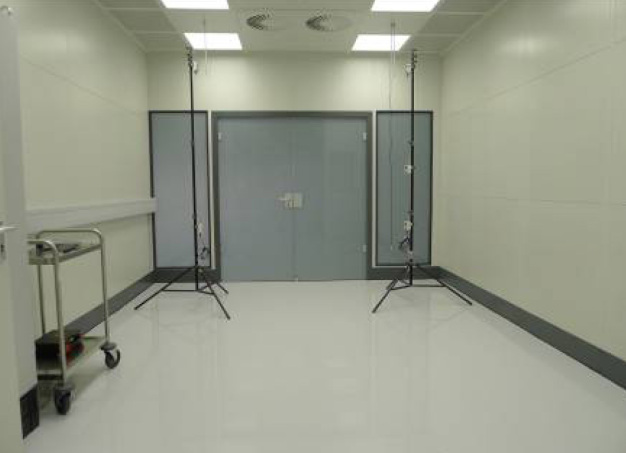
In Nerling's new research laboratory, the effects of noise sources in highly precise rooms will be examined more closely in the future. For this purpose, the new energy-saving LED lamps were installed in the measurement room of class I for the first time.
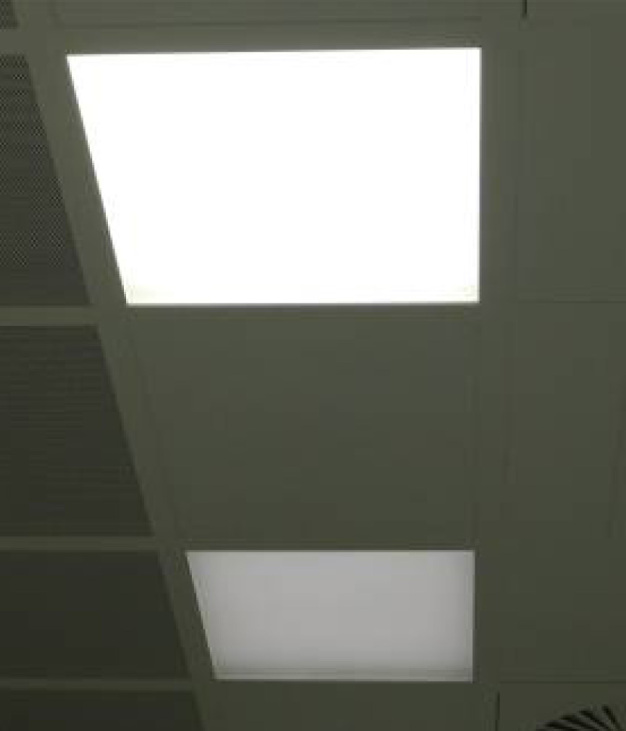
The LED lights offer significantly more flexibility in terms of formats. For the lamps in the measurement laboratory, for example, the dimensions of FFUs were adopted. This allowed for the creation of a modular ceiling, where the individual elements can be moved back and forth.
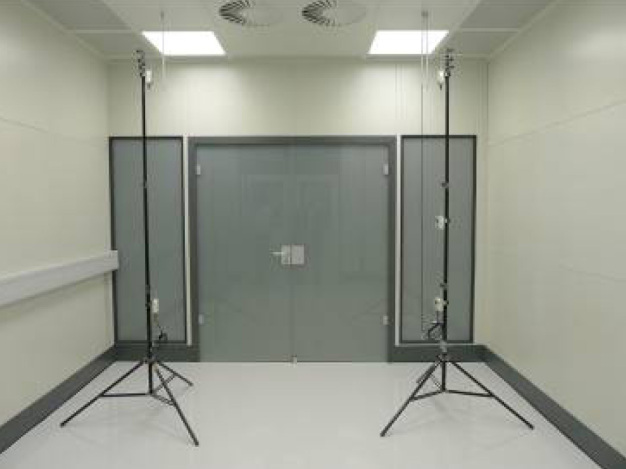
The main advantage of the lamps for system room renovation is that they do not release heat downward into the room but upward, where the exhaust airflow carries it away. This makes them particularly suitable for temperature-stable measurement rooms.
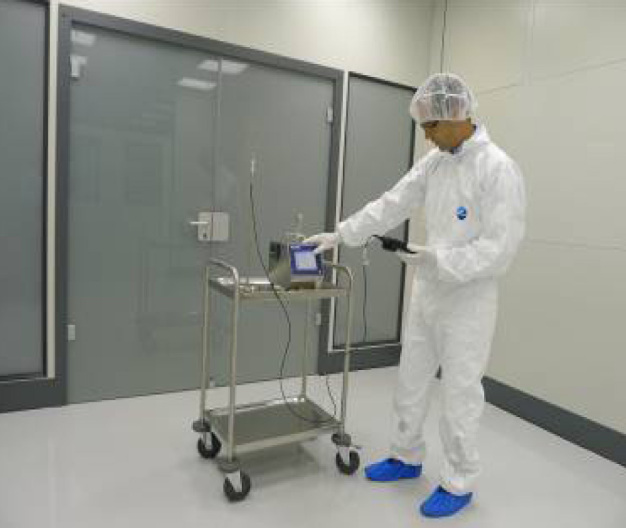
The new research laboratory is to maintain values of 0.2 K/h, 0.4 K/day, and 0.1 K/m. In the first series of experiments, the question to be answered is how to achieve the specifications of quality class I according to the new VDI/VDE guideline 2627. Additionally, airflow velocities and particle concentration will be determined.
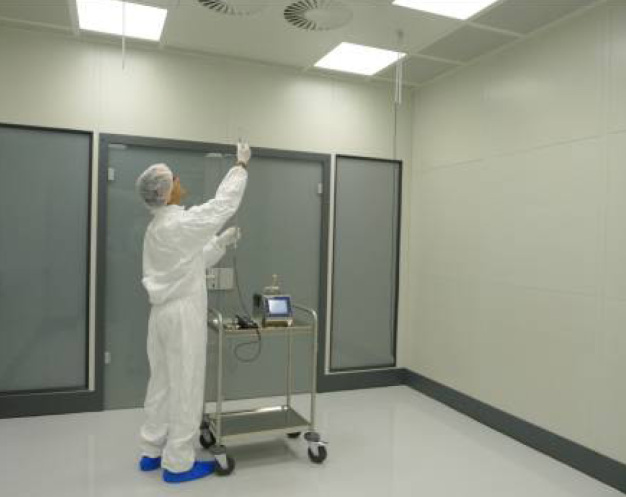
Long-term measurements are intended to determine which sources of disturbance are relevant and which are overestimated. Additionally, recovery time measurements should be conducted to assess how quickly the room recovers from disturbances.

Olaf Nerling: "For example, we want to answer the question of what happens in the room when the LEDs are dimmed or parts that are not properly tempered are introduced into the room," explains Olaf Nerling, Managing Director of Nerling Systemräume GmbH. "There are room concepts that degrade by two classes under such disturbances. Our goal is to only temporarily and at most degrade by one class."
Until now, lighting systems with fluorescent tubes have generally been used for system rooms, which are maintenance-intensive and only available in a few standard housing formats. To enable more flexible room planning in the future, system room builder Nerling has developed an LED lamp program with flexible housing sizes, making small series production easily possible. The nearly maintenance-free luminaires require up to 40 percent less energy than the conventional lamps used so far. They can be used in temperature-stable measurement rooms as well as in cleanrooms, where the individual luminaire formats offer planning advantages and the heat input should be minimized. To test the potential of the lamps and the interaction of various climate control components, they were installed together with a patented air duct ceiling and fan filter units (FFUs) in Nerling's new research laboratory in Renningen. In the measurement room of quality class I, various test series will be conducted in the future to better assess the impact of interference sources in highly precise rooms.
"As a measurement room of quality class I according to VDI/VDE 2627-1, the new measurement laboratory is to meet values of 0.2 K/h, 0.4 K/day, and 0.1 K/m," says Olaf Nerling, Managing Director of Nerling Systemräume GmbH. "In the future, we want to test new concepts for room construction and conduct long-term studies on the interaction of various components." The new LED luminaires are the first test objects for this purpose.
Lamps in Fan Filter Unit Format
The LED luminaires were specifically designed by Nerling to provide a uniform lighting system for all system room situations: "Until now, we have installed fluorescent tubes in our projects. In clean and sterile rooms, we relied on sealed cleanroom luminaires, and in measurement rooms, on mirror grid luminaires," explains Nerling. "Although we use electronic ballasts, this technology was not as energy-efficient as LED lamps." At the same time, there are only a few standard formats available in series for these lighting fixtures, meaning that expensive custom-made solutions often have to be produced, resulting in long delivery times.
Therefore, the company decided to develop a lamp program together with an LED manufacturer that allows much more flexibility in formats. "Sizes from 312 x 625 mm to 1250 x 625 mm are now easily possible," explains the managing director. For example, lamps with dimensions similar to filter fan units—i.e., 1,170 x 570 mm—can also be produced, a size that is relatively frequently required in cleanroom construction. The system size of the FFUs was also adopted for the lighting in the research measurement room. This allowed the creation of a modular ceiling where individual modules can be moved back and forth. Additionally, ordering spare lamps for small series is no problem, as Nerling manufactures the lamp housings themselves.
Energy Savings and Heat Dissipation to the Rear
Thanks to LED technology, significant energy savings are possible. "For example, to illuminate a room measuring 5 x 5 meters with a ceiling height of 3 meters, six lamps with open grid luminaires of 4 x 24 watts and 700 Lux are necessary," explains Nerling. "That’s a total of 576 watts, with an average illuminance of 911 Lux." Using the new type of lamp instead, only six units of 70 watts are needed, resulting in an overall average brightness of 816 Lux at only 420 watts. The LED solution is therefore about 20 percent more energy-efficient. If instead of open grid luminaires, sealed cleanroom luminaires are used, savings of up to 40 percent can be achieved. Additionally, LED luminaires generally have a very long lifespan of around 50,000 hours. "In many applications, the luminaires last more than five years, so they can almost be considered maintenance-free," says Nerling. If a luminaire breaks, it is quite sensible to replace it completely. This does not burden the environment, as the various components can be recycled. Usually, it is sufficient to replace the circuit boards.
The main advantage of the lamps for system room construction is that they dissipate heat not forward into the room but to the rear, where the exhaust airflow transports it away. This makes these light sources particularly suitable for temperature-stable measurement rooms, where the heat input is significantly reduced compared to the otherwise used grid luminaires. Even in areas where sealed luminaires are necessary, installing LED lamps is advantageous. They are standardly equipped with the necessary diffuser here, whereas previous solutions required an additional installation. "Furthermore, the luminaires are easily dimmable, which opens up additional possibilities for energy savings," explains the expert.
Test Series on the Interaction of Individual Components
A total of 8 LED luminaires are installed in the 17 m² research measurement room in Renningen. The achieved illuminance of the lamps can be adjusted continuously between 400 and 1,500 Lux. "The first test series aims to answer the question of how to achieve the specifications of quality class I according to VDI/VDE guideline 2627," says Nerling. Additionally, tests on the interaction of the luminaires and other climate control components will be conducted: "We want to answer, for example, what happens in the room when the LEDs are dimmed, the FFUs are reduced, non-temperature-controlled parts are introduced into the room, or multiple people enter the room at the same time," Nerling explains. "There are room concepts that worsen by two classes under such disturbances. Our goal is to only temporarily and at most by one class to degrade." In highly precise rooms, potential interference sources are very difficult to estimate. Nerling plans to monitor the room over a longer period to identify which interference sources are relevant and which are overestimated. Additionally, recovery time measurements will be conducted to determine how quickly the room recovers from disturbances.

Nerling Systemräume GmbH
Benzstraße 54
71272 Renningen
Germany
Phone: +49 7159 16340
Fax: +49 7159 163430
email: ralf.nerling@nerling.de
Internet: http://www.nerling.de