
- Translated with AI
Medical Technology at OTH Amberg Weiden: How Cleanroom and Hybrid OR are Integrated into Teaching and Research
Cleanroom industry – where does the new talent come from?
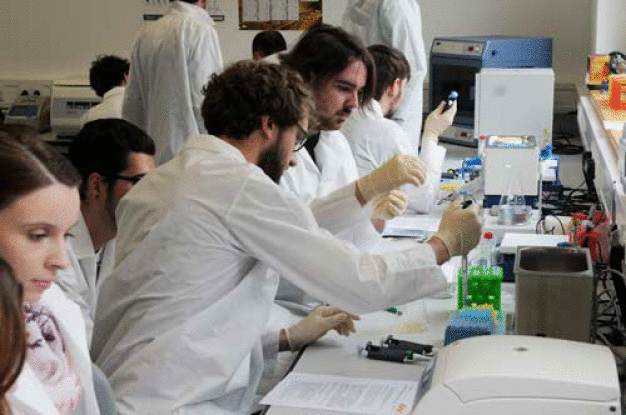
Insight into the Master's program in Medical Engineering, Laboratory Practicum in Molecular Diagnostics.
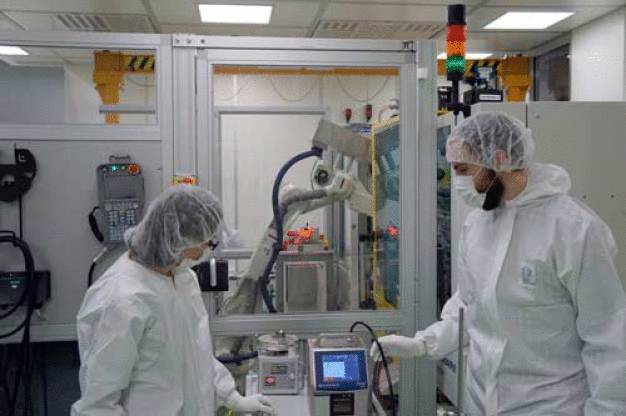
Further insights into the cleanroom at the OTH on the Weiden campus
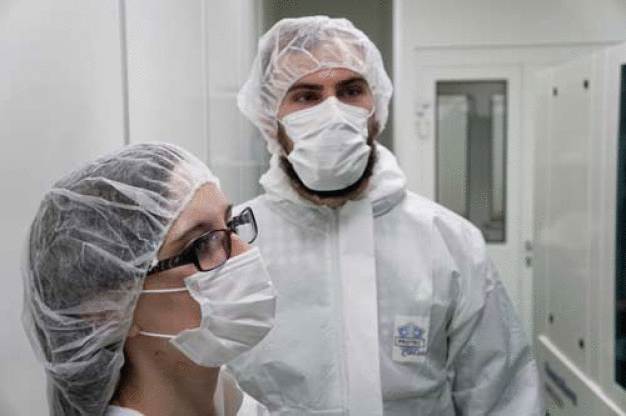
Further insights into the cleanroom at the OTH on the Weiden campus
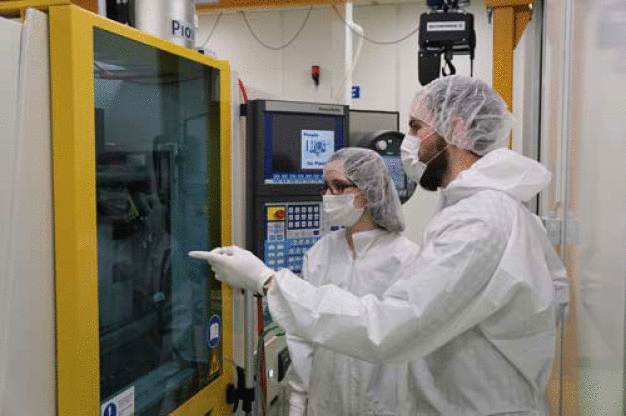
Further insights into the cleanroom at the OTH on the Weiden campus
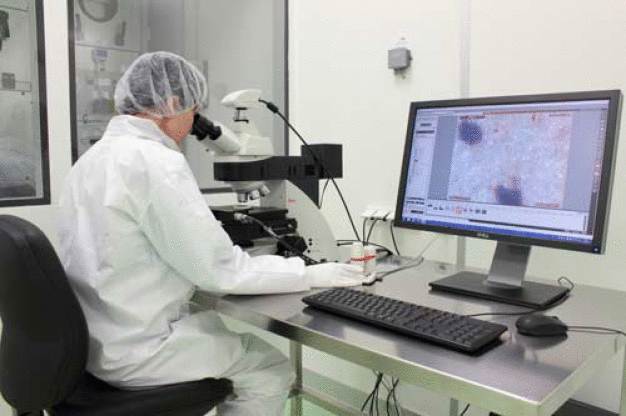

Panoramic view of the cleanroom and particle measurement station
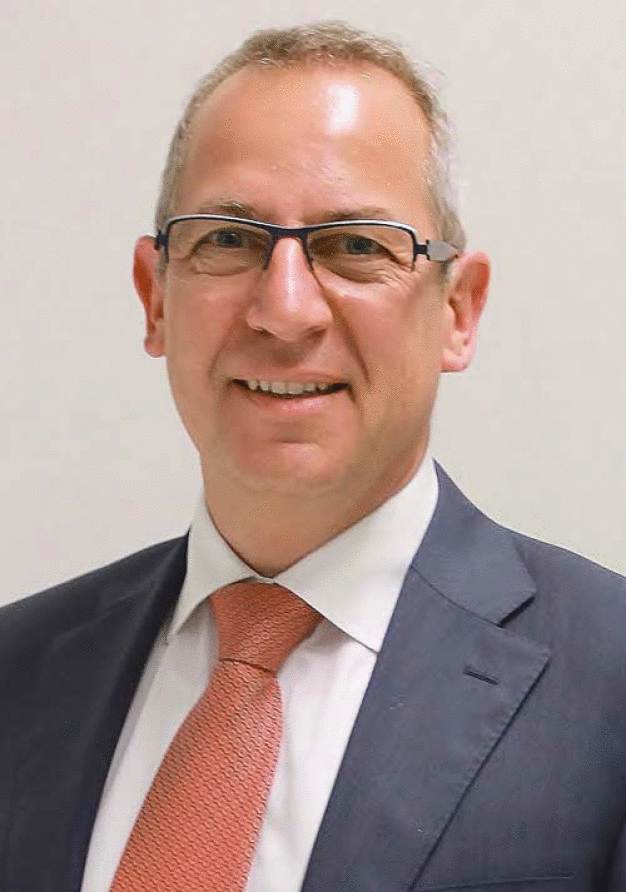
Prof. Burkhard Stolz
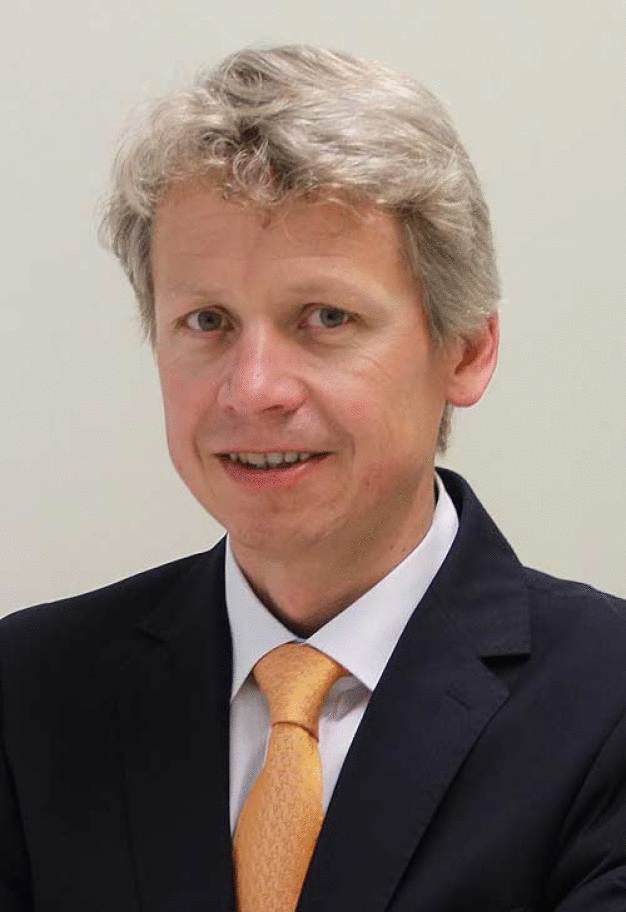
Prof. Dr. med. Clemens Bulitta
Biomedical Engineering – offers Depth and Breadth
Medical and pharmaceutical products go through a long journey from idea to market launch and must meet a variety of requirements primarily aimed at protecting patients and users. In this context, cleanliness and sterility of the product play a crucial role, which can only be guaranteed through adherence to specific environmental conditions during manufacturing and use, as well as the relevant hygiene standards. One of the goals of training engineers in the field of medical technology is to impart this knowledge to students. Tomorrow's engineers must understand the requirements and operating conditions for medical devices in clinical everyday life just as well as the industrial development and manufacturing processes. This is precisely the focus of the biomedical engineering programs taught at the Ostbayerische Technische Hochschule Amberg-Weiden at the Weiden campus in the Upper Palatinate. Since 2010, young graduates have been trained in Weiden to become Bachelor of Engineering, and since 2014, the consecutive master's program in medical engineering has offered the opportunity to deepen knowledge in medical technology, culminating in the academic degree Master of Science.
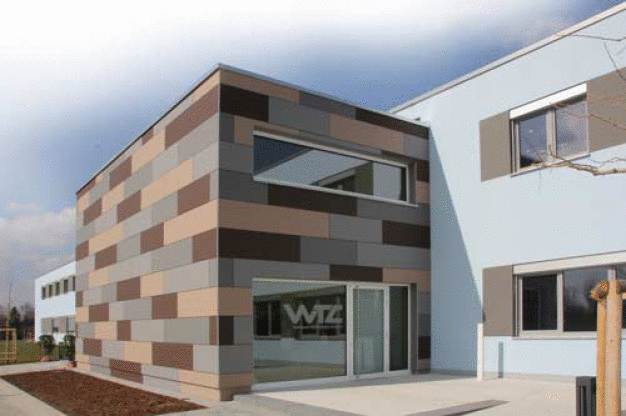
Essential components for the successful training of medical engineers, alongside teaching, are the practical elements at the university and in clinics and industry. The approximately 1,100 m2 of laboratory space equipped at a high-tech level at the Weiden Technology Campus (WTC) includes a laboratory for radiation diagnostics, a biomechanics laboratory, a laboratory for in-vitro diagnostics, as well as a hybrid operating room and an industrial cleanroom of around 60 m2. This equipment is complemented by additional laboratories for materials engineering, CAE, electrical engineering, and manufacturing technology, which are also used in other engineering programs at the Faculty of Business Engineering. Regional partners, clinics, and industrial companies offer "innovative learning locations" that provide opportunities to learn about further processes and devices through excursions, internships, and workshops, and to independently conduct experiments there.
Cleanroom and Hybrid Operating Room in Applied Research
With a cleanroom and a hybrid operating room, the OTH Amberg-Weiden currently offers a unique feature in the German higher education landscape for training engineers, which are also used for industrial research projects. The industrial cleanroom meets the requirements of Class 7 according to ISO 14644-1 and enables investigations into the cleanliness of technical processes, components, and manufacturing modules. Particulate contamination as well as microbiological contamination are considered here, with appropriate measuring devices for sampling and subsequent analysis available for use by both university laboratory engineers and students. An example of industrial cooperation is the manufacturing and assembly of a pharmaceutical primary packaging, which was carried out in the university's facilities. The production involved creating a plastic body via injection molding and subsequent assembly and packaging processes as part of a pilot production. The involved industrial company uses the insights from this study to design series tools and machines and can thus specifically optimize critical processes regarding particle generation and shorten project durations. The university's task was to analyze particulate and microbiological contamination along the process chain and identify potential improvements. Further projects included, for example, testing a new handling unit from an automation company for its cleanroom suitability, where constructive suggestions for product improvements could also be identified. An additional reference project is the examination of a micro-injection molding machine with a similar task. A dedicated laboratory is available for microbiological contamination investigations, conducted by a biologist with extensive expertise in this field.
Students become familiar with cleanroom technology during their studies, understanding the basics of planning and commissioning, with particular emphasis on qualification and validation. The master's program includes a module on cleanroom technology and hygiene, offering a variety of practical courses that also cover fundamental methods of particle analysis and microbiology.
The surgical environment is evolving rapidly. New minimally invasive techniques (keyword: NOTES) and increased use of imaging (keyword: hybrid operating room) are radically changing the operating room workplace. The requirements for such rooms are highly specific depending on the clinical application, especially concerning medical equipment. Only through comprehensive workflow understanding, careful, early, and interdisciplinary planning involving all stakeholders can the successful realization of a hybrid OR and modern integrated operating rooms be achieved. This leads to numerous new questions that can be thoroughly addressed in the teaching and research operating room:
- Use and benefit of intraoperative imaging
- Technology integration, e.g., operating table and imaging, as well as medical technology and information technology (keyword: DIN 80001-1)
- Hygiene and ventilation technology (keyword: DIN 1946/4 2008)
- Medical technology planning
- Ergonomics and usability
- Workflow and efficiency
Therefore, a state-of-the-art teaching and research operating room with full functionality, including ventilation technology, has been established at the Ostbayerische Technische Hochschule (OTH) Amberg-Weiden for teaching and research purposes. The connection to the biomedical engineering program and local clinical partners provides excellent conditions for research and teaching. Aspects of system integration and training of project engineers and service experts, who turn the ideas and visions of users in the operating room into reality, can be comprehensively addressed. The OTH Amberg-Weiden thus offers unique opportunities to position itself permanently as an innovative center for the healthcare industry and medical technology.
Hygiene plays a particularly important role in hospitals, as microbial contamination of surfaces of medical devices poses a high infection risk for patients and staff. Another research focus of the university is microbiological testing of various antimicrobial coatings regarding their effectiveness and durability. This is carried out according to international standard procedures (JIS Z 2801 or ISO 22196) and allows reproducible and meaningful determination of antibacterial efficacy. Load testing can subsequently simulate the routine use of antimicrobial-coated medical devices and verify any loss of effectiveness after several years of use.
"Institute for Medical Technology"
To consolidate university-related activities in research, teaching, and industry in the field of medical technology, the Institute for Medical Technology (IfMZ) was founded as a scientific research institution of the Ostbayerische Technische Hochschule Amberg-Weiden. With a team of professors, scientists, and engineers with diverse specialization backgrounds, the institute offers a broad range of expertise from medicine, molecular biology, and engineering sciences. In close collaboration with regional and supraregional external partners, the IfMZ links applied medical engineering research questions with practice-oriented training of highly qualified specialists for the forward-looking segment of medical technology. The institute cooperates with numerous companies from the medical technology industry, hospitals, specialist practices, and external research institutions.
The main research areas of the IfMZ include the advanced development of diagnostic and therapeutic systems and the optimization of examination procedures in medicine. The research activities focus on imaging techniques as well as on software and hardware components. In addition to technical issues, projects in hygiene, cleanroom technology, and microbiology are also pursued as key topics.
The professors of the biomedical engineering program lead various laboratories. In addition to student projects, research & development topics are also addressed in these labs. Future graduates also use the specialized laboratories for complex measurements under defined conditions during their theses. Questions that cannot be addressed at industrial sites during ongoing operations are studied here under realistic conditions.
Research focuses include, for example, hygiene and medical technology, simulation and computer-aided engineering, dental technology, and manufacturing in cleanrooms.
Bachelor's Degree in Medical Engineering
The biomedical engineering program offers an optimal combination of technical, health, and engineering sciences. To prepare students thoroughly for their later professional roles, the lecture series is supplemented with numerous practical elements such as internships, project work, guest lectures, and excursions with high practical relevance. This provides graduates with many opportunities for an interesting and challenging career start.
The program aims to impart the necessary technical and methodological skills for the development, testing, manufacturing, and application of medical components, devices, and systems. It includes, among other things, the application of mechatronics in medicine. Students acquire the required medical expertise in direct connection with practical knowledge from natural and engineering sciences.
Course Structure
The program is based on 4 pillars:
- Natural science fundamentals
- Mechatronics
- Medical engineering
- Integration subjects
The standard duration of study is 7 semesters when starting in the winter semester. The program is modular and includes six theoretical and one practical semester. The seventh semester is dedicated to the bachelor's thesis. The program comprises a total of 210 ECTS credits. Upon successful completion, the academic degree Bachelor of Engineering (B. Eng.) is awarded.
Master's Program in Medical Engineering – in three semesters to the Master of Science (M. Sc.)
"What do I do after my bachelor's degree?" Many students ask themselves this question after obtaining their first scientific qualification. Is the knowledge sufficient for industry requirements, or is an additional master's program the better path? There is no one-size-fits-all answer; individual circumstances must be considered. Since the winter semester 2014/2015, a very interesting option has been offered in Weiden. For graduates of bachelor's programs such as biomedical engineering, medical informatics, or medical physics, the Ostbayerische Technische Hochschule Amberg-Weiden, in cooperation with the Ostbayerische Technische Hochschule Regensburg, offers the master's program "Medical Engineering." The focus of this program is "Technologies and Systems."
The program trains students to take on leadership roles in research, development, production, and service within internationally active companies in medical technology and pharmaceuticals. These roles include, for example, development and innovation management, system development and medical technology management, IT and imaging procedures, research and development in medical technology, simulation-based development processes, diagnostics, process and quality management. Graduates are capable of assuming significant responsibilities within teams or organizations, leading complex tasks, and actively promoting the professional development of team members. Furthermore, the qualification in the master's in medical engineering extends to application- or research-oriented tasks and projects. The skills acquired qualify graduates to undertake complex technical and leadership roles and can serve as a basis for further scientific qualification through subsequent cooperative doctoral programs or employment in scientific institutions.
This program offers students an intensive experience with new topics over two semesters of face-to-face instruction at the university. Numerous term papers, laboratory practicals, lectures, and excursions provide the opportunity to expand knowledge and develop personal skills in a short period. Additionally, the personal network can be expanded through numerous industry contacts. The third semester is dedicated to the master's thesis. This setup allows students to complete their thesis even at an international location of an industrial company outside the university.
The decision to pursue the master's in medical engineering at the Ostbayerische Technische Hochschule Amberg-Weiden should be an easy one for students. Industry seeks qualified personnel for complex tasks – this program imparts many of the necessary contents.
Hochschule Amberg-Weiden
92224 Amberg
Germany