




- Buildings & Rooms
- Translated with AI
Leakage test S3 laboratory under extreme conditions
STZ EURO: Manufacturer-independent testing within the framework of VDI 2083-19
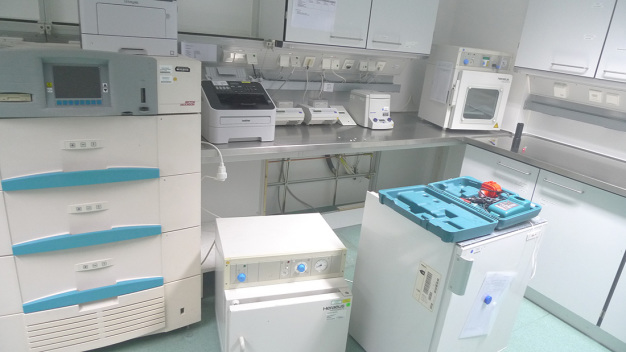
The wall covering had to be removed to locate the leak behind it (inappropriate electrical cable entry, see arrow).
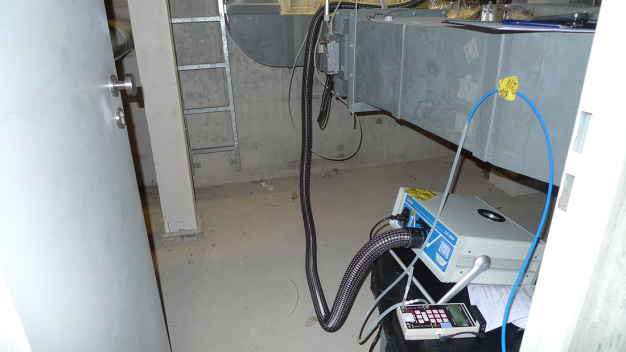
Measurement setup in the crawl space under the S3 laboratory, approximately 1 meter high.
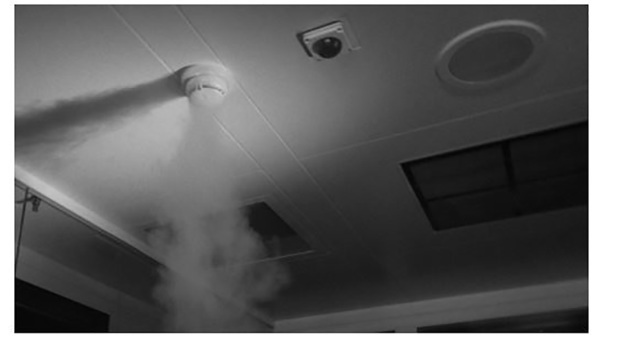
Leak detection at the construction site on a faulty installed smoke detector.

Dipl.-Ing. (FH) Michael Kuhn, Head of the Steinbeis Transfer Center for Energy, Environmental, and Cleanroom Technology, Lecturer in Cleanroom Technology, and Chairman of VDI 2083-19.
The VDI Guideline 2083-19, concerning the airtightness of cleanrooms, already considers all relevant aspects of room airtightness during the planning phase and can thus prevent laboratory and cleanroom operators from unpleasant surprises. Retrofitting existing laboratories and cleanrooms is often associated with extensive work, as demonstrated by the STZ EURO in the example of a laboratory with biological safety level 3.
In many existing laboratories and cleanrooms, systems with H2O2 release as gas or spray mist are being retrofitted for room disinfection. This topic has gained further momentum during the COVID-19 pandemic. Accompanying this are airtightness requirements to prevent neighboring rooms from being exposed to hydrogen peroxide during H2O2 release or to avoid unwanted dilution effects. Accordingly, the engineers of STZ EURO supported an existing S3 laboratory in a Stuttgart clinic during its upgrade regarding airtightness.
In the S3 laboratory, an exhaust air volume flow of a maximum of 61 m³/h was required according to ELATEC standards, with a differential pressure of 50 Pa to the environment. During the initial assessment, STZ EURO found a leakage three times higher than this. The next step was to locate the leakages.
Due to the very poor accessibility of the existing setup, this was a major challenge. Installed components, possible leaks behind wall panels, or hard-to-reach crawl spaces make work difficult. Cleanrooms and laboratories are not designed for subsequent modifications. In the case of the S3 laboratory, good teamwork allowed the work to be optimized. The technical manager and a team of craftsmen carried out sealing work in parallel with the leak detection. This gradually improved the airtightness. After three sealing sessions, the verification testing based on VDI 2083-19 was successfully completed.
This also pleased the technical manager, who informed STZ EURO at the project conclusion via email: “I would like to take this opportunity to thank you, Mr. Kuhn and Mr. Bürkell, for your competent support and tireless assistance in locating leaks. You were not afraid to search even in the most inaccessible corners for leaks and, with your experience, were able to suggest the right solutions. We will be happy to commission you again.”
“Most of the time, it is not the readjustment itself that involves great effort, but the accessibility. This makes subsequent work on laboratories and cleanrooms so complex,” says Michael Kuhn, head of STZ EURO in Offenburg.
The airtightness of cleanrooms can be defined and verified based on VDI 2083-19. For S3 laboratories, it makes sense to incorporate the recommendations of ELATEC[1]. “Furthermore, manufacturers of system components with airtightness requirements, as well as planners and operators, have the opportunity to have individual components tested on the test stand of STZ EURO in advance. Because even if a single component, such as the electrode dose, has a leak of 1.0 m³/h—which may not seem high at first glance—this can quickly lead to the room’s airtightness requirements not being met when multiple components are installed,” explains Michael Kuhn.
Using this expertise already during planning can help avoid the often significant time and cost expenditure associated with rectifying airtightness issues in cleanrooms.
STZ EURO also offers training on VDI 2083-19 to prevent customers from facing such problems, which could lead to increased costs and delays.

STZ EURO Steinbeis-Transferzentrum
Energie-, Umwelt- und Reinraumtechnik Offenburg
Badstraße 24a
77652 Offenburg
Germany
Phone: +49 781 20354711
email: mkuhn@stz-euro.de
Internet: http://www.stz-euro.de



