

- Translated with AI
Institute for Microelectronics: Cleanroom inauguration with Minister Schmid and Mayor Fritz Kuhn
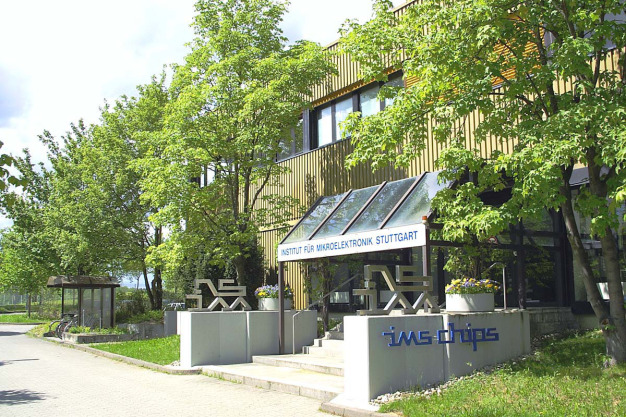
Institute for Microelectronics Stuttgart – Exterior view
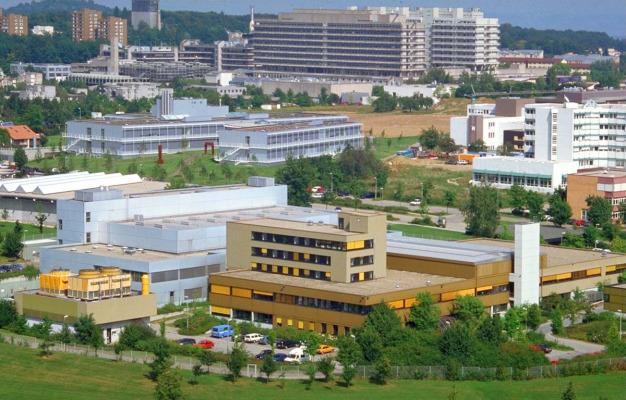
Institute for Microelectronics Stuttgart – Overview
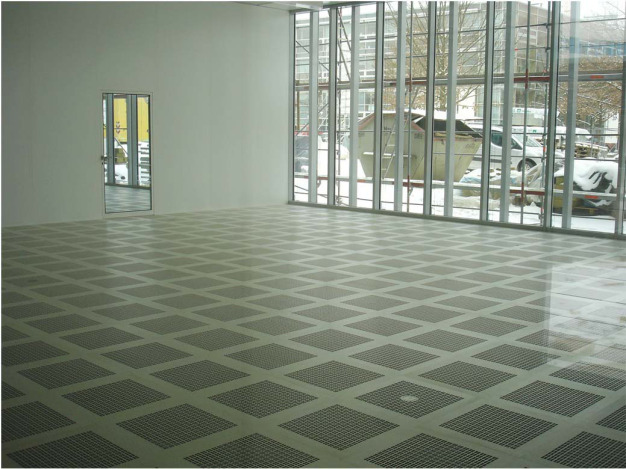
New cleanroom – Interior view, early April 2013
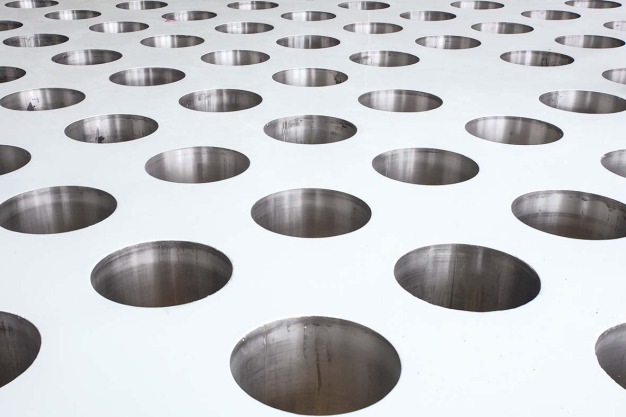
New cleanroom – Extremely stiff waffle slab made of reinforced concrete, 70cm thick with 1,200 40cm holes
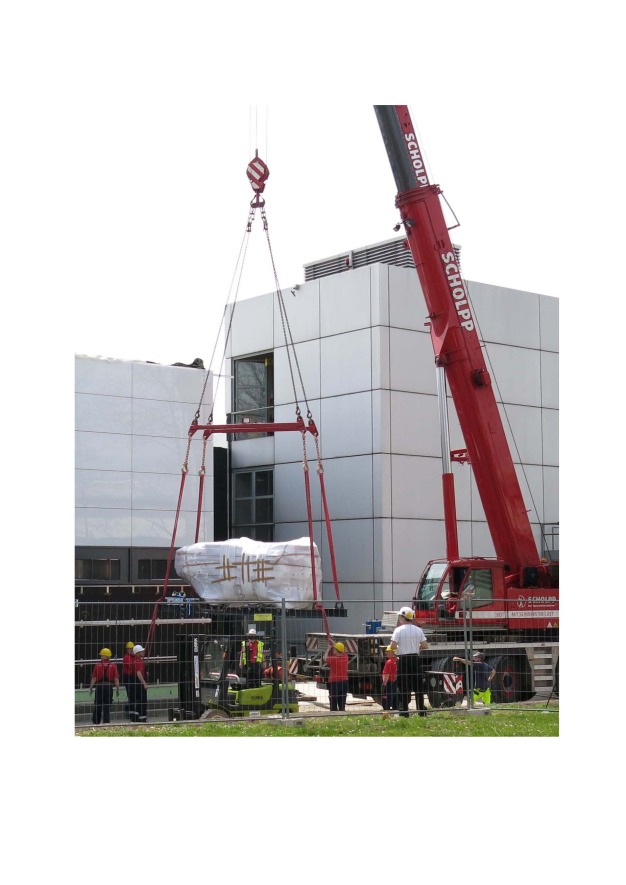
Delivery of electron beam writer Vistec SB4050 on April 17, 2013 – 11 tons of high-tech on the hook
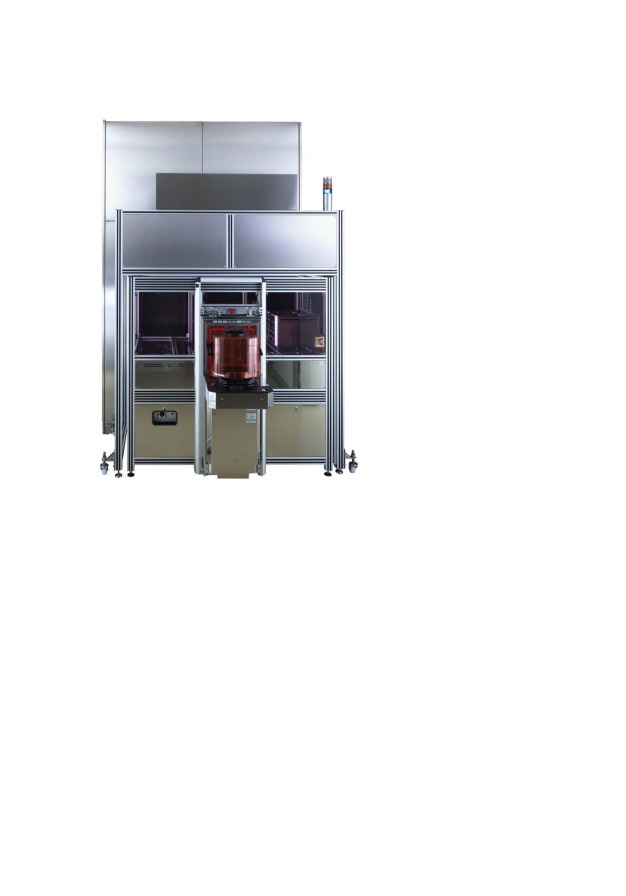
Electron beam writer Vistec SB3050/4050 (Source: Vistec Electron Beam GmbH)
Finance and Economy Minister Dr. Nils Schmid and Mayor Fritz Kuhn inaugurated the new cleanroom at the Institute for Microelectronics Stuttgart (IMS CHIPS) in Stuttgart-Vaihingen on April 22, 2013.
Stuttgart's microelectronics hub finally gained more space for new high-tech equipment. After two years of construction, the new cleanroom at the Institute for Microelectronics Stuttgart was officially inaugurated on April 22. Simultaneously, the newly built social area of the institute and the delivery of a next-generation electron beam writer were celebrated. The state supported the expansion and equipment procurement with a total of 14.7 million euros.
Minister Schmid: "By expanding the available cleanroom space, we are creating the necessary infrastructure to strengthen the cutting-edge research at the Institute for Microelectronics Stuttgart and to secure the institute's long-term future. As a partner to small and medium-sized enterprises, the institute makes an important contribution to the implementation of research and development results into industrial practice, which is so vital for our economy."
The Institute for Microelectronics Stuttgart is one of twelve contract research institutions of the Baden-Württemberg Innovation Alliance innBW and holds a leading position nationally and internationally in the field of nanostructuring and the research and development of new methods for manufacturing microchips and nanostructures. Through the expansion of the cleanroom, the production area for semiconductors and optical components can be increased by more than half and improved in quality. With the new electron beam writer, the institute can also continue to make an important contribution to the development and production of extremely precise optical components, such as those needed for the semiconductor industry.
Growth in Nanoproducts
The equipment used worldwide today to image tiny circuit structures on silicon wafers requires extremely precise and error-free optics down to the nanometer range. A leading provider of such lens systems is Carl Zeiss SMT GmbH from Oberkochen. Zeiss SMT is the exclusive partner of the Dutch company ASML, the world market leader in manufacturing so-called wafer steppers, which are among the most expensive devices in semiconductor manufacturing. Together with the Institute for Microelectronics, these companies have developed innovative optical components that enable even finer structures to be exposed. Key elements of these nanometer optics are designed at the Institute for Microelectronics, currently produced in small quantities, and will be mass-produced in the future using the new electron beam writer.
Microelectronic Systems
When the institute was founded in 1983, the focus was on ensuring technological connectivity for the local economy, especially small and medium-sized enterprises in microelectronics. In 1986, the first cleanroom with a complete production environment for microchips was put into operation in Stuttgart-Vaihingen. ASICs (application-specific integrated circuits), or microchips designed and manufactured specifically for a customer, were just beginning their triumphant march.
IMS CHIPS successfully carved out a niche between off-the-shelf microchips and large-series ASICs for mass products. Particularly the machinery industry in Baden-Württemberg, which is strongly characterized by SMEs, and the automation technology sector have benefited from small-series ASICs from Stuttgart ever since. The quality of the chips, manufactured according to industrial standards, even meets the demands of space travel: currently, thousands of chips from Vaihingen are onboard radar satellites in space, produced by the EADS subsidiary Astrium in Friedrichshafen.
In medical technology, retina implants for the blind often attract attention — little known is that the first chips ever successfully implanted into human eyes were also designed and manufactured by the Institute for Microelectronics. The institute has also played a significant role in developing cameras for driver assistance systems, setting standards with highly dynamic HDRC image sensors.
Today, the institute serves a variety of requirements for microelectronic systems.
Research for the Future
The structures of microchips are not only becoming smaller and leading to more powerful products but are also becoming more flexible — in a literal sense. The invention of ultra-thin microchips, awarded the State Research Award in 2009 to institute director Prof. Joachim Burghartz, allows for the industrial production of ultra-thin silicon chips in almost any shape and size, which are highly flexible and contain complex electronics in a tiny space. A recently launched research network, led by the institute and funded by the BMBF, focuses precisely on this topic: complex systems on foils. The involvement of well-known companies from Baden-Württemberg such as Festo, Pilz, and Würth in the project highlights the importance that the industry assigns to future foil electronics.
IMS CHIPS
The Institute for Microelectronics Stuttgart (IMS CHIPS) is a non-profit foundation in Baden-Württemberg that conducts industry-related research and production in the fields of silicon technology, application-specific circuits (ASIC), nanostructuring, and image sensors, and is committed to vocational training. The institute is part of the Baden-Württemberg Innovation Alliance and sees itself as a partner to small and medium-sized enterprises, especially in Baden-Württemberg, collaborating with internationally leading semiconductor companies and suppliers. Led by Prof. Joachim Burghartz, the institute employs nearly 100 highly qualified staff members.
Institut für Mikroelektronik Stuttgart
70569 Stuttgart
Germany