


- Robot
- Translated with AI
Five robotics forecasts for 2025: AI makes the impossible possible
The robotics industry is undergoing a significant transformation. Over the past two years, artificial intelligence (AI) has changed our understanding of what technology can achieve: AI is no longer just a buzzword but an indispensable part of future corporate strategies. By 2025, the focus will shift from innovative concepts to concrete applications.
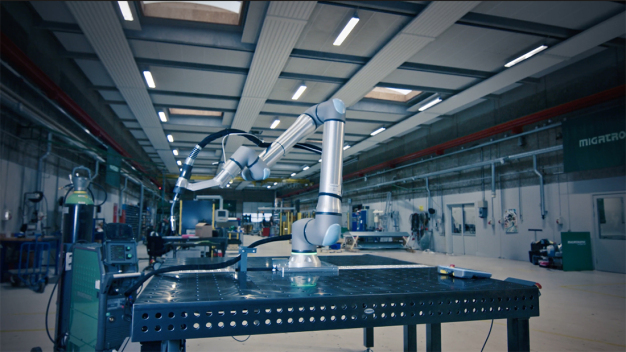
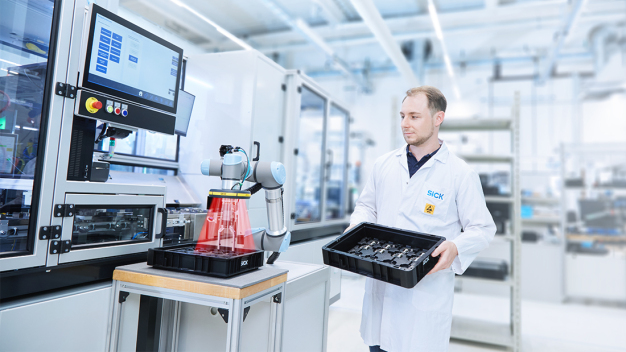
In robotics, AI is also pushing the boundaries of what is possible. While the use of robots was previously limited to repetitive tasks in controlled environments, they can now understand and independently perform complex tasks. This development is not only changing how various industries work but also shaping the future of work in general.
Leading this field is Anders Billesø Beck, Vice President of Technology at Universal Robots. His goal is to make automation accessible and as effective as possible for every company. With his extensive expertise and passion for using robots to improve human work, he is a key voice shaping the future of automation.
Here are his five predictions for 2025:
#1: AI Becomes Mature
AI applications will take a decisive step forward in 2025, transitioning from hype to practical implementation. In recent years, new AI startups have emerged rapidly, but this year we will see consolidation and integration. Naturally, new players with exciting innovations will continue to enter the market, but more mature solutions will also become available.
AI will also become more intuitive. It will no longer be perceived as an independent technology but increasingly as an embedded feature that enhances existing systems. During the early "hype years" of AI, solutions were often explicitly marketed as "AI-driven" or "AI solutions." From this year onward, AI will increasingly be a "silent enabler" — a powerful tool that subtly enhances and optimizes functionality in the background. Take, for example, Ocado's Cobot solution. It is not marketed as an "AI solution" but as a logistics pick-and-place system that uses AI.
The next wave of AI will also be physical. AI that understands the laws of physics, can adapt to unforeseen challenges, and navigate dynamic, real-world environments. We already saw early signs of this in 2024, but this development will significantly accelerate in 2025. By integrating physical AI into robotics, new possibilities will open up for systems that not only process data but also interact meaningfully with the physical world. This will transform entire industries and pave the way for my second prediction.
#2: Robots as Baristas and Chefs
For decades, robots were confined to industrial environments. Now they are increasingly spreading into other parts of our society. While humanoid robots may be the most well-known example — although they are still far from market-ready — collaborative robots, known as cobots, are gaining ground across all industries — for example, in film and television production. By the end of the year, most of us will have seen a film, TV show, or commercial where a Cobot operated the camera. An example of this is MRMC, which produces cobot-based camera solutions.
Especially in the USA and Asia, cobots are increasingly used in the food and beverage industry, where they prepare coffee or meals, for instance. Cobots designed specifically for hygienic food preparation offer consistency and speed — especially during peak times. Companies like the US fast-food chain Chipotle are already deploying cobots in their restaurants, demonstrating that these machines do not replace workers but increase productivity and improve working conditions.
But cobots are not only used in kitchens and film productions; they will also become more common in industries like construction. Companies like Canvas are already using cobots for tasks such as completing drywall walls, showing how these versatile machines can help address skilled labor shortages in highly variable industries. Another example is Raise Robotics, which uses cobots for tasks such as installing fasteners on facade panels on high-rise buildings — a dangerous and monotonous job.
#3: Automation Surge in India
So far, Asian giants like China, Japan, and South Korea have dominated the global robotics market. This will shift in 2025: India will take a leading role. The country is investing heavily in automation, supported by proactive government initiatives. The "Production Linked Incentive" (PLI) scheme, for example, offers subsidies to companies that build manufacturing capacities in key industries such as automotive, metals, pharmaceuticals, and food processing in India.
Three factors drive India's automation potential. First: the young population, with an average age of 29 years compared to 45 in Germany, provides dynamic and adaptable labor. Second: a thriving technology sector worth $115 billion in IT and business process management provides a solid foundation for innovation. And third: strategic government investments in digitalization, industrial automation, and skills development create an ideal environment for growth.
These factors, combined with the "Make in India" initiative, highlight the country's enormous potential. In just the past year, India has risen from 10th to 7th place in global robot installations — a 59% increase.
#4: A New Approach to Safety
Safety has always been a fundamental aspect of cobots, but with their deployment in more dynamic and less controlled environments, traditional safety concepts must evolve. The safety measures in place depend heavily on the specific application and use case. Although cobots are designed for close collaboration with humans, additional safety features are necessary when they operate at high speeds or handle sharp objects. In factories, safety is often ensured through fences and strict protocols. However, these methods are impractical in environments where cobots and humans work closely together in unpredictable scenarios.
In the future, robot safety will focus on adaptive technologies that can respond to variability. Using real-time sensor data and advanced algorithms, cobots will be able to immediately recognize and react to human movements, ensuring safety without compromising efficiency. This is a significant step toward making collaborative robotics usable across a broad range of applications.
#5: Standardized Turnkey Solutions
Although the concept is not new, the importance of standardized, ready-to-use solutions will increase further this year. These solutions, which simplify the automation process through pre-configured systems, will become indispensable for companies seeking to quickly and efficiently integrate cobots.
The main advantage is that they eliminate the complexity often associated with automation, such as extensive customization and lengthy setup processes. Small and medium-sized enterprises (SMEs), in particular, will have easier access to automation. This allows them to compete with larger companies without bearing the high costs of custom automation systems.
My prediction is that by the end of 2025, more than one-third of deployed cobots will be part of such standardized solutions. Their scalability and cost-efficiency will enable widespread application across all industries, from manufacturing to logistics. As companies seek practical and affordable ways to increase efficiency, standardized solutions will be a cornerstone of the next phase of automation.
Shaping the Future of Automation
Robotics will experience a clear transformation in 2025. From the increasing maturity of artificial intelligence to the deployment of cobots in ever more dynamic environments — this year marks a turning point. At the same time, robotics will continue to address key global challenges: skilled labor shortages, strengthening supply chain resilience, and the need for productivity gains.
Advanced technologies like physical AI and standardized solutions are making automation not only more accessible but also more effective. They are transforming entire industries and everyday life. Companies that harness these innovations can fully realize the potential of robotics — creating a future that is safer, more efficient, and more collaborative.
Universal Robots A/S
5260 Odense S
Denmark