



- Furnishing & equipment
- Translated with AI
Fan Filter Unit (FFU) modules and their areas of application
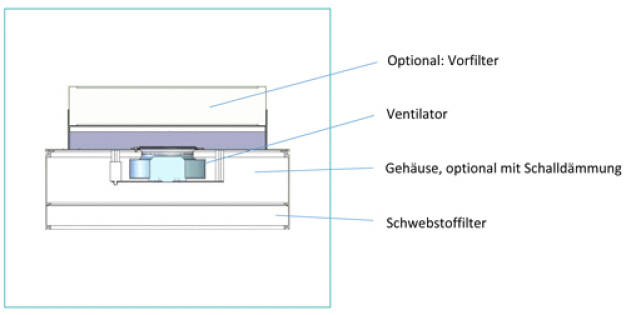
Fig. 1: Structure of a fan filter unit FFU
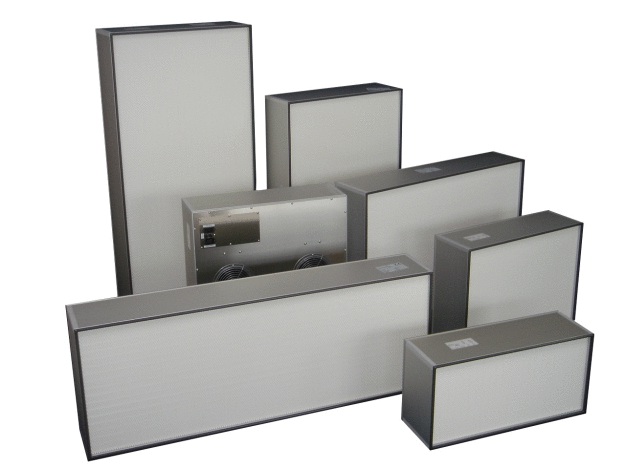
Fig. 2: 200 mm high modules in various dimensions
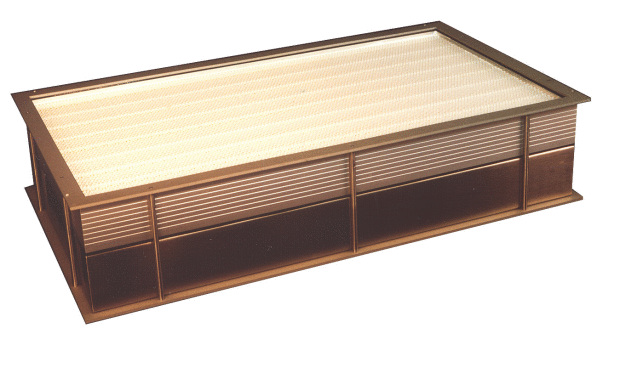
Fig. 3: Integrable FFU
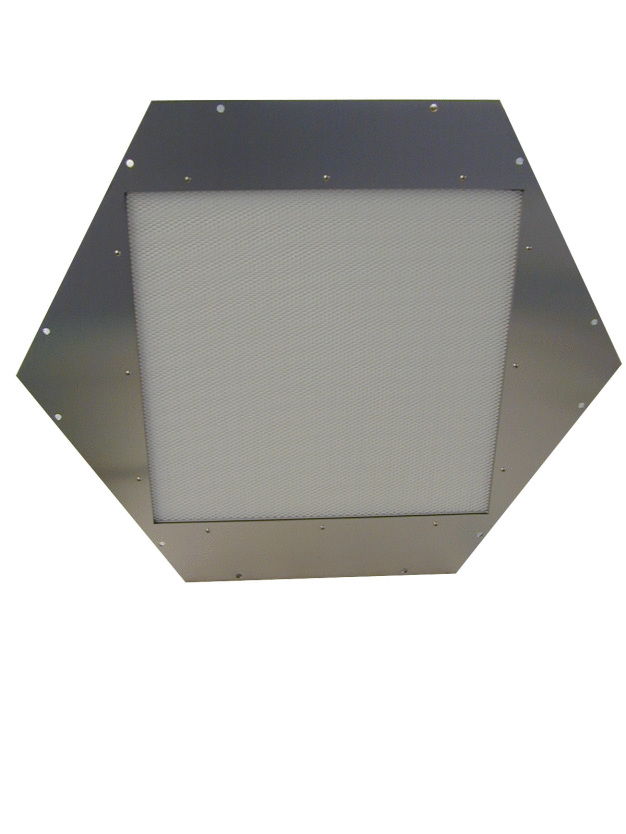
Fig. 4: Hexagonal integrated FFU
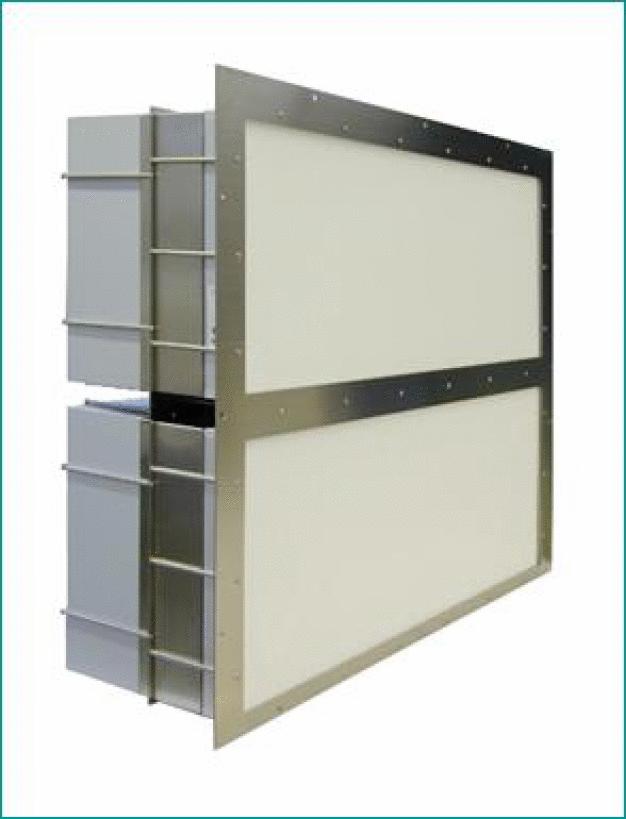
Fig. 5: Integrable FFU with two filters
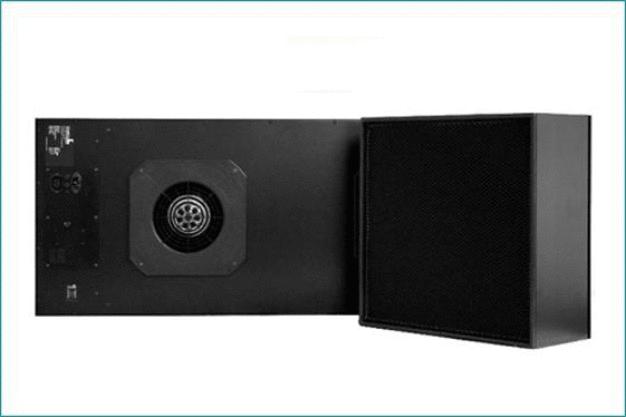
Fig. 6: FFU with black housing and black filter intake surface
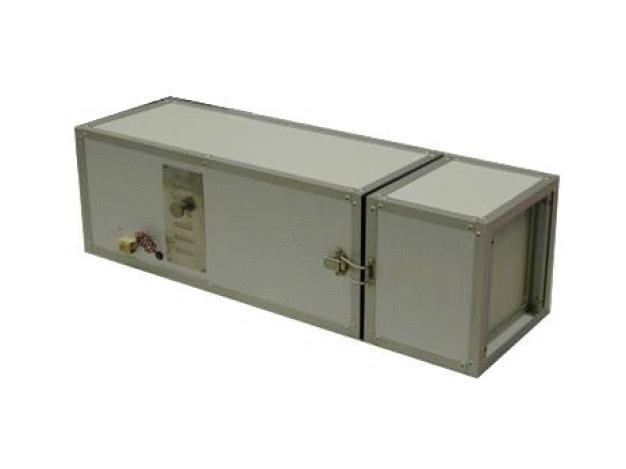
Fig. 7: Module with particle and molecular filtration
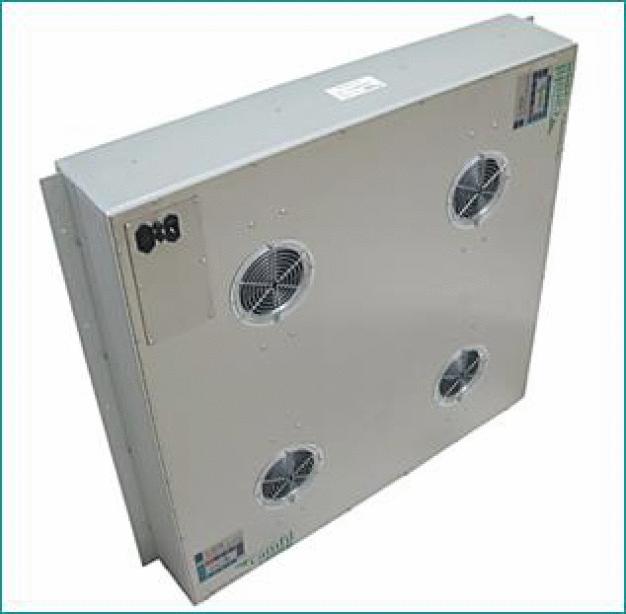
Fig. 8: Cleanroom module
Since the mid-1980s, fan-filter modules under the term FFU have been available on the market. FFU stands for Fan-Filter-Unit and represents a compact unit for generating high-purity air. These modules made it possible for the first time to introduce greater flexibility into airflow in cleanrooms. By enabling individual control of the modules, the airflow velocities under the filters could be flexibly varied within a room. It was no longer necessary to use filters with different fold heights and thus different differential pressures, which also meant a rigid rather than a flexible system.
At that time, these first modules were primarily available in a few standard sizes, mainly based on outer dimensions of 300, 400, 600, 900, and 1,200 mm. When used in various cleanroom ceiling grids, these sizes could be adjusted downward to fit ceiling grid sizes of 600, 900, and 1,200 mm. These relatively limited sizes restricted their use mainly to cleanroom ceilings and cleanroom cabins.
The basic structure of a module consists of a housing, a fan, and a HEPA filter, with the filter either fully integrated into the housing or the housing mounted onto the filter, thus comprising two parts. Optionally, a pre-filter can be installed in front of the fan, and sound-absorbing material can be incorporated inside the module. (see Fig. 1)
Since then, the development of fan-filter modules has experienced a strong surge. Many suppliers worldwide offer modules that differ in details or even fundamentally from those of other providers.
Furthermore, their application possibilities have expanded to other areas such as mini-environments, gloveboxes, and mobile systems.
This section will discuss some completely different constructions from the basic design. Standard sizes, limited to a few dimensions in length x width, are no longer a topic.
Flat Design
Previous modules had a height of 350, 400, or even more mm. For conventional applications, this is quite acceptable, especially since these modules, due to large fans and sound-absorbing linings, can reduce noise levels.
However, many applications also require low heights. It may be necessary to install cleanrooms and cleanroom cabins in existing rooms with insufficient ceiling heights. These are applications in mini-environments and also special applications where space is extremely limited. (see Fig. 2)
This patented solution uses the housing of the HEPA filter, which, due to its anodized surface, is very well suited to serve directly as the housing of the module. In addition to material savings, it also achieves a weight reduction, which should further expand the areas of application.
Integrable FFU
Specifically designed modules are available for the integration or attachment of FFUs to machines and systems. (see Fig. 3)
The advantage of these modules is that the pressure frame for the filter can be designed completely variably and independently of the filter size, enabling plug & play solutions that save the user additional structural effort and extra components. (see Fig. 4)
For example, hexagonal modules can be created for installation in cluster tools, eliminating the need for additional adapter plates, among other things.
To achieve different airflow velocities within a machine, which may be necessary for flow optimization, multiple filters can also be integrated into a single module in the case of integrable FFUs. (see Fig. 5)
Special FFUs
This section will briefly describe some examples of special solutions that demonstrate the many possibilities for using FFUs.
In optical manufacturing, for example, optics are tested in a dark room using a light source for quality assessment. These testing rooms must be very dark to detect surface defects. If this must also be done under cleanroom conditions, it is easy to design walls, ceilings, and floors in black. However, the filter surfaces of the HEPA filters used are always white. (see Fig. 6)
This patented solution reduces light reflection on the filter surface by 95%.
In museums, it is often necessary to protect especially valuable exhibits not only from particles but also from chemical influences. Since display cases also require a very compact design, this has been implemented in a module that, in addition to the HEPA filter, contains chemical filters for various harmful airborne compounds. (see Fig. 7)
The automotive industry is currently one of the largest drivers of developments in the field of technical cleanliness. The focus is primarily on part cleanliness. However, the achieved cleanliness must be maintained by an appropriate environment. Today, one does not necessarily speak of large-scale use of cleanrooms in the automotive industry, but the term "cleanroom" is already widely known. Since in clean environments that do not reach the level of a cleanroom, reducing ongoing costs is especially important, so-called cleanroom modules are available, which are not equipped with HEPA filters but with a high-quality F9 pre-filter. (see Fig. 8)
With this module, a high air volume can be achieved with sufficient purity at low operating costs. However, the use of these modules is not limited to the automotive industry.
In summary, it can be said that the application areas of fan-filter modules (FFUs) are almost unlimited. One should not limit oneself to a narrow range of standard modules. Customer-specific solutions allow significant cost savings in the further value chain, which can be achieved through the use of very cost-effective standard modules.

COLANDIS GmbH
Im Camisch 34
07768 Kahla
Germany
Phone: +49 36424 76940
email: info@colandis.com
Internet: https://www.colandis.com