- Building technology
- Translated with AI
EUROVENT 2019
Certainly clean air
(Image: Camfil)
(Image: Camfil)
Facts | DIN EN ISO 16890:2016
Three key factors have led to the focus on the energy consumption of air filters within the ventilation industry. These are, first, rising energy prices; second, increasingly strict requirements to reduce CO2 emissions; and third, the growing awareness of the serious health and well-being impacts caused by poor air quality.
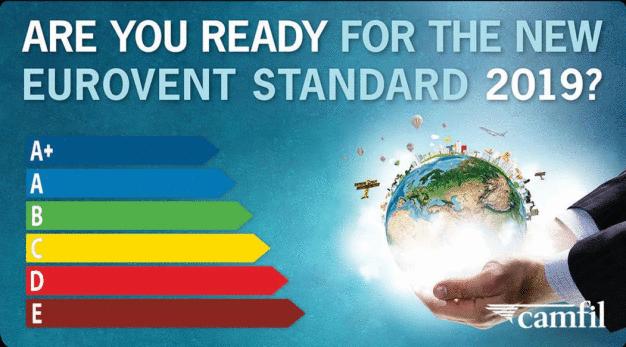
To address these developments, a new Eurovent classification system came into effect on January 1, 2019, based on international standards for filter performance evaluation. Air filters are classified on a color-coded system, familiar from household electrical appliances like refrigerators and freezers, on a scale from A+ to E. The A+ class indicates the lowest energy consumption, while class E indicates the highest. This classification of energy efficiency provides users with a better understanding of the annual energy consumption, average efficiency, and minimum efficiency. This makes it easier to find the right air filter with the lowest energy use.
Increased requirements
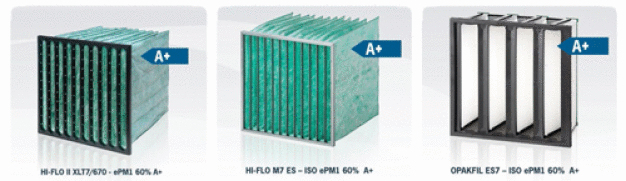
With testing by Eurovent, the demands for energy efficiency have increased, and as a result, many filters previously classified as A+ have been downgraded to A. Choosing an air filter according to the new Eurovent testing standard therefore saves money and guarantees healthy indoor air quality.
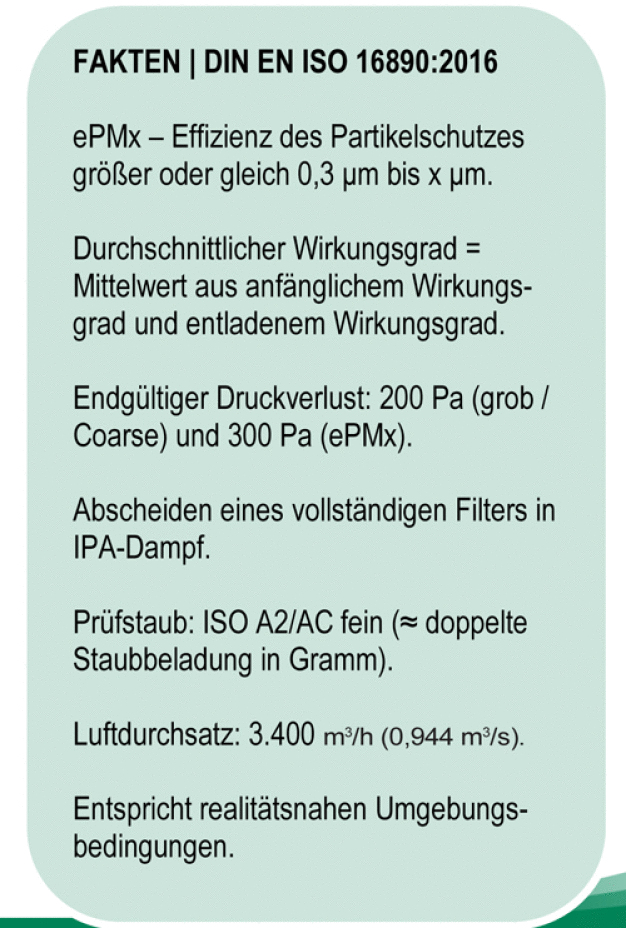
The new energy efficiency classification is based on the international standard for particulate filtration in buildings, DIN EN ISO 16890:2016. It replaced previous testing standards from June 1, 2018. Manufacturers participating in Eurovent testing must submit a complete test report according to ISO16890, which is used to calculate the filter's energy consumption. In Europe, EN779:2012 has been replaced by ISO 16890 (which is now more precise and realistic than the old EN779 system, which only provided a single consumption value per energy class).
With ISO 16890, detailed information is provided for the first time about what filters can achieve. For example, air filters are described as ePM1 60%. This means the filter has an efficiency of 60% at PM1. The abbreviation “e” stands for the effective capture efficiency of the filter, and “PM1” refers to the particle size range (from 0.3 µm to 1 µm). The “60%” indicates the percentage of particles in this measurement range that are captured.
Classification of filter groups
The fine dust particles (PM – particulate matter) prevalent in indoor air are classified into four filter groups according to ISO 16890:
1.
Coarse dust particles:
Particles with a diameter of 10 µm or larger (1 µm = 1/1000 millimeter). Examples include visible coarse dust, sand, leaves, hair, and other large organic particles.
2.
PM10:
Aerosol particles with a diameter of ≤ 10 µm. This includes fine dust and organic particles.
3.
PM2.5:
Aerosol particles with a diameter of ≤ 2.5 µm, such as pollen, spores, and other organic particles.
4.
PM1:
Aerosol particles with a diameter of ≤ 1 µm. This includes combustion particles, diesel exhaust, and viruses.
Optimal indoor air quality
The human body is capable of “filtering” out coarse dust particles of 10 µm or larger before they reach the throat. Particles with a diameter of 2.5 µm or less can reach the lungs. PM1 particles, with a diameter of 1 µm or less, can enter the bloodstream via the alveoli, increasing the risk of health effects ranging from mucous membrane inflammation to cardiovascular diseases. Therefore, it is important that filters are classified according to their efficiency against particles of sizes PM10, PM2.5, and PM1 – and this is precisely the main goal of the new global standard for air filters, ISO 16890.
The right air filter not only saves money but also ensures healthy indoor air quality. With the new energy efficiency classification for air filters by Eurovent, it is now even easier to find the right filter with the lowest energy consumption while maintaining the best indoor air quality.
The official Eurovent brochure is available for download at www.camfil.com.

Camfil GmbH
Feldstr. 26 - 32
23858 Reinfeld
Germany
Phone: +49 4533 2020
Fax: +49 4533 202202
email: info.de@camfil.com
Internet: http://www.camfil.com