




- Translated with AI
Ensure component cleanliness is stable and economical
New guidelines for quality-assuring process management
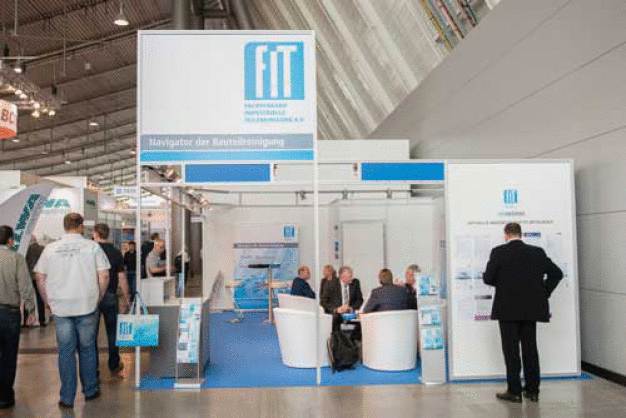
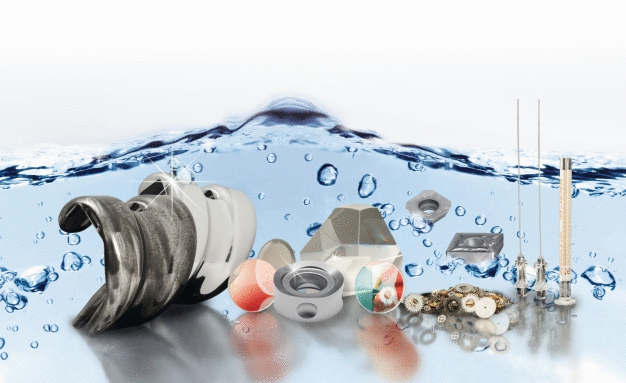
With the guidelines developed by the Cleaning Expert Committee, the German Association of Industrial Part Cleaning (FiT) provided in 2013 the first orientation aid for a quality-assuring process management in component cleaning, to design and carry out cleaning processes that are stable and economical. The now internationally recognized guideline work has been updated based on new findings and supplemented with relevant topics. The new edition will be presented to the public at parts2clean.
The goal of component cleaning is to reliably meet the cleanliness requirements resulting from subsequent manufacturing steps such as coating, bonding, welding, or assembly, thus ensuring the quality of the cleaning. However, quality assurance in industrial component cleaning was long limited to cleanliness control at the end of the cleaning process. This determines whether the component has the cleanliness required for the subsequent process. Monitoring of the cleaning process and process parameters was usually not performed. On the one hand, this resulted in interventions only when quality defects occurred. On the other hand, cleaning was often carried out in "safety operation," meaning cleaning media were overdosed and bath changes were performed too early. Both factors increase cleaning costs and thus impact profitability and competitiveness.
With the guidelines developed by the Cleaning Expert Committee and published in 2013, the FiT provided the first orientation aid for quality-assuring process management in component cleaning. The guidelines include principles and fundamental concepts for designing, controlling, and optimizing the cleaning process, with the aim of ensuring the required component cleanliness with an optimal technical, economic, and ecological system solution. This includes key aspects from the perspectives of chemistry and processes, plant technology, as well as measurement, testing, and control, as well as knowledge transfer and qualification.
Updated and integrated new topics
The first edition of the now internationally recognized guidelines has been updated and supplemented based on numerous suggestions and feedback from industry experts and users. Relevant topics such as corrosion protection, parts handling, service, and maintenance have been incorporated. The new guidelines include seven principles:
- Creating quality instead of testing it requires quality control through
- Continuous monitoring of component cleanliness and regular supervision of quality-influencing process parameters
- Recording and evaluating changes
- Timely intervention in the cleaning process - Quality control is based on the interactions between the required component cleanliness and the quality-influencing process parameters.
- Process management involves mastering the cleaning process through targeted measures in process engineering and plant operation, supported by measurement, testing, and control technology.
- Quality-assuring process management requires the technical coordination of cleaning and, if necessary, preservation of the components.
- The goal of process management in industrial component cleaning is to ensure sufficient component cleanliness relative to the subsequent process with minimal resource consumption.
- Knowledge-based process management for a specific cleaning task is based on fundamental, task-independent knowledge ("How does it work in general?") and newly developed, task-specific knowledge ("What is the detailed solution for the specific case?").
- These guidelines apply to both aqueous cleaning and solvent cleaning, as well as to other cleaning methods and systems.
Decision-making and action aids for process management
Based on these principles, decision and action aids have been formulated for the areas of chemistry and processes, plant technology, measurement, testing, and control, as well as knowledge transfer and qualification. They address key aspects in the selection and use of cleaning procedures and media, as well as the optimal design of plant technology from the perspective of quality assurance. Additionally, they focus on continuous monitoring and recording of quality-influencing parameters in the cleaning process and their control, as well as on the goal of knowledge-based process management.
Besides the fundamentals for thinking and acting to ensure stable, economical, and sustainable component cleanliness, the guidelines serve as a basis for collaboration between industry providers and plant operators. They also provide orientation for experience exchange and the development of new solutions.
Complementing this, the FiT has developed a new checklist for planning a cleaning process. It helps users gather all necessary information for procuring a new cleaning system and thus be optimally prepared for discussions with equipment and chemical suppliers.
Guidelines and checklist are available free of charge during parts2clean 2017 at the FiT booth (Hall 3, Stand E02).

Fachverband industrielle Teilereinigung (FiT) e.v.
Geschäftsstelle
Hauptstraße 7
72639 Neuffen
Germany
Phone: +49 7025 84340
Fax: +49 7025 843420
email: info@fit-online.org
Internet: http://www.fit-online.org



