


- Translated with AI
Deburring and cleaning – a sought-after combination
Fully booked 2nd Conference on Deburring and Cleaning
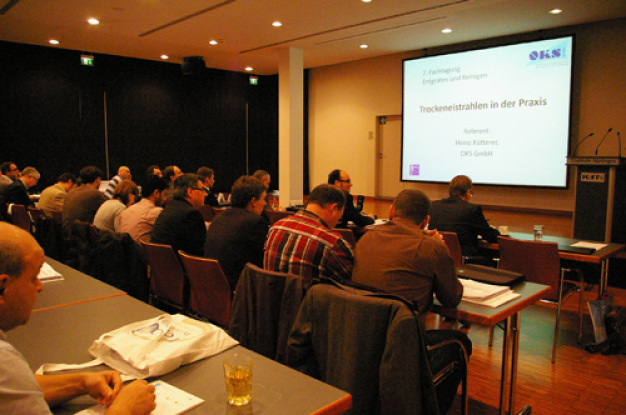
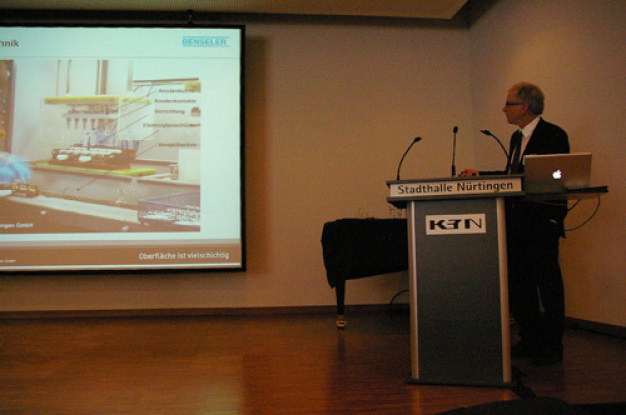
Deburring and Component Cleanliness – two topics that practically no manufacturing company can avoid today. Accordingly, there is a high level of interest in efficient solutions for these tasks. This was also demonstrated by the 2nd Conference on "Deburring and Cleaning," which was fully booked with a total of 150 participants and organized by fairXperts GmbH on February 25 and 26, 2014, in Nürtingen.
Whether casting, forming, or machining – almost no manufacturing process can avoid burr formation. Removing these small material protrusions plays a crucial role both in terms of technical cleanliness and from ergonomic and aesthetic perspectives. Solutions are needed for component and surface cleaning that allow deburring to be carried out economically and reliably. These were presented in the 21 lectures of the 2nd Conference on "Deburring and Cleaning," held by fairXperts GmbH on February 25 and 26, 2014.
The first day focused on the topic of deburring. The opening lecture provided detailed information on burr formation, reduction, and removal, as well as the factors to consider when selecting the appropriate deburring method. The subsequent presentations delved deeper into individual processes. One lecture addressed the possibilities and limitations of various solutions for mass finishing – both in terms of equipment technology and process media. Removing internal burrs presents a special challenge. To address this, subsequent presentations discussed various methods such as abrasive flow machining (AFM), also known as flow grinding and pressure slip laps, thermal deburring, and water jet deburring, including classic applications of each process. Other topics included ECM and PECM (electrochemical machining and electrochemical machining), focusing on their use in deburring and the advantages and benefits for processing metallic materials. Examples demonstrated how these processes can produce burr-free contours, structures, or complete drilled holes—even "around the corner"—in a component. Additionally, a presentation covered analytics for chemical deburring wheels. The deburring with dry ice, increasingly used for plastic and lightweight metal components, was also on the agenda, along with procedures and results from vacuum blasting on various workpieces. The final lecture on February 25, about clean manufacturing-oriented machining, served as an ideal transition to the second day, which was dedicated to component cleaning. An introductory presentation provided an overview of the various cleaning processes used in industry. The lectures addressed solvent-based cleaning and preservation, the potentials and limitations of spray cleaning, and the optimization opportunities offered by impulse technology. Focus was also placed on cleaning containers as a key element in value stream design for modern manufacturing, considering cleaning, parts handling, and logistics. Furthermore, the conference provided information on solutions for the maintenance and recycling of aqueous cleaning wheels, quality assurance in cleaning processes, and testing component cleanliness regarding film and particulate residual contamination—including methods such as fluorescence, light microscopy, and micro-computed tomography.
Alongside the conference, 22 companies showcased products and services related to deburring and cleaning.
The feedback from the 150 participants was consistently positive. The broad range of topics was praised for providing a comprehensive overview of current developments and trends in deburring and cleaning, as well as for imparting a wealth of knowledge. In addition to knowledge transfer, participants appreciated the opportunity to network and exchange experiences.
fairXperts GmbH & Co. KG
72639 Neuffen
Germany