- Translated with AI
Dangerous germs from the mud
In search of life in inhospitable environments, microbiologists find pathogenic bacteria in volcanic mud on Trinidad
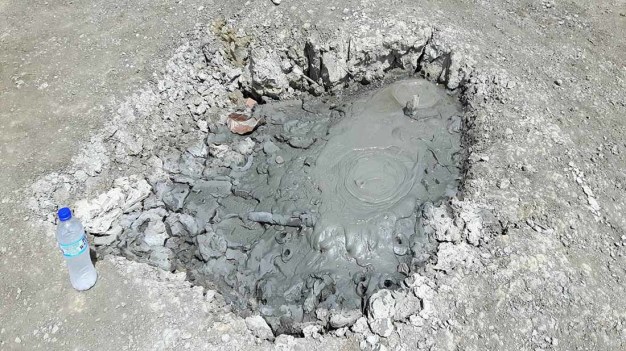
Mud volcanoes are unique geological structures formed by tectonic pressure. They are fed by fluids located deep beneath the Earth's surface. (© TU Berlin/ZAA/Dirk Schulze-Makuch)
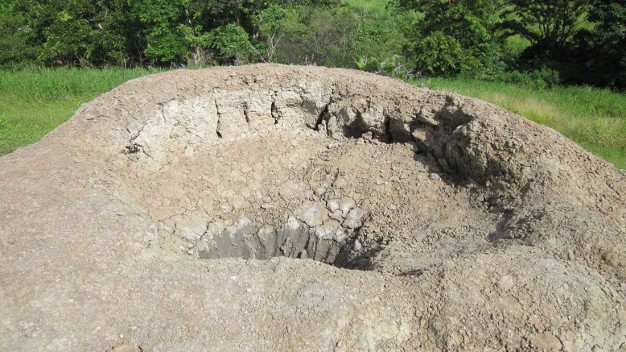
Mud volcanoes are unique geological structures formed by tectonic pressure. They are fed by fluids located deep beneath the Earth's surface. (© TU Berlin/ZAA/Dirk Schulze-Makuch)
When a research team around TU astrobiologist and geologist Prof. Dr. Dirk Schulze-Makuch chemically-microbiologically examined some mud volcanoes on the Caribbean island of Trinidad in search of living organisms in particularly inhospitable environments, they experienced a surprise. The researchers found various dangerous pathogenic bacterial strains, including those known as multi-resistant hospital germs, which very likely do not originate from the depths of the mud volcano but are introduced there via surface and rainwater. The researchers then refocused their investigation and published the results in the Elsevier journal "Science of the Total Environment".
Mud volcanoes are unique geological structures formed by tectonic pressure. They are fed by fluids located deep beneath the Earth's surface and are mainly found in zones where the Earth's crust is tectonically very active. One such zone is, for example, around the Los Bajos fault on the island of Trinidad, the largest island of the Lesser Antilles in the Caribbean. There, the research team took solid and liquid analysis samples from three of these mud volcanoes to perform chemical and microbiological characterization and to determine whether the composition of the mud varies north and south of the fault line. "Our study initially confirmed assumptions that at least some of the mud volcano fluids are a mixture of deeper salt-rich water and surface or precipitation water," explains Prof. Dirk Schulze-Makuch from the TU Center for Astronomy and Astrophysics, who is also an Adjunct Professor at Arizona State and Washington State University and President of the German Astrobiological Society e.V. and has been working for several years with his research group on the habitability of potential habitats in inhospitable environments, such as on Mars.
Bacteria as Survivors – and a Risky Find
"In our microbiological analyses, we were able to identify various aerobic and anaerobic colonizations, meaning bacteria that can live with or without surrounding oxygen. Some of them can reduce sulfate, others produce methane, thus engaging in such metabolism, while others bind carbon dioxide or nitrates from which they gain energy. Several identified species were halophilic, meaning salt-loving, and probably originated from the deeper salt-rich underground water." But what surprised the researchers was the discovery of various highly pathogenic, disease-causing bacteria species. "These bacteria typically colonize the digestive tract of humans and mammals, and some are even the cause of urinary tract infections," says Schulze-Makuch.
Among the pathogenic bacteria, there were also species from the family Enterobacteriaceae, known especially for damaging plants. Additionally, Enterobacter cloacae was identified, which has been found in hospitals in recent years, including neonatal units. These bacteria are particularly known as multi-resistant germs and are responsible for several infection epidemics. Another pathogen found is Klebsiella variicola. This bacterium is associated with plant diseases occurring on banana and sugarcane plantations. It was also isolated from cows suffering from udder inflammations or blood poisoning.
The contaminated water could harm humans, animals, and plants
Overall, the researchers believe it is unlikely that the infected water originates from the depths feeding the mud volcanoes. It is most likely introduced from the surface. Since in Trinidad, the water in the mud volcanoes mainly comes from deep-seated seawater reservoirs mixed with water from surface aquifers, it is suspected that the surface water in at least one case comes from a nearby river that occasionally floods the region. Control samples from other regions where mud volcanoes occur were negative.
"Our biochemical and microbiological results do not necessarily imply that it is an anthropogenic, i.e., human-made, contamination. However, this is very likely at least for some sites," says Dirk Schulze-Makuch, and the research group recommends: "In any case, the observed pathogenic contamination of the volcano mud samples poses a significant health risk to humans and animals, especially if the contaminated water comes from flooding. This should be further investigated."
The original publication can be found at:
Dirk Schulze-Makuch, Shirin Haque, Denise Beckles, Philippe Schmitt-Kopplin, Mourad Harir, Beate Schneider, Christine Stumpp, and Dirk Wagner
A Chemical and Microbial Characterization of Selected Mud Volcanoes in Trinidad Reveals Pathogens Introduced by Surface Water and Rain Water
For further information, please contact:
Prof. Dr. Dirk Schulze-Makuch
Technical University of Berlin
Center for Astronomy and Astrophysics of TU Berlin
Planetary Habitability and Astrobiology
Tel.: 030 314-23736
Email: schulze-makuch@tu-berlin.de
Technische Universität Berlin
10587 Berlin
Germany