


- Buildings & Rooms
- Translated with AI
Belma Gül
Cleanroom or sterile room?
Classification of Manufacturing Environments
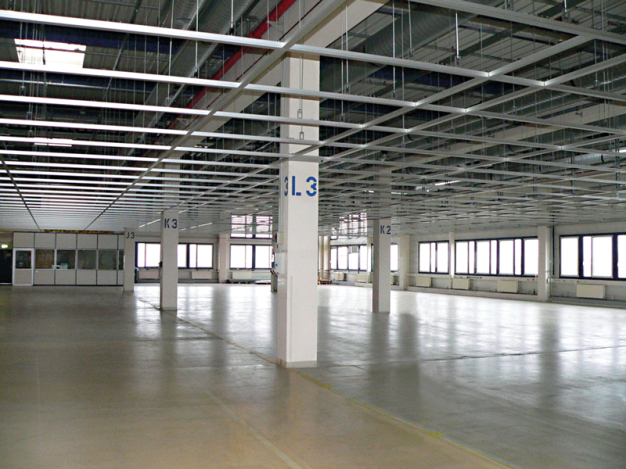
Example of a cleanroom ceiling grid from Asys Cleanroom
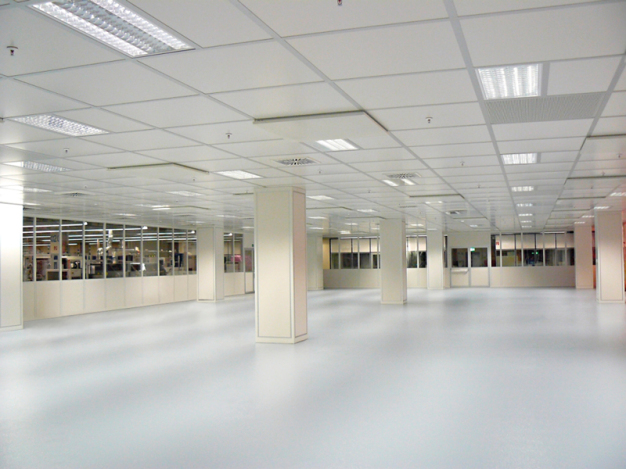
This is what a cleanroom implemented by Asys can look like
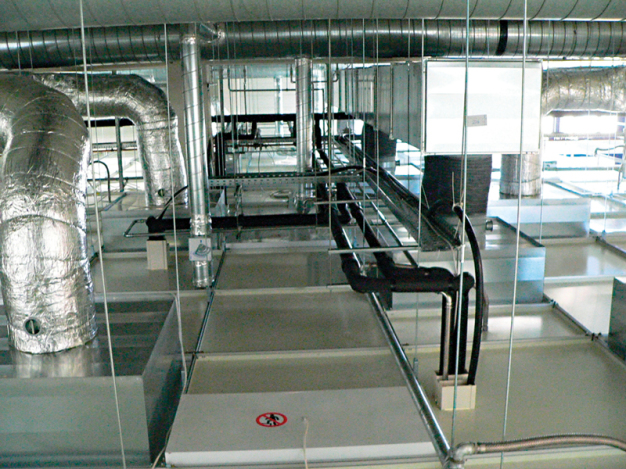
View from above of a cleanroom ceiling by Asys Cleanroom
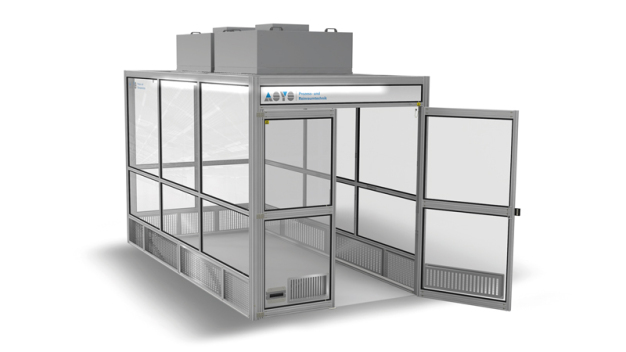
Sometimes, a cleanroom cabin is also sufficient.

Karl Goll is the Managing Director of Asys Process and Cleanroom Technology
With increasingly smaller and more sensitive components, for example in anti-lock braking systems or airbags, the need for controlled environments in manufacturing is growing. Often, these systems are equipped with sensors that are sensitive to dust, dirt, or fibers. Therefore, a pure, clean, and controlled environment is indispensable in many electronics and automotive manufacturing processes.
Cleanrooms are already used in many industries such as semiconductor manufacturing, optics, or pharmaceuticals. Whether investing in a cleanroom or a clean environment makes sense for a company depends on various factors. Besides the requirements for a pure environment, the manufacturing process and the product also play a significant role. Depending on the permissible particle size, it is decided whether a cleanroom or a sterile room is necessary.
Both approaches generally aim to prevent the formation of particles in the air, remove unavoidable particles, and protect the environment from particle entry. This is also necessary, as Karl Goll, Managing Director of Asys Process and Cleanroom Technology in Dornstadt near Ulm, explains: “Even the smallest particles with a size of 50 µm can cause significant damage to sensitive electronics in brake systems.”
The Cleanroom Classification
The internationally valid norm EN ISO 14644 classifies air cleanliness based on the reference particle size of 0.5 µm. Accordingly, in class ISO 5, a maximum of 3,520 particles of size 0.5 µm per cubic meter of air are allowed. Industry- and country-specific standards, such as the U.S. Federal Standard, have been replaced by the ISO standard. For example, the old classification of cleanroom class 100 now corresponds to ISO class 5 (see table).
|
Cleanroom Classes according to ISO 14644-1 |
US-Fed |
||||||
|
|
Particles per m³; |
ft³ |
|||||
|
Class |
0.1 µm |
0.2 µm |
0.3 µm |
0.5 µm |
1.0 µm |
5.0 µm |
|
|
ISO 1 |
10 |
2 |
|
|
|
|
|
|
ISO 2 |
100 |
24 |
10 |
4 |
|
|
|
|
ISO 3 |
1,000 |
237 |
102 |
35 |
8 |
|
|
|
ISO 4 |
10,000 |
2,370 |
1,020 |
352 |
83 |
|
10 |
|
ISO 5 |
100,000 |
23,700 |
10,200 |
3,520 |
832 |
29 |
100 |
|
ISO 6 |
1,000,000 |
237,000 |
102,000 |
35,200 |
8,320 |
293 |
1,000 |
|
ISO 7 |
|
|
|
352,000 |
83,200 |
2,930 |
10,000 |
|
ISO 8 |
|
|
|
3,520,000 |
832,000 |
29,300 |
100,000 |
|
ISO 9 |
|
|
|
35,200,000 |
8,320,000 |
293,000 |
|
Cleanroom classes according to ISO and U.S. Fed.
In cleanrooms, particle sizes from 0.1 µm to 5.0 µm are controlled and measured. These particles are very light but can be filtered out of the ambient air with clean air technology. In sterile rooms, particle sizes from 1000 µm to 1 µm and the specific weight (density g/cm³) of the particles are considered. If particles fall to the ground after being released, clean air technology is not effective. Therefore, the manufacturing environment with dust-independent measures corresponds to cleanliness levels 1 and 2, the clean zone, or the sterile room.
Given this challenge, the Association of the Automotive Industry (VDA), in cooperation with the Fraunhofer Institute, has developed a set of guidelines. VDA Volume 19 has established itself as a standard. The first edition addresses “Testing of Technical Cleanliness.” Here, cleanliness is defined and classified into levels from 0 to 3.
• Cleanliness level 0 refers to an uncontrolled area
• Cleanliness level 1 corresponds to the standards of a clean zone
• Cleanliness level 2 regulates the requirements of a cleanroom without clean air technology
• Cleanliness level 3 is a cleanroom according to EN ISO 14644
Level zero refers to manufacturing areas without cleanliness regulation. To meet the requirements of levels 1 to 3, certain measures are indispensable: For example, delineation of the clean zone (SaS1) from critical areas must be done through floor markings or fixed partitions in cleanrooms (SaS2). Additionally, personnel and material transfer must be organized with cleanliness in mind, and personnel must be trained beforehand. Floors must also have good abrasion resistance and mechanical durability. Depending on the production process, further measures may be necessary.
The cleanroom is the preliminary stage to a sterile room. If cleanliness level three according to VDA 19 is achieved, the environment corresponds to ISO class 9. “The challenge lies in choosing the correct approach—cleanroom or sterile room—based on requirements. Because the higher the cleanroom class, the higher the investment and operating costs,” emphasizes Goll.
A matter of consultation
When planning a cleanroom or sterile environment, it is absolutely necessary to consider the entire manufacturing and assembly process. Asys Process and Cleanroom Technology, a company within the Asys Group, specializes in the planning and realization of clean and sterile rooms. Together with customers, the company analyzes their manufacturing processes and develops appropriate concepts. It is important to find and maintain a balance between the quality requirements of manufacturing and the environmental conditions. This involves avoiding oversized rooms and excessively high requirements for the cleanroom class. “Providing the right advice to our customers is especially important to us. Sometimes, customers come to us wanting to install a cleanroom in their production. But after a detailed analysis, it turns out that a sterile room is sufficient for their needs. This way, we avoid unnecessary investment and operating costs,” reports Karl Goll.
An additional key point is to respond flexibly to changed cleanliness requirements and adapt the facilities accordingly. Asys combines central climate and ventilation systems with flexible filter fan modules (FFUs). The central system regulates fresh air supply, temperature, and relative humidity in the room, while the FFUs are used to achieve the required air exchange rate. If a higher cleanroom class is required, the number of modules can be increased accordingly. Particular attention is paid to energy efficiency and low operating costs.
Special wall systems and a ceiling system developed by Asys allow the planning team to meet the requirements for flexibility. Smooth and easy-to-clean surfaces are just as important as surface-integrated installations in walls and ceilings. Thanks to intelligently planned personnel and material airlocks, particle entry is prevented, and an optimal flow of materials and personnel is developed together with the customer.
Deciding on the required cleanroom class and the size of the room is crucial when commissioning a controlled environment. Asys Cleanroom supports its customers in this decision—perhaps a simple cleanroom is already sufficient?

ASYS Prozess- und Reinraumtechnik GmbH
Lerchenbergstraße 31
89160 Dornstadt
Germany
Phone: +49 7348 98560
email: cleanroom@asys-group.com
Internet: http://www.asys-group.com